
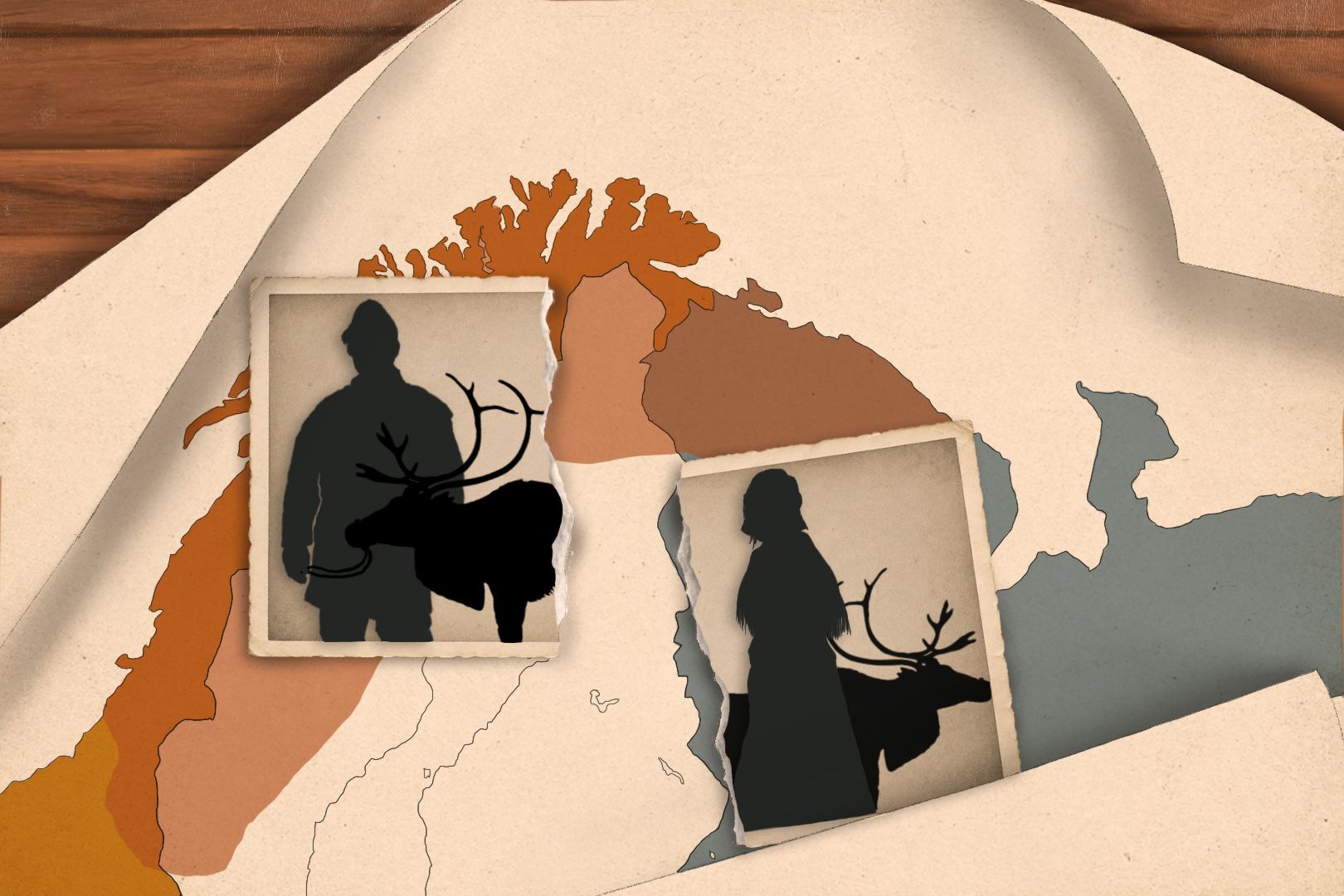
As Russia’s war in Ukraine reshapes this Arctic frontier, Sámi communities struggle to sustain cross-border traditions.An illustration showing a map of the Indigenous coastal Sámi homeland, Sápmi, which stretches across northern Norway, Sweden, Finland and Russia’s heavily militarized Kola Peninsula [Jawahir Al-Naimi/Al Jazeera]An illustration showing a map of the Indigenous coastal Sámi homeland, Sápmi, which stretches across northern Norway, Sweden, Finland and Russia’s heavily militarized Kola Peninsula [Jawahir Al-Naimi/Al Jazeera]Along the shores of the Neiden Fjord, in Norway’s northernmost county Finnmark, Nils Boine* gazes out across the water. On the horizon, the Neiden River splits around the craggy island of Skogerøya, but lurking beneath its surface is a fisherman’s bounty: hundreds of king crabs.His grandmother was Sea Sámi, from an Indigenous coastal people whose homeland, Sápmi, stretches across northern Norway, Sweden, Finland and Russia’s heavily militarised Kola Peninsula. In Finnmark’s fjords, Sea Sámi families have fished for generations. But these waters are dissected by more than currents and shoals. Since Norway and Russia fixed their border in 1826, Sámi communities in the region have been divided by a national boundary.Two hundred years later, this Arctic community is a combination of Sámi, Norwegians, Finns, Ukrainians, Russians, and international seasonal workers. Most of the Sámi population lives in Norway, with roughly 2 percent residing in Russia.The Sámi have established a cross-border lifestyle, supported by flexible policies, including a Norwegian-Russian agreement allowing visa-free travel for those living within 30km (18.5 miles) of the border.Security, however, has begun to tighten since the onset of Russia's full-scale war on Ukraine. The West sees Finnmark as part of NATO’s exposed northern flank, as it is directly opposite Russia’s heavily armed Kola Peninsula. The Norwegian border town of Kirkenes has been caught in a spy war with Russia, with multiple Russian operatives having been caught posing as tourists and fishermen while trying to engage in espionage.Now, border bureaucracy is a daily reality, and reindeer herding, language revitalisation and hunting traditions are increasingly being navigated through permits and regulations, making the wider Arctic infrastructure feel fractured.“I have friends in Russia,” Boine says. “We used to go shopping in Russia, and go there for weekends.”Since Russian President Vladimir Putin's full-scale invasion of Ukraine in February 2022, those crossings have stopped — partly as a display of solidarity with Ukraine, and partly due to safety concerns.“A local person was just arrested in Russia, so people are afraid to cross the border,” Boine explains. “The rumours say that he had some illegal things in his car, but he was arrested, and the [Ministry of] Foreign Affairs in Norway tried to do something, but it’s very difficult, of course, because we don’t have any diplomats in Russia.”He is referring to the reported June arrest of a Kirkenes businessman. Lawyer John Christian Elden told the daily newspaper Verdens Gang (VG) that the man was in custody for two months under alleged “possession of weapons or ammunition". Some Kirkenes residents were left shaken by the news, as recreational hunting is common in the region. They fear accidentally crossing the Russian border with forgotten hunting ammunition that might be left in their cars.The number of Russian tourists visiting Norway has also declined, from 250,000 in 2019 to 52,000 last year.“Before, we had Russian guests, but not now,” Boine says. Fortunately for his family, who run a tourism company, 80 percent of customers come from Asia or Finland. Their business has emerged relatively unscathed, but other companies have not been as lucky.“Shops in the area have lost a lot of income without Russian [tourists],” says Boine. “Several shops have had to close.”In a landscape traditionally connected for centuries, the fragmentation of communities is deeply concerning for both the regional economy and Sámi culture. Cross-border connections are deeply rooted in the regional psyche.For Boine, the war in Ukraine has put his friendships with people in Russia on hold.“They are afraid to do something wrong or write something wrong,” he says quietly. “You never know what might happen if they have too close contact,” he says.“I want to be careful.”When tour guide Henrik Hoffmann hikes near the Norwegian-Russian border, he rarely sees other civilians [Courtesy of Kirkenes Tours]When tour guide Henrik Hoffmann hikes near the Norwegian-Russian border, he rarely sees other civilians [Courtesy of Kirkenes Tours]New technological barriersGerman Henrik Hoffmann visited Kirkenes in 2021 and fell in love with its landscape and tight-knit community. Deciding to relocate permanently, the expat co-founded a tourism company, Kirkenes Tours, and began working with Sámi herders and on hiking trails along the Norwegian-Russian border.“I was nervous the first time,” Hoffmann admits. “I kept checking my maps to make sure I hadn’t accidentally crossed [the border].”Distracted hikers can easily step over the border by mistake, as the frontier is only marked by posts and forest clearings.Hoffmann takes tourists along these trails, teaching them about the border’s history and its strict rules, including heavy fines for touching a Russian marker. In June 2026, three Swedish tourists were reportedly each fined 8,000 Norwegian kroner ($830) for throwing stones across the border.The terrain looks desolate, peppered with granite rocks and scattered birch trees, but it is well-surveilled. Watchtowers dot the horizon, and security cameras are tucked among branches overhead.Hoffmann rarely sees other civilians on this route, but he has seen increasing numbers of Norwegian military patrols. When his walks are interrupted, it is mostly by Sámi-owned reindeer.He points towards a small herd grazing in a sheltered valley beneath a rocky crag. The reindeer – which are marked with traditional branding and earmarks – are at least a kilometre (0.6 miles) away.Sámi families use distinctive marks, including pre-approved patterns cut into reindeer ears, to instantly identify which animal belongs to which herder. In May and June, there is a calf marking round-up, where the local siida – an organisation of Sámi herders who manage reindeer – use huskies, snowmobiles and drones to track and herd reindeer into pens. This process ensures that every calf is correctly identified. The jagged earmarking is an ancient Indigenous practice.Alongside traditional earmarking, Sámi herders have simplified these roundups with 21st-century technology. For years, they have attached GPS tracking devices to reindeer, enabling herders to locate livestock with ease. But this is no longer a reliable method, because the area along the Russian-Norwegian border is often affected by GPS jamming and spoofing.Aeroplanes landing in Kirkenes have even been affected by the interference, with navigation symbols blocked or replaced with false location data. The same disruption can render reindeer trackers inaccurate and useless.Recently, Russian interference has reportedly been targeting lower elevations, too, leaving those in the hills surrounding Kirkenes – typically hikers and reindeer herders – at higher risk of having a GPS device jammed or spoofed.“I have experienced it saying I am in Tromsø,” says Hoffmann, referring to the northern Norwegian city, about an 800km (500 miles) drive from Kirkenes.To avoid mishaps, he always hikes with a satellite phone, and many local reindeer herders now avoid using GPS trackers because they have become unreliable.“Now, they’re mostly using GSM trackers, which rely on the phone network,” Hoffmann explains.Reindeers graze along the Norwegian-Russian border and are rounded up at certain times of the year by Sámi herders [Eibhlis Gale-Coleman/Al Jazeera]Reindeers graze along the Norwegian-Russian border and are rounded up at certain times of the year by Sámi herders [Eibhlis Gale-Coleman/Al Jazeera]Animals don’t understand bordersWalking through Finnmark's exposed borderlands means crossing paths with many types of wildlife, including the Arctic grouse, a bright-white bird that buries itself in the snow. But not all animal encounters are pleasant.For Sámi herders, predators are an increasing concern. Finnmark’s brown bear population is steadily increasing, with bears freely crossing between Russian and Norwegian territory. Some residents believe the rise could be connected to a decline in Russian hunting activity, but since cross-border conservation has declined, it is difficult to say.“Last year, a man was bitten,” says Hoffmann. He also reveals that at a local stable where his girlfriend goes horseback riding, a bear attacked a horse in its paddock.Bear and wolf attacks are dangerous for reindeer, who spend much of the year wandering unattended in the remote Arctic terrain. Large animals, like bears, are also notorious for damaging reindeer fences, barriers key to preventing livestock from wandering into Russia.For herders, these potential animal breaches illustrate how difficult it can be to control a border shaped as much by wilderness and animal wandering as by geopolitics. Norwegian authorities are now investing heavily in doing just that.Following a report by the Norwegian National Police Directorate in 2024, the European Union awarded Norway 16.4 million euros ($18.5m) to strengthen its border surveillance. By 2033, Norway will have a fully operational Finnmark Brigade, forming a defensive presence throughout its Arctic region.From the Arctic tundra along the Norwegian-Russian border, the Pasvik River is visible on the horizon [Eibhlis Gale-Coleman/Al Jazeera]Roaming wildlife is not following the same script. Along the Pasvik River, the boundary is visible, but it rarely feels fixed.From the birch-covered slopes of the Norwegian side, the river forms a natural border, and coloured markers are dotted evenly along the water to help boaters navigate safely.But by early November, the river is frozen, forming an icy bridge for the wandering wildlife – and a seasonal concern for Sámi herders who fear their reindeer will run off into Russia.Across Sápmi, the terrain is already intersected by sections of reindeer fencing. Traditionally crafted from wood, these barricades discourage livestock from venturing into forbidden grazing lands, but these man-made structures have one weakness: On snowy winter days, large snowdrifts are enough to allow opportunistic reindeer to scramble across.Along the border, efforts have intensified to try to prevent livestock from wandering into Russia, with increased patrols and repairs by herders.In 2023, after 42 reindeer crossed into Russia in eight months, Norway moved to replace a dilapidated 7km (4.3-miles) of the 150km (93-mile) reindeer fence along the border. Still, some Sámi herders remain sceptical.Egil Kalliainen, a local herder, told The Barents Observer that “reindeer will keep crossing the border with or without any war".The trouble, many say, is that cross-border cooperation is needed. “Reindeer don’t understand borders,” Hoffmann says with a wry smile.[Alia Chughtai/Al Jazeera]The power of craftOn the shelves of the Ä´vv Skolt Sámi Museum sit reindeer antlers that have been polished into pocketknife handles. Nearby, there are kuska cups carved from birch burl. These are examples of duodji, traditional Sámi handicraft created through techniques with cultural meanings that have been handed down for generations.But duodji is more than an exhibit or souvenir; it is part of a broader economy rooted in reindeer herding, local materials and border exchange. Before the geopolitical tensions of recent years, Sámi artisans and institutions could easily move goods and sell jewellery made in Russia while maintaining connections across the region. Barriers that hinder cultural exchange and trade directly impact the material foundation of Sámi culture. by Håkon Mudenia, political adviser to the Sámi Parliamentary Council “Historically, national borders have divided Sámi and settlement areas,” said Håkon Mudenia, political adviser to the Sámi Parliamentary Council.But now, border restrictions have made those exchanges more difficult, affecting the movement, sale and display of Sámi-made goods and limiting broader cultural cooperation. Mudenia says the council is calling for simplified customs and VAT rules for traditional Sámi handicrafts. “Barriers that hinder cultural exchange and trade directly impact the material foundation of Sámi culture,” he says.Norwegian officials acknowledge the wider constraint. As a generational use of natural resources, duodji relies on raw materials, such as reindeer antlers or birch trees. These crafts play an important role in Sámi heritage preservation.“Sanctions imposed on Russia have created constraints that affect the ability of Indigenous peoples to sustain cross‑border cooperation,” Marius Meisfjord Jøsevold, Norway’s state secretary at the Ministry of Local Government and Regional Development, tells Al Jazeera.Duodji objects make Sámi culture visible, whether it is antler handles or leader pouches marked with a herder’s reindeer sign. But one part of the culture most threatened by a divided Sápmi boundary cannot be displayed on a museum shelf. It is spoken.A Sami handler in traditional clothing holds two of his herd of reindeer in Saariselka, Finnish Lapland, in March 2013 [David McDougall/AP]A Sami handler in traditional clothing holds two of his herd of reindeer in Saariselka, Finnish Lapland, in March 2013 [David McDougall/AP]Language across bordersCenturies of colonisation have affected Indigenous languages in the region. Sápmi encompasses numerous Sámi communities and linguistic traditions, including Inari, Skolt and Sea Sámi communities. Each has distinct cultural differences, and there are nine surviving languages in total. Originally, the number was higher, but a handful of languages, including Akkala Sámi, are already extinct.The 1826 delimitation of the Norwegian-Russian border was particularly damaging for Skolt Sámi lands. Separated across countries, the Skolt community faced an abrupt split.From 1850 to 1959, the situation worsened, with Norwegianisation policies forcing Sámi children to be taught in Norwegian at state schools. As of 2026, local reports suggest there are fewer than 1,000 Skolt Sámi speakers across Norway, Finland and Russia.With numbers so low, every speaker counts.“Border closures and restrictions render cross-border, all-Sámi cooperation more vulnerable,” explains Mudenia, noting that opportunities for speakers to gather are of utmost importance.In 2026, the Sámi Parliament Council supported a Skolt Sámi Year of Culture, celebrating its distinct culture within the wider Indigenous community. But Mudenia says more must be done to protect and revitalise the community.“The Sámi Parliament has already recognised Skolt Sámi as an official language in Norway and demands that the Norwegian Parliament do the same,” he says.For the people living along this frontier, survival has long depended on forms of mutual care ...The battle to protect the language is part of the ongoing demand for change. The Sámi Parliament Council wants a situation where Sámi economic, social and cultural conditions are safeguarded within national contingency plans, Mudenia explains.“The overarching goal of the Sámi Parliament Council is to continuously dismantle border obstacles across Sápmi,” he says. “State security measures and geopolitical barriers must not be designed or implemented in a way that violates Indigenous rights, international law, or the United Nations Declaration on the Rights of Indigenous Peoples (UNDRIP).”The council, he says, “thinks that Sámi communities should be included as an integral part of the total defence framework”, while Sámi expertise and representation should be “secured in national security and emergency preparedness forums to address such hybrid threats".Jøsevold, from the Ministry of Local Government and Regional Development, says the Sámi Parliament is an important dialogue partner for the central government.Asked about the council’s concerns, Jøsevold emphasised the government’s commitment to consultation as defence activity expands in the North. But he did not address Mudenia’s call for national recognition of the Skolt Sámi, or for Sámi representation in national-security forums.“In Northern Norway, increased defence activity as a result of increased tensions caused by Russia’s illegal war against Ukraine will be coordinated with Sámi representatives to ensure due consideration to Sámi culture and traditional Sámi industries,” he says.But for the people living along this frontier, survival has long depended on forms of mutual care that are not included in defence planning or government consultations.Border markers along the Norwegian-Russian border: yellow is Norway, and red with green stripes is Russia [Eibhlis Gale-Coleman/Al Jazeera]Border markers along the Norwegian-Russian border: yellow is Norway, and red with green stripes is Russia [Eibhlis Gale-Coleman/Al Jazeera]Community against the odds“People think there is nothing here,” Hoffmann laughs as he scrambles up a steep embankment. The Pasvik River disappears behind the tree line, and an undulating expanse of smooth rock unfolds. A dark wooden cube appears on the horizon.Set against a backdrop of the granite-speckled hillside, this building is a recreational shelter, one of the small public spaces designed to make the remote border landscape accessible year-round. It offers walkers, hikers, families, and herders alike a place to warm up and take shelter from the weather.Inside, a fire sits ready to be lit; in winter, locals add an extra log before leaving, preheating the shelter for the next visitor. In another corner, a stack of children’s books forms the start of a community library.Within these walls, it is easy to forget that NATO’s northernmost land border is a short walk away. One side of the shelter is a floor-to-ceiling window. The views are beautiful: rock-peppered hills and crevices, dipping and diving towards a hazy horizon. From this warm bench, nature is the star attraction, and the painted border markers stand forgotten.Throughout the Varanger Peninsula, there is a determination to preserve everyday life. With the border just a few kilometres away, its largest city, Kirkenes, has become a multicultural Arctic outpost.Along the harbour, tourists continue to disembark from Hurtigruten cruises, promising local business with their clockwork itineraries of border hikes and boat tours.Reindeer roundups follow a seasonal calendar, not political agendas. Ocean vessels continue to collect nets of Arctic cod and baskets of king crabs, while along the Neiden River, Sámi fishermen return for the salmon season. In Kirkenes, a simple walk to the Joker supermarket could be interrupted by drifting conversations in Sámi, Norwegian, Finnish, Swedish, German, English or Russian.“We were very surprised that we have people from Ukraine living in Kirkenes alongside Russian people in Kirkenes,” Boine admits. “I thought maybe there would be more conflict between these people, but not here.”While many residents might have been surprised by Ukrainian refugees deciding to settle so close to the Russian border, Boine says it makes sense. “Because they speak Russian, it is easier for them to find work here,” he adds.In February 2026, Barents Spektakel, an annual arts festival, marked the 200th anniversary of the Russian-Norwegian border. Kirkenes erupted in creative artwork and cultural displays, but the theme, “The border crossed us”, spoke volumes.For Sámi communities, connection to these landscapes predates both the ongoing war and the 200-year-old border. There was an Arctic community before both, and across Sápmi, there is a growing determination that tightening borders will not erase it.*Nils Boine is a pseudonym to protect the identity of a man with Sea Sámi heritage who lives near Neiden and crosses the border regularly.Other features in the series: The Berlin Wall separated his family. Its legacy still endures Korea divided: Siblings separated, a son's fight to save his mom Set within granite-speckled hills and flanked by border markers, this recreational shelter or hiker's hut is a reminder of the communities living in the Norwegian-Russian border region [Eibhlis Gale-Coleman/Al Jazeera]Set within granite-speckled hills and flanked by border markers, this recreational shelter or hiker's hut is a reminder of the communities living in the Norwegian-Russian border region [Eibhlis Gale-Coleman/Al Jazeera]
On the Norway-Russia border, the Sámi people face a growing divide
Full Article
Original Source
Read the full article at Aljazeera →KhanList aggregates and links to publicly available news content. We do not host full articles from third-party sources. Always verify important information with original sources.