
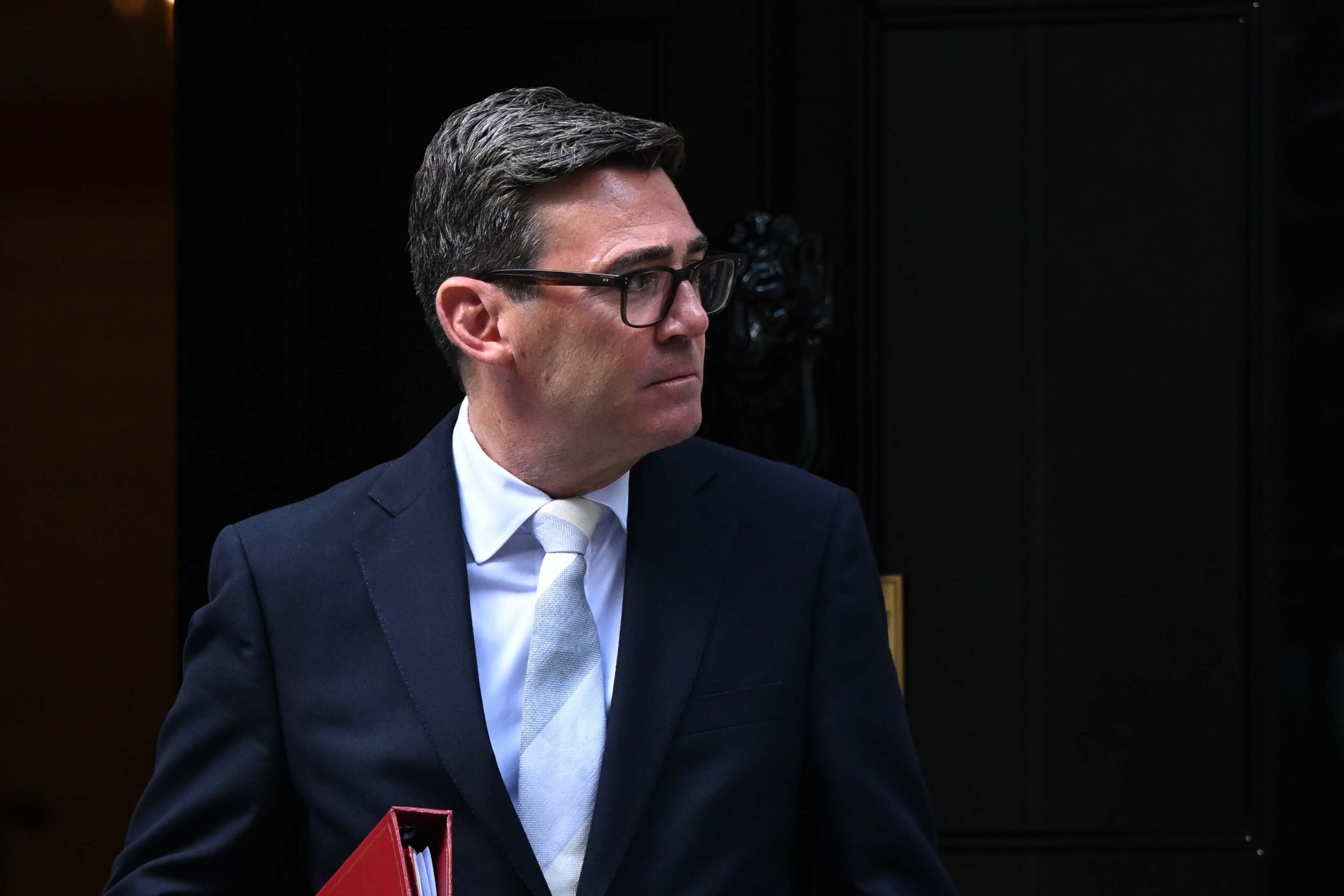
UK Special Coverage The prime minister has always been slippery, but sudden policy changes this early presage trouble. UK Special Coverage Photo by Rasid Necati Aslim/Anadolu via Getty Images “A Blairite, a Brownite and a Corbynite walk into a bar. The barman says, ‘What are you having, Andy?’” OK—it’s an old joke dating from Prime Minister Andy Burnham’s past (failed) Labour leadership campaigns. He has long been accused of telling people what they want to hear, of being a political chameleon. But no one expected him to elevate it into a principle of government. On tax, nationalization, infrastructure and the European Union, Burnham is, as they say in Manchester, all over the shop. His predecessor, Sir Keir Starmer, became renowned for policy reversals on issues such as the winter fuel payment for pensioners and attempts to cut the welfare bill. But at least Starmer waited until there was a rebellion in his party before abandoning the policy in question. Andy Burnham has been performing dizzying U-turns even before MPs return from their summer break. This week alone we learned of two significant policy “amendments". Before he entered Number 10, Burnham promised “the biggest council-house building programme since the postwar period.” This week it emerged that his multibillion-pound house-building program will not be led by councils after all. Instead, councils will be funded along with housing associations, construction companies, and other “strategic partners”—the same bodies that have been building housing in recent years, or failing to. Burnham’s people insist that many of the first tranche of 70,000 new homes will be for social rent—a little more than half of them, in fact. But the whole point of his council-house promise was that elected local authorities would be in charge of this building bonanza, as they were after the Second World War. They clearly will not. This is probably just as well, since councils, especially Labour ones, are not exactly renowned as efficient managers of infrastructure projects. But that is not the point. It is a strange way to restore public faith in politics to make grand-sounding pronouncements that last no longer than a news cycle. Backing away from nationalizing the troubled Thames Water, along with other privatized utilities, is also probably a wise decision. Putting Thames into public control would cost about £2 billion up front, invite a cascade of legal action from creditors and shareholders, and make the government the fall guy for every loss of drinking water or leak of sewage from this incontinent utility. Yet in June Burnham told the Guardian: “Public ownership is absolutely an option. I would say for Thames Water, that is what should be done.” He has long argued for bringing utilities back under state control because “shareholders can never lose and the bill payers never win.” Tell that to Thames Water’s shareholders, such as the Universities Superannuation Scheme, who have already seen their equity stakes reduced nearly to zero in successive write-downs. Privatization may or may not have been a mistake under Margaret Thatcher—public enemy number one for Burnham—but to say that shareholders can never lose betrays a staggering ignorance of economics. Abandoning nationalization is only the latest U-turn. Last year, Burnham said he wanted Britain back in the European Union. That was ruled out during the Makerfield by-election campaign. He said the country should not be “in hock to the bond markets,” only later to recommit to the fiscal rules on tax and spending observed by his predecessor. He also mused about raising the frozen tax-free personal allowance in income tax—and then didn’t. He said he favored replacing council tax with a land value tax. That has disappeared into the ether, along with his proposed review of the Barnett formula, which gives Scotland a large public spending advantage over England. You might have expected that to figure in the PM’s signature project to devolve money and power to local authorities and mayors. Not so. He made clear in his August 27 visit to Wales that Barnett was not on the table. Indeed, observers are beginning to wonder what has become of “the biggest rebalancing of power our country has ever seen.” Number 10 North was supposed to help “make power flow” out from Whitehall departments across the country. English mayors were to get a share of income tax and local business taxes. They already collect property tax, but Burnham argued that this was not enough to deliver “good growth in every postcode and hope in every heart,” as he famously put it. Subscribe Today Get daily emails in your inbox British voters are beginning to lose heart. Burnham promised “breathing space” in the cost-of-living crisis. But his cut in VAT on domestic electricity has been dwarfed by the latest rise in the energy price cap. A long, hot summer of drought now threatens to turn into a winter of discontent as British households face ever higher food prices and heating bills. His next U-turn is expected to be on his promise not to raise income taxes on working people inherited from his predecessor. Burnham has long been regarded as a slippery customer. The former Labour chancellor Alistair Darling supposedly compared him to “a lorry on ice” because he could not keep a straight course. But there was widespread relief when the unloved Starmer stood down in June. Burnham’s administration was launched on a wave of goodwill even from non-Labour voters. But gilt yields are rising ominously once again and are now actually higher even than during the bond-market crisis four years ago under the Tory prime minister Liz Truss. Burnham is the seventh prime minister in a decade. Britain just cannot afford another dud in Number 10.
On His Big Policies, Burnham Begins Backtracking
Full Article
Original Source
Read the full article at Theamericanconservative →KhanList aggregates and links to publicly available news content. We do not host full articles from third-party sources. Always verify important information with original sources.