
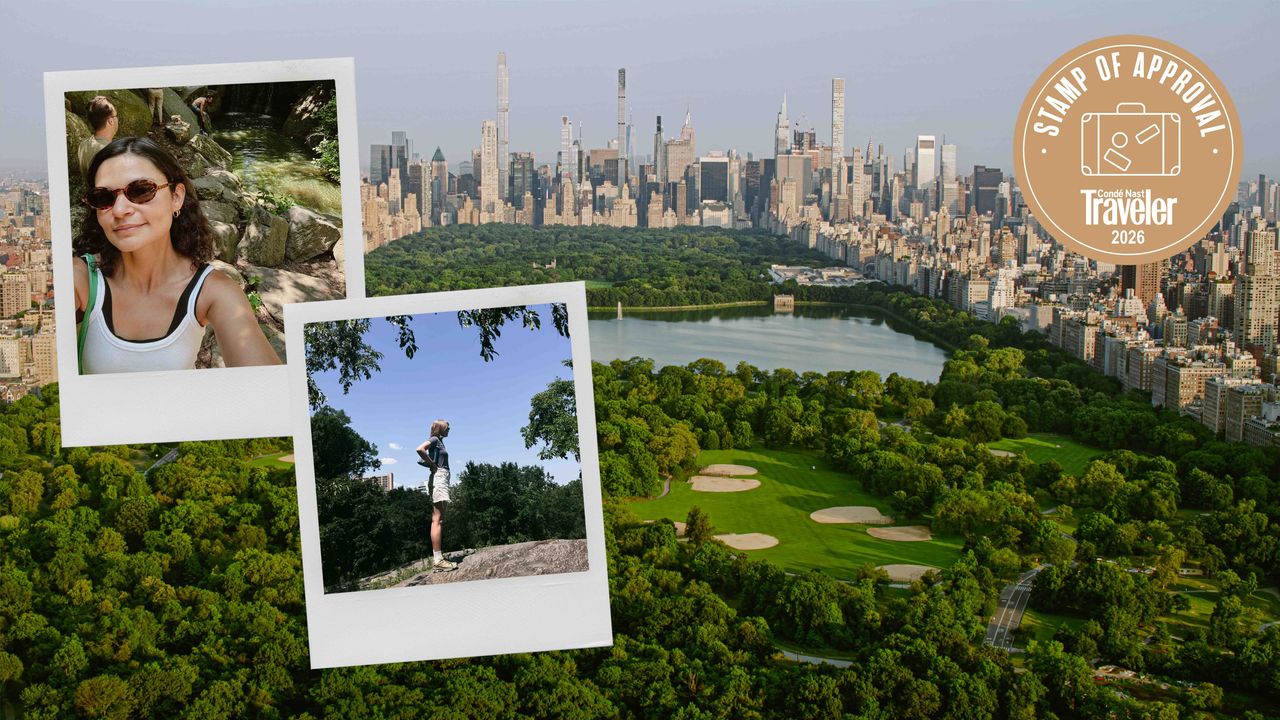
Once, on a wintry morning walk through Central Park, a place I’m lucky to say is a 10-minute walk from my home, I came face to face with a coyote. Whether it was Romeo or Juliet, two of Central Park’s most elusive mascots, I’ll never know. But the sighting felt like some kind of divine privilege, a fast track through the 10 years it takes to become a real New Yorker. As I continued to wander through The Ramble, graced with a few red cardinals for good measure, I was struck by the realization that there’s still so much of my beloved backyard that I don’t know.I pride myself on my average ability to spit New York City facts on the fly. I love to point out the hidden peephole at the IFC Center whenever I’m passing by the theater with a friend, or make sure whoever is sitting next to me on the Q from Brooklyn keeps their eyes peeled for Masstransiscope (1980). But when it came to Central Park, all I could really offer was the trick to finding your way via the cast-iron lampposts. (For those who don’t know: Each post features a stamped code, the first two or three digits matching the nearest cross street, the final digit revealing what side you’re on—east if it's even, west if it’s odd). Thank you, TikTok.AirbnbUncover Central Park's Secret PlacesI love playing tourist in my own city, but I’m skeptical of any experience that might lead me to museums about ice cream or sex. When a scroll through a list of NYC-specific Airbnb Experiences prompted me to “Uncover Central Park’s Secret Places,” I was immediately intrigued. The tour, led by Bruce Racond of Revolutionary Tours, promised to take curious attendees to sites rarely seen above 100th Street, from cascading waterfalls to Revolutionary forts. Racond hosts these tours every Sunday for a little over a dozen guests, and I was able to book a spot for my friend and me a week in advance. We were told to come prepared with comfortable shoes, as we’d be winding through the park for two and a half hours.Racond showing us portraits of Olmsted and Vaux Jessica SulimaWhen I found myself early for the tour on a bright July afternoon, chatting with some fellow group members, I was surprised to learn that not only were many of the attendees locals like me, but a few were repeat guests of Racond’s. One loyal couple in particular, who came to the city from Long Island, told me that despite spending the entirety of their lives in New York, they’ve consistently found themselves enlightened by Racond’s knowledge.When our extolled, khaki-wearing tour guide turned and asked what brought me here, I mentioned the coyote, asking him if he’d ever seen one of the four-legged paramours. He said no, but not without recognizing my profound luck. I liked his vibe immediately—like that of a good-humored history teacher. Born in New York, Racond knows the city intimately; he’s a historian with a master’s degree in American history and has been a licensed tour guide for over 25 years.Most people who come to Central Park, Racond began explaining as we huddled at our meeting point on 100th Street and Central Park West, don’t venture above 85th Street. (It’s me, guilty as charged.) He started the tour by showing us a few photos of the park’s creators, Frederick Law Olmsted and Calvert Vaux, as well as some images of the vast, swampy landscape that comprised Central Park before it became what it is today.The rustic Glen Span Arch is located in the North Woods GettyIt might sound elementary, but it’s always good to be reminded that Central Park didn’t just look like that. It took an incredible amount of manpower—between the years of 1858 and 1873 (the Civil War happened in between)—to create the illusion that it was a natural pocket of Manhattan’s fabric, a reactionary response to the Industrial Revolution. As we entered the North Woods, which made us feel as though we were miles away from the city, Racond spoke with such palpable delight about his favorite arches and made-to-look-real springs.Perhaps my favorite fact: That gray bedrock that children and couples love to pile up on—otherwise known as the Manhattan Schist—is a metamorphic rock formed 450 million years ago, and the makers of the park quite literally molded it with gunpowder. As for the original soil, it wasn’t fertile enough to sustain the beautiful oak and hickory trees you see today, so five million cubic yards of dirt and rock were brought in from New Jersey and Long Island.A Revolutionary War cannon on display at Fort Clinton GettyWithout giving all of Racond’s secrets away, I will say this: We climbed up to Blockhouse No. 1, a military fort left over from the War of 1812 (the oldest surviving building in the park!); we paid a visit to the Harlem Meer (which I now know is a Dutch word for “small sea”); and we listened closely to the trickling bird bath at the fairytale-like Conservatory Garden. One of our last stops was a bench dedicated to Andrew Haswell Green, whom Racond considers an underrated hero for helping to found nearly every public institution we hold dear (from Central Park to the New York Public Library) and for consolidating the five boroughs.Ever since I was a bridge-and-tunneler visiting from New Jersey, Central Park had always been‚ unironically, one of my favorite places in New York. And the reason for that is simple: Second to the subway, it’s one of the few places in the city where tourists and locals of varying social classes cohabitate peacefully. And if there’s one thing Racond wanted us to take away from this tour, it’s that this feeling of democracy was a deliberate design from Olmsted and Vaux. Whether I have the coyote or my tour guide to thank, I’m happy to know more about the creation of Central Park—and feel more committed than ever to rethink the places I find most familiar.How to book with Revolutionary ToursThe “Secret Places of Central Park” walking tour is available to book directly on the Revolutionary Tours website, as well as on Airbnb. Racond typically offers it in the warmer months, when the weather makes for a more pleasant walkthrough, but if you’re visiting NYC in the winter, consider booking Racond’s other tour, “The Central Park Experience,” which takes guests through the lower half of the park, touching on the hidden histories of recognizable sites like Bethesda Terrace and the Delacorte Theater. Next up on my list? Racond’s tour of Brooklyn, which includes a historic overview of the Brooklyn Bridge. (Did you know 21 elephants and 17 camels stress-tested the bridge in 1884?) And for fans of Hamilton, there’s a tour for that, too.More Central Park toursRun the highlights of Central ParkGet a little exercise on vacation, or switch up your weekend routine with this running tour that winds around Central Park's greatest hits.Fish in Central ParkYes, it's legal to fish in Central Park (catch-and-release only), and this tour is guided by a seasoned New York angler who will tell you all about the park's sunfish and crappie.Central park bike tourOn this highly rated bike tour, you'll pass the Dakota apartment building where John Lennon lived, loop around Cleopatra’s Needle, and visit the Jackie Kennedy Onassis Reservoir.Central Park movie sights guided bike tourCentral Park is an iconic filming location. On this bike tour, you'll stop by famous spots from Home Alone 2, Elf, Serendipity, and Avengers.
On a ‘Secrets of Central Park’ Tour, I Saw a Different Side of Manhattan’s Beloved Backyard
Full Article
Original Source
Read the full article at Cntraveler →KhanList aggregates and links to publicly available news content. We do not host full articles from third-party sources. Always verify important information with original sources.