
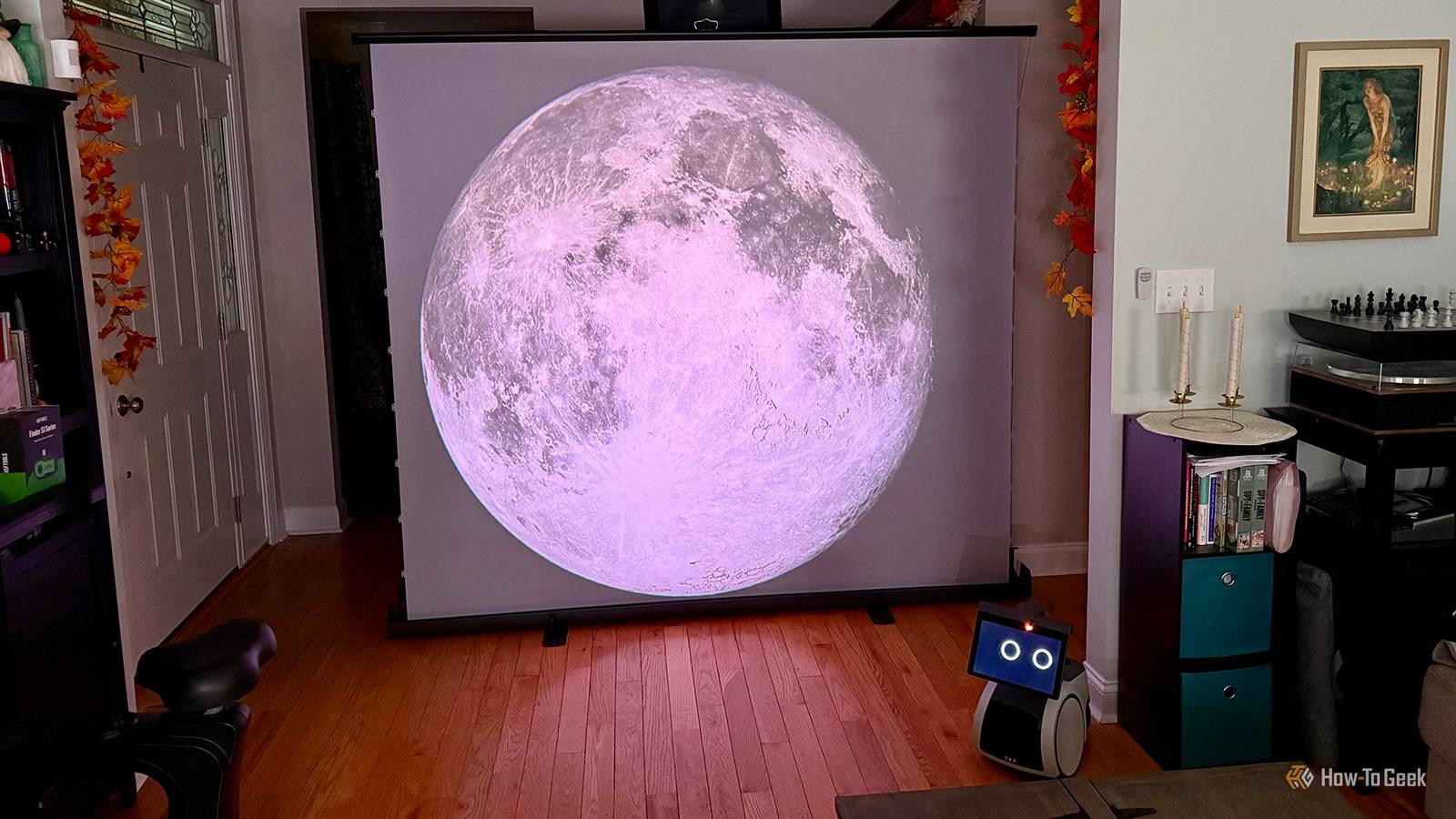
Published Nov 17, 2026, 2:00 PM EST Sydney Butler is a technology writer with over 20 years of experience as a freelance PC technician and system builder and over a decade as a professional writer. He's worked for more than a decade in user education. On How-To Geek, he writes commerce content, guides, opinions, and specializes in editing hardware and cutting edge technology articles. Sydney started working as a freelance computer technician around the age of 13, before which he was in charge of running the computer center for his school. (He also ran LAN gaming tournaments when the teachers weren't looking!) His interests include VR, PC, Mac, gaming, 3D printing, consumer electronics, the web, and privacy. He holds a Master of Arts degree in Research Psychology with a minor in media and technology studies. His masters dissertation examined the potential for social media to spread misinformation. Outside of How-To Geek, he hosted the Online Tech Tips YouTube Channel, and wrote for Online Tech Tips, Switching to Mac, and Helpdesk Geek. Sydney also wrote for Expert Reviews UK. He also has bylines at 9to5Mac, 9to5Google, 9to5Toys, Tom's Hardware, MakeTechEasier, and Laptop Mag. Everyone has a different set of goals when choosing a display device for TV, movies, gaming, or even just regular desktop use. If you're weighing up buying an OLED TV or a modern laser projector, I expect your main motivation is probably total screen size, and perhaps space is also a consideration. It's true that a modern laser projector will take up less space than an OLED (especially short-throw models) and that projectors can create an image larger than any OLED in existence. However, if these two factors aren't high on your list of priorities, there's something else you should consider. Look at the projector screen before you turn anything on It's so obvious Making sure it's all level.The author, defeated. Look at a projector screen with the projector off. If the lights in the room are on, the screen will be lighter than if they are off. This seems obvious, but the implications for image quality are enormous. Whatever light the screen reflects that's not coming from the projector itself raises the so-called "black floor." This is why ALR, or Ambient Light Rejection screens, have become the (expensive) gold standard. These screens have a surface specially designed to reflect light from the projector but not ambient light from other sources. It lowers the black floor and improves contrast. But even the best ALR screen in the darkest room can't match the contrast ratio of an OLED panel, despite a dark room being the optimal way to use a projector. Anything other than this best-case scenario doesn't end well for the projector, since an OLED will obviously outperform it more and more as the ambient light level rises. Not that OLED TVs don't suffer from ambient light. It's why I personally don't like glossy models and prefer a matte coating on a TV. There are also specialized coatings to prevent glare and reflections on TVs these days. However, people who are buying an OLED for use in a dark home theater setup avoid these because they have an impact on color and sharpness. Wait for the first name in the credits The writing's on the wall Credit: Ahmd_khlfr/Shutterstock.com Another easy visual test to show just how much OLEDs dominate projectors when it comes to contrast is an end-credits sequence. If you're watching those white-on-black credits in a dark room on an OLED, the words can appear to float in space. However, during this contrast torture test, you can still see the entire projector screen's edges, showing that it has a higher light level than the surrounding environment. Incidentally, this is also a test where OLED's other main competitor, mini-LED, tends to fall apart. You can see a halo around the lettering on a black background, which is an issue known as "bloom." For now, OLED technology is the only commercially-available solution that can handle this level of contrast without blemishes. That said, one rarely-discussed issue that some OLEDs have is "near-black" issues. While any OLED can make a pixel true black by simply turning it off, they aren't all equally good at that transition from the lowest power state in the pixel to the off state. This means cheaper or older OLEDs actually suffer from crushed blacks or other artifacts in "near-black" parts of the content. That said, even those OLEDs do a better overall job than a projector in these situations. Even with the lights off, your room can light up the screen On reflection, there are more issues A projector has to throw a lot of light to make a visible image, and not all of it ends up on the screen or heads back directly to your eyeballs. Bright scenes on the projection screen can reflect off a nearby wall or ceiling, which then turns the light from the projector itself into ambient light. Again, an ALR screen is your best defense against it, but it's not possible to eliminate the issue completely. Some new projectors have algorithms that dynamically change the laser light level based on the scene content, so it doesn't use more light than necessary to project the image correctly, but it's just a mitigation and mainly works to improve contrast. I’d choose the OLED for what happens after dark While new competitors like RGB mini-LED or Micro RGB TVs are slowly moving in on OLED's crown and can get pretty close, if I had to choose one technology for watching movies in the dark, it would be an OLED. If money were no object, I'd get the biggest OLED possible and mount it on the wall where the projector screen would be. Of course, it only works in a situation where an (up to) 97 or 98-inch size is enough for you. Above that level, you'll need to pick a different TV technology, or go with a laser TV. In other words, unless you absolutely must have a specific screen size, or at least a specific cost per square inch, OLED is the way.
OLED TV vs. Projector: The winner is obvious when you see a blank screen
Full Article
Original Source
Read the full article at Howtogeek →KhanList aggregates and links to publicly available news content. We do not host full articles from third-party sources. Always verify important information with original sources.