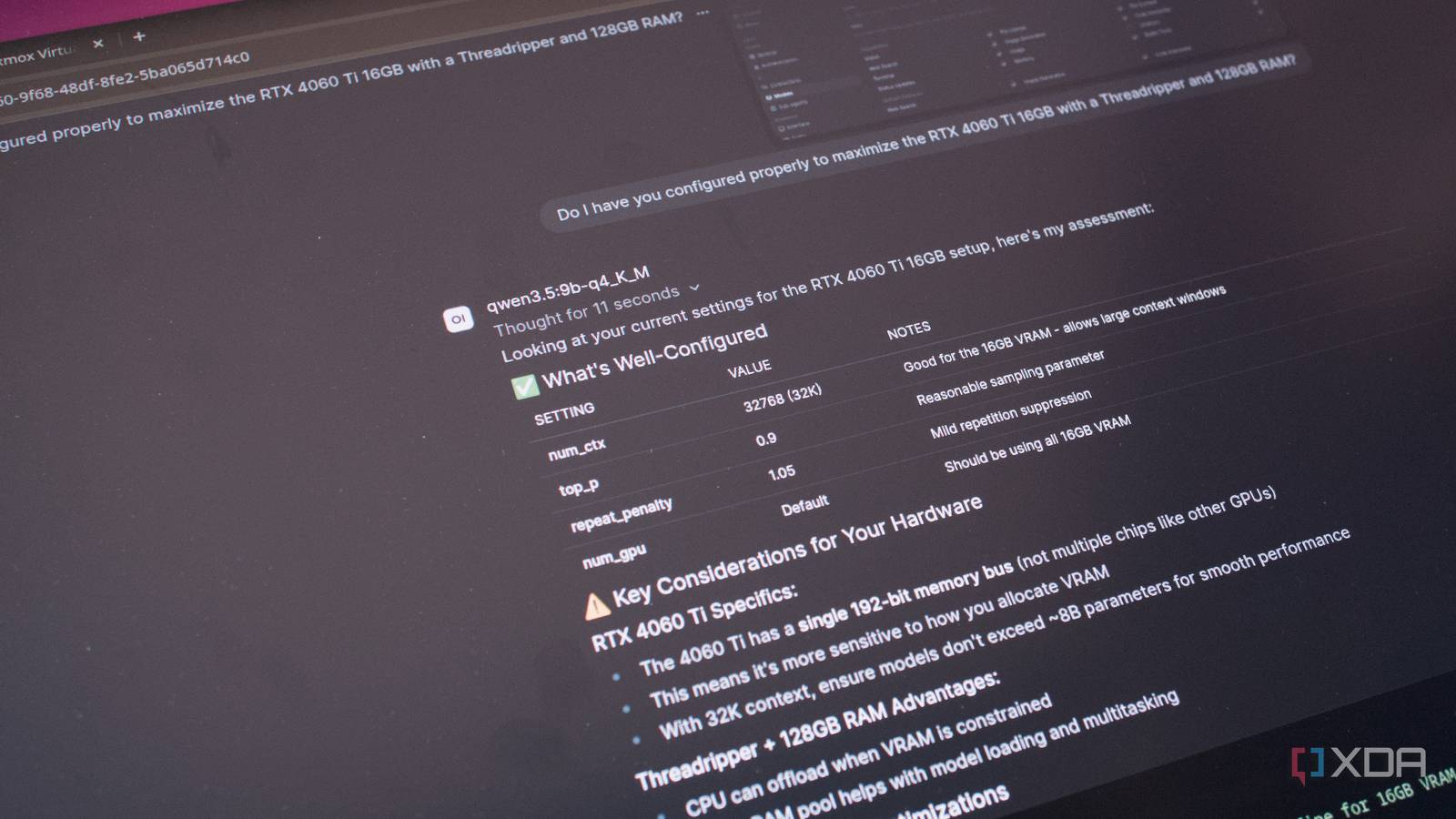
Published Jul 29, 2026, 2:30 PM EDT Richard is the PC Hardware Lead at XDA and has been covering the technology industry for almost two decades. He's been building PCs since young, and when not creating content, you can often find him inside a chassis somewhere. You've seen us cover the Nvidia GeForce RTX 3090 and how this now six-year-old GPU refuses to give way to successors for running local AI inference. It's all down to the VRAM and how much is available on the card, making this quite the compelling purchase, even if it happens to be from several generations prior. The RTX 3090 may not be as good for gaming today, but it remains an absolute monster of a local large language model (LLM) powerhouse. It's all in the RTX 3090's VRAM. There's plenty of it to go around Credit: Nvidia One highlight of the RTX 3090 is the 24 GB of GDDR6X VRAM. That sounds like a lot because it is, even by today's standard. The RTX 5080 only comes with 16 GB, so the RTX 3090 is still quite the GPU for cramming as much data into memory. This so happens to be just what running local AI inference demands. Plenty of high-speed memory, and even though it's GDDR6X, it's still vastly speedier than DDR5 memory, making it ideal for local agents. What good is a more capable model if your more powerful GPU doesn't have enough memory to run it? It's what has led to the RTX 3090 becoming one of the most desirable GPUs for a home lab setting. Originally launched as the flagship GPU for gaming with a whopping 10,496 CUDA cores, third-gen Tensor Cores, and 24 GB of GDDR6X VRAM on a 384-bit memory bus, the RTX 3090 is a beast that can clock out at 936 GB/s for memory bandwidth. It was excessive for the time, but these specifications have allowed the card to age like fine wine. Local AI applications are notably more accessible these days, and more people are looking to cut subscriptions with cloud counterparts and run some AI at home. That's where a dedicated discrete GPU comes into play, and you'd struggle to find one better than the RTX 3090 for value. If you were to purchase a brand-new Nvidia GPU, you'd have to go with the obscenely expensive RTX 5090 to get more than 24 GB of VRAM. This difference in memory can matter more than raw compute performance. Because what good is a more capable model if your more powerful GPU doesn't have enough memory to run it? The RTX 5080 alone is better equipped than the RTX 3090 yet has two-thirds of the RAM, resulting in smaller models being the only option to cram all that data into memory. It's faster, sure, but that doesn't matter if slower system RAM has to come in to pick up the slack with the data overflow. VRAM determines what models you can use And running out of memory can lead to terrible performance An AI model is only as good as the underlying hardware. It's why you'll experience different performance with the same model but on two very different systems. Local inference requires memory to store the parameters, but it also needs to fill the RAM up with temporary data, runtime overhead, and cache. So that parameter number doesn't always translate well to how much memory is required to run that model well. Even though a 14 GB model will fit on a 16 GB GPU, it won't run terribly well without optimization. And all that supplementary data is vital for getting the most out of these AI agents. The cache, especially so, which saves the model from having to repeat the same work whenever a new token is generated. If you plan to run some longer context workloads, this is where considerable memory overhead can mean the difference between getting better results sooner or having to start a fresh session because you've hit the limit of what the GPU can physically offer. The RTX 3090 can run models up to around 20 GB or so without issue. The ability to automatically offload some of the model into normal system RAM is great for allowing people to try larger models, but it does result in severe penalties to performance that can sometimes lead to sub-par results with responses. If the model and all its data cannot fit on the same GPU, the system now has to work between the GPU, CPU, and RAM over PCIe. That may not sound like a substantial stepdown, but it's huge compared to the speeds GPU memory can run at. So while newer GPUs may be outright faster than the RTX 3090, they may have to offload some of the work to slower memory, which is where the RTX 3090 can shine by keeping it all locally and offering better sustained performance. The difference between 16 GB and 24 GB is massive Not just in VRAM capacity but also model support A smaller, faster 8B model may be perfect for answering simple questions and providing lightweight text generation, but for anything heavier, you'll need substantially more parameters to work with. Coding along needs some hefty models to really handle difficult problems, analysis, and lengthy instructions. This is where 24 GB of VRAM can make a world of difference compared to 16 GB. I've run countless models on my old RTX 4060 Ti with 16 GB of VRAM. It's not the fastest GPU on the block, but the RAM is pretty good for the price. Bump that up to 24 GB with beefier internals, and now you're looking at having the ability to load up 27B parameter models with quantization. And this is where the RTX 3090 can really hold its own against newer cards. The choice of model has a heavier impact on output quality than the hardware used to increase token-generation speed. And just because it's a few generations old, that doesn't mean the RTX 3090 cannot perform once everything is loaded into VRAM. 936 GB/s of memory bandwidth is great compared to modern consumer-grade GPUs. LLM inference has multiple phases, and they all require different parts of the system. Prefill is far more compute-intensive, while decoding will rely more on memory bandwidth as the GPU will need to read the model weights with each processed token. So, it's not that the RTX 3090 offers better performance for local inference; it's why people are flocking to the GPU for AI. It's because it has enough RAM for more breathing space with larger models. It's an unusual addition to the used market Sourcing a used GPU for AI inferencing is more challenging if you don't have the funds to cover the cost of more expensive workstation cards or an RTX 5090. The RTX 3090 is in an interesting position with listings that aren't too out of reach thanks to those offloading their older GPU for an upgrade. It still demands quite the chunk of change to be parted with, but it's a fantastic local AI-crunching GPU compared to other options. NVIDIA RTX 3090 A superb GPU available at reduced prices for running local AI workloads.
Old Nvidia GPUs with 24GB VRAM are crushing new cards at local AI inference, and here's why
Full Article
Original Source
Read the full article at Xda-developers →KhanList aggregates and links to publicly available news content. We do not host full articles from third-party sources. Always verify important information with original sources.