
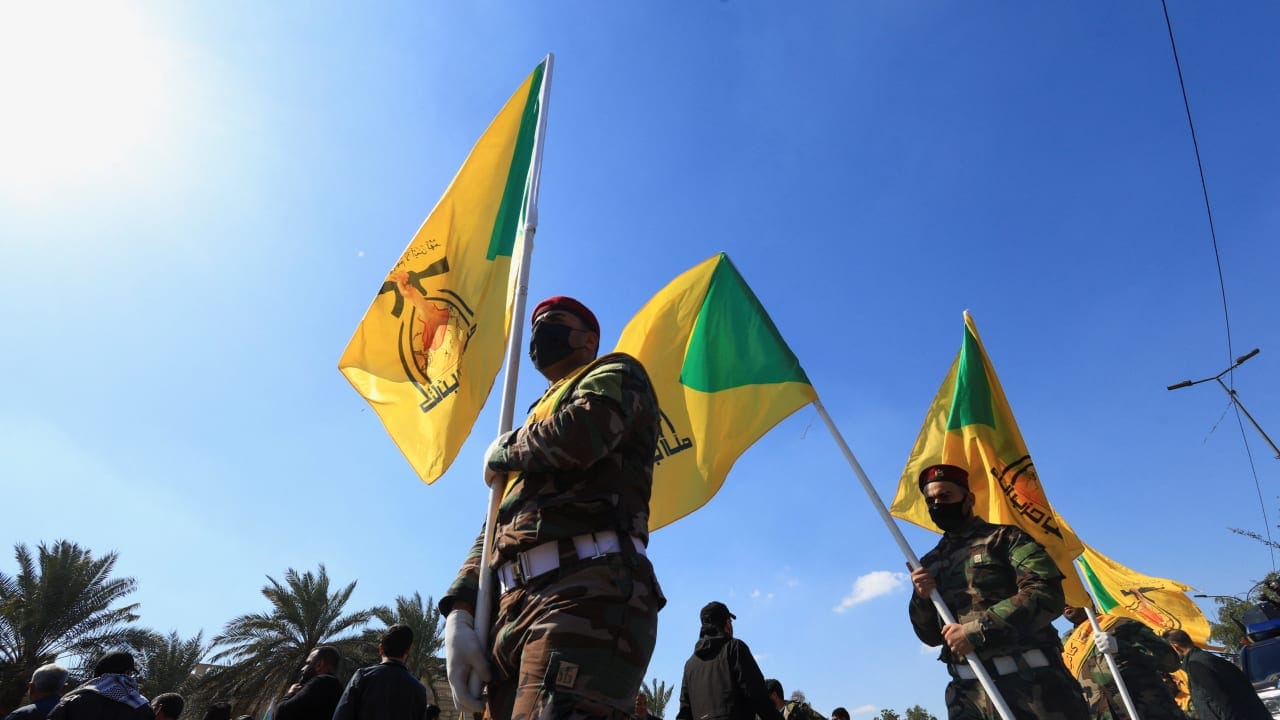
This is a potential turning point in Iraq. Iraq has sent troops to the Jurf al-Sakhar area over the weekend.Follow us on GoogleMembers of the Iraqi armed group Kataib Hezbollah hold flags during the funeral of their members, who were killed in an airstrike that targeted a Hashd al‑Shaabi headquarters near the western al‑Qaim district on the Syrian border, amid the U.S.-Israel conflict with Iran, in Baghdad, Iraq, March 2, 2(photo credit: REUTERS/THAIER AL-SUDANI)NOVEMBER 14, 2026 22:31Iraq investigated illegal oil smuggling that appeared to be taking place from an Iranian-backed militia stronghold.A report at Asharq Al-Awsat explained some of what is happening and noted that “an Iraqi security committee began investigating suspected fuel smuggling in Jurf Al-Sakhar, north of the Babil province, on Friday, amid mounting tensions between the government and Kataib Hezbollah over the area and efforts to bring weapons under state control.”This could be a turning point for Iraq. Iraq sent troops to the area over the weekend. However, it’s unclear whether Baghdad has the power to finally deal with the militias and their state-within-a-state economic and military empire.Will militias try to dominate the investigation?“Footage showed a large military deployment before committee members met commanders believed to be from the pro-Iran Kataib Hezbollah. Sabereen News, an outlet close to armed factions, broadcast a Kataib Hezbollah commander addressing Interior Ministry officers,” Asharq noted.The question is whether the militias will try to dominate the investigation, essentially investigating themselves. Security Media Cell chief Saad Maan denied that the militias were involved.Mourners attend the funeral of members of the Iraqi armed group Kataib Hezbollah, in Baghdad (credit: REUTERS/THAIER AL-SUDANI)A security source told Shafaq News that the committee conducted an initial inspection. “Prime Minister Ali Al-Zaidi formed the committee Thursday, placing it under the Popular Mobilization Forces (PMF). Its members represent the prime minister’s office, intelligence and anti-corruption bodies, the Oil Ministry, security agencies, forensic authorities and the Energy Police,” the report noted.Jurf Al-Sakhr, also known as Jurf Al-Nasr, is a strategically important area in Iraq's Babil province, southwest of Baghdad. Located near the Euphrates River and the routes connecting Baghdad to the Shiite holy cities of Karbala and Najaf, it has been a center of conflict for more than two decades. Historically, the area was populated primarily by Sunni Arabs, including members of the Al-Janabi tribe.During the Iraqi insurgency against the US that followed the 2003 US invasion of Iraq, Jurf Al-Sakhr became a stronghold for Al-Qaeda in Iraq. ISIS subsequently established a presence in the area, using it to threaten nearby cities and transportation routes.In October 2014, Iraqi security forces, supported by Shi'ite militias and Iranian advisers, recaptured Jurf Al-Sakhr from ISIS after months of fighting. The area was subsequently renamed Jurf Al-Nasr, meaning "bank of victory."However, the defeat of ISIS did not lead to the return of the local population. Tens of thousands of Sunni residents were displaced, and the area became a restricted military zone linked to Iranian-backed militias.More than a decade later, many families still cannot return. Iraqi officials have cited security concerns, unexploded ordnance, and damaged infrastructure, while displaced residents and Sunni politicians have accused armed factions of preventing their return. Meanwhile, the militias have thrived.Site identified as Kataib Hezbollah stronghold in IraqJurf Al-Sakhr has since become an important stronghold for Iran-backed militias, particularly Kataib Hezbollah, which operates within Iraq's Popular Mobilization Forces (PMF). Research published by the Combating Terrorism Center at West Point identified the area as a major Kataib Hezbollah military hub, with facilities associated with weapons manufacturing, storage and testing.The district remained a thorn in Baghdad’s side because it illustrated the challenges facing the Iraqi government in asserting control over armed factions. It was also a symbol of unresolved Sunni displacement, sectarian divisions and Iran's influence over Iraq's security landscape.Oil smuggling allegations are now the major news in Iraq as Baghdad seeks to confront Kataib Hezbollah. Jurf Al-Sakhr has recently become the focus of a new controversy involving alleged oil smuggling and the Iraqi government's efforts to assert control over Iran-backed armed factions.According to Rudaw, Iraqi Parliament Speaker Haibat Al-Halbousi ordered the formation of a temporary parliamentary committee to investigate intelligence reports concerning oil smuggling through Jurf Al-Nasr. The investigation followed an Alhurra report detailing a classified 19-page Iraqi Interior Ministry assessment prepared in October.Report describes tanker trucks transporting stolen oilThe assessment reportedly identified four sites where oil stolen from government pipelines was processed or stored in makeshift facilities. Investigators used five years of satellite imagery to trace the operations, which allegedly began in 2021. It appears oil is smuggled to Iran and also to other places.The report described tanker trucks transporting stolen oil through official checkpoints and concluded that "oil smuggling operations are still ongoing in Jurf Al-Nasr" because the area was under the "control and protection of one of the armed factions." An Interior Ministry source previously told Alhurra that Kataib Hezbollah exercised "complete control" over the area. These allegations have not been established through judicial findings.Iraqi Prime Minister Ali Al-Zaidi, who is relatively new to the job, ordered an executive investigation. According to the Iraqi News Agency, he chaired an emergency security meeting on Saturday and ordered suspects referred to the judiciary and several security and administrative officials dismissed. Zaidi is backed by the US.The controversy came amid growing tensions between Baghdad and Kataib Hezbollah over government efforts to bring armed factions under state control. Rudaw reported that Zaidi met with PMF Chairman Falih Al-Fayyadh, Badr Organization leader Hadi Al-Ameri and PMF Chief of Staff Abdul Aziz Al-Mohammadawi, known as Abu Fadak, amid efforts to defuse the confrontation.Zaidi's office said the government remained committed to policies that "reinforce state sovereignty and the rule of law."The government has extended its deadline for armed factions to surrender their weapons until June 30, 2027. Kataib Hezbollah remains among the groups resisting unconditional disarmament. The dispute illustrates how Jurf Al-Sakhr has become a focal point in the wider struggle over militia influence, illicit economic activity and the Iraqi state's authority over its territory.Follow us on Google
Oil smuggling probe in Jurf Al-Sakhar tests Baghdad’s power over Iran-backed militias – analysis
Full Article
Original Source
Read the full article at Jpost →KhanList aggregates and links to publicly available news content. We do not host full articles from third-party sources. Always verify important information with original sources.