
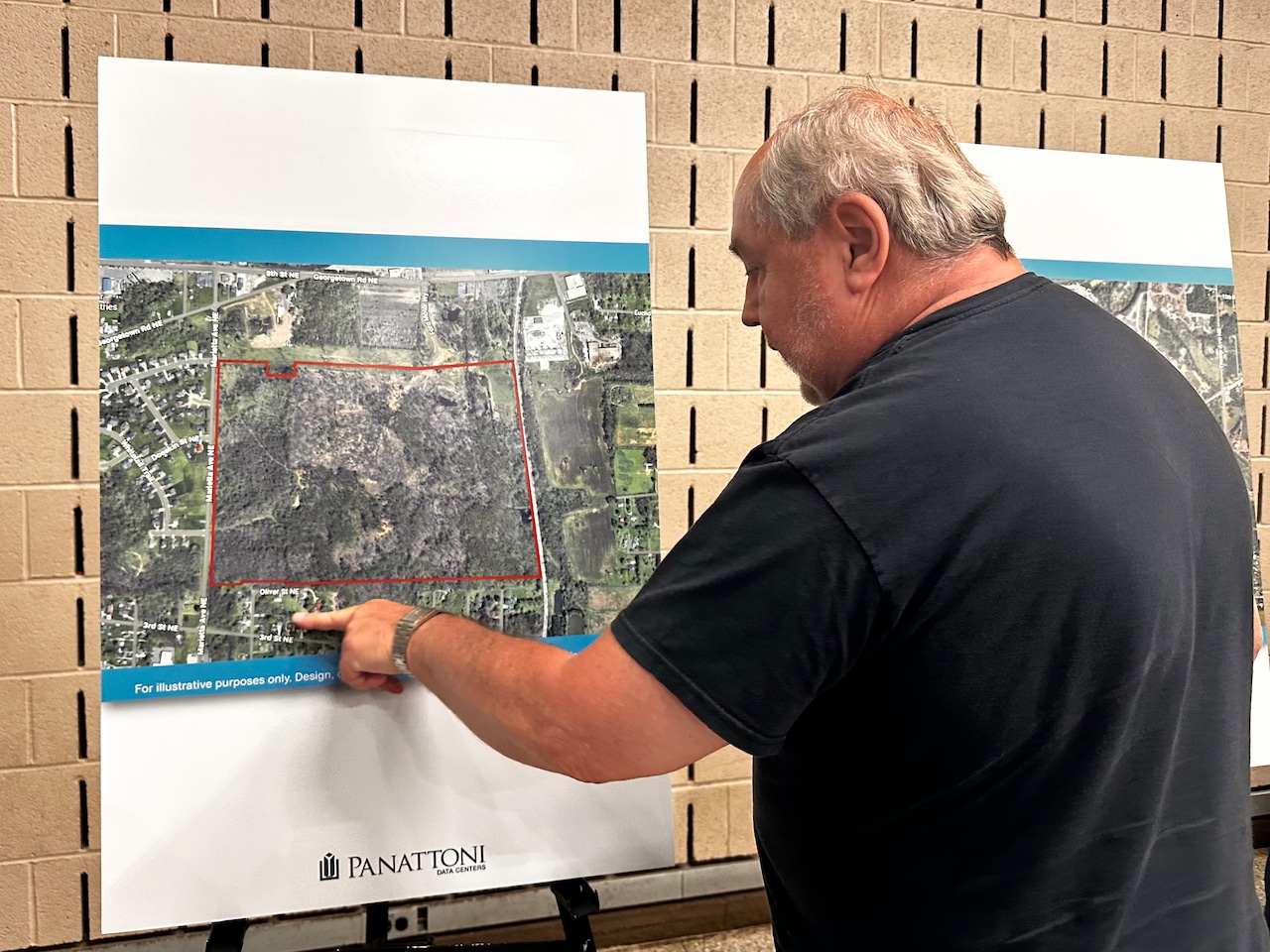
COLUMBUS, Ohio -- Brian Rager had just finished building his $30,000 dream garage when he learned a data center was moving next door.The 69-year-old Republican walked into an open house in Canton Tuesday to hear the developer’s pitch. After an hour, Rager saw only one way the developer, Panattoni, could be a good neighbor: “Cancel it.”The problem for Panattoni was that Rager’s mind was already made up. The problem for Republicans is that he isn’t alone. For years, pro-business Republicans treated data centers as economic development wins, offering tax breaks and incentives to lure them to Ohio. Then the politics changed. Seven in 10 voters now oppose having a data center near their home, up from 42% less than a year ago, according to a Heatmap Pro poll.The ribbon cuttings Republicans once celebrated became footage for Democratic attack ads, and the issue threatens to upend elections up and down the ticket.“(Ohio) Republicans are used to tapping the easy button this time of year,” University of Cincinnati political science professor David Niven said. “Suddenly they’ve replaced it with the panic button.”Boom to backlashShelby County farmer Chris Gibbs speaks at a rally in Lima and calls out Republican Sen. Jon Husted for his support of data centers.Ohio Democratic PartyWhen Google broke ground on a New Albany data center in November 2019, Sen. Jon Husted celebrated beside company leaders.“There are real benefits to real people who live here,” Husted, then Ohio’s lieutenant governor, said. The project meant jobs that helped families “pay the mortgage, pay for their cars, save for the future.”He predicted the investment would help turn Columbus into “the tech hub of the Midwest.”Husted was hardly alone.Then-Sen. Sherrod Brown, who now is challenging Husted in a bid to return to Washington, welcomed Amazon’s data center plans a few years earlier as “great news” and looked “forward to working to ensure that our region’s burgeoning logistics hub continues to grow.”At the time, data centers weren’t really controversial.They were moderately sized facilities that powered our online banking and cloud computing. But as our digital lives grew, so did the data centers. Facilities that once needed 50 megawatts of electricity gave way to sprawling campuses seeking hundreds or even more than 1,000 megawatts, enough power for a major city. Some developers even proposed building their own power plants to feed them.As electric bills jumped, communities began asking who would pay for new power plants and transmission lines. How much water would data centers consume? Why build on farmland instead of unused industrial brownfields?The industry did little to ease those concerns. Nondisclosure agreements sometimes kept even elected officials from knowing which companies were coming to town. Developers pushed for emergency clauses that prevented residents from challenging approved projects at the ballot box.“A lot of trust has been broken,” said Greg Lawson, a researcher at the conservative Buckeye Institute.Anger to actionAnita Smith, left, and Brenda Parsons, right, stand outside the Canton Civic Center on August 18, 2026 collecting signatures for an amendment to ban most data centers in Ohio.Anna StaverBack in Canton, Rager walked out of Panattoni’s open house and found another option waiting for him.Brenda Parsons stood outside with a clipboard, gathering signatures for a proposed constitutional amendment that would ban data centers larger than 25 megawatts.Parsons works with Conserve Ohio, the group behind the statewide effort. She said the signature campaign has been a truly bipartisan effort by people who are fed up with governments and big businesses telling them they don’t know what’s best for their communities.Her own involvement began when she learned a nondisclosure agreement had hidden a data center development on farmland near her home.“This is where I live,” Parsons said. “And it’s going to be right against my property.”Allison Meade, who helped organize Teays Valley Against Overgrowth in Ashville, said its core organizers include three Republicans and two Democrats.“Our community typically votes pretty conservative,” Meade said. “But I think they’re going to look at candidate stances on this before deciding how to vote.”Backyards to ballotsDon Leonard, the Democratic candidate for Ohio's 15th Congressional District, speaks against a proposed gas power plant development during an Ohio Power Siting Board Meeting at Teays Valley High School in Ashville.Anna StaverA recent memo from the National Republican Senatorial Committee warned that voter anger over data centers could threaten Husted’s election in November.“Republicans seem like they were caught flat-footed here,” Niven said. “They help unleash a data center plague and then appear surprised they are taking the blame for it.”Husted’s campaign said data centers “are, and should remain, a local decision” and pointed to his Ratepayer Protection Act, which would keep the cost of new power infrastructure from falling on families and small businesses.But the NRSC memo still called data centers an “anchor” around his campaign.Canton Republican Vic Vicenty hadn’t heard about the data center planned near his home until the day of Panattoni’s open house, despite public notices about the project. He told a company representative that he missed their messaging because he avoids most “liberal” news outlets. But Vicenty had seen Brown’s data center ad. He and other Republicans Cleveland.com spoke with were quick to point out that Brown did little to regulate data centers while in office. Vicenty doesn’t have to vote for Brown to hurt Husted. He could write in another name or leave the Senate race blank, something election officials call an undervote.“In my opinion, it’s going to be the undervote that could decide all the statewide races,” Lawson said.At an Ohio Power Siting Board meeting in Ashville, residents in red shirts packed a high school cafeteria to oppose a natural gas plant that would help power a nearby data center development.Republican Rep. Mike Carey won the district by 11 points in 2024. But his Democratic challenger, Don Leonard, drew raucous applause when he declared: “We will not become a dumping ground for our country’s addiction to AI.”Democrats aren’t the only ones trying to tap into that anger.Rep. Max Miller, a Republican trying to regain ground in his increasingly competitive reelection race, has come out in support of one of Ohio’s toughest proposed data center laws.The NRSC memo, however, did not advise Republicans to turn against data centers altogether.It said voters preferred Republicans who would require local approval for data centers and make developers pay their way over Democrats who would halt construction entirely.It also said technology companies must win back skeptical voters and repair what it called the industry’s “toxic brand.”In Canton, Panattoni’s trying to do just that. Adam Kramer, the company’s head of data centers for North America, said the project would not raise utility bills. And the company would mitigate noise, preserve trees around the property, and place generators at least 500 feet from neighboring properties—more than twice the distance local regulations required. He promised to hire local contractors and skilled tradespeople.“Whether people trust us, that’s for them to decide. But we’re here, we’re listening,” Kramer said. “We can show our track record that we’ve actually made changes based on feedback.”Rager wasn’t buying it.“If you believe all that, you believe in leprechauns,” he said.That may be the industry’s thornier problem. Developers can move generators, preserve trees and promise to pick up the tab. But none of that matters politically if voters don’t believe them.“The American people are still making up their minds on data centers, but the current perception is negative,” the memo states. “If Husted loses because of data centers, the industry will be blamed, and elected officials or other parties will learn a cautionary lesson.”
Ohioans are mad at data centers; Why that’s a problem for Republicans
Full Article
Original Source
Read the full article at Cleveland →KhanList aggregates and links to publicly available news content. We do not host full articles from third-party sources. Always verify important information with original sources.