
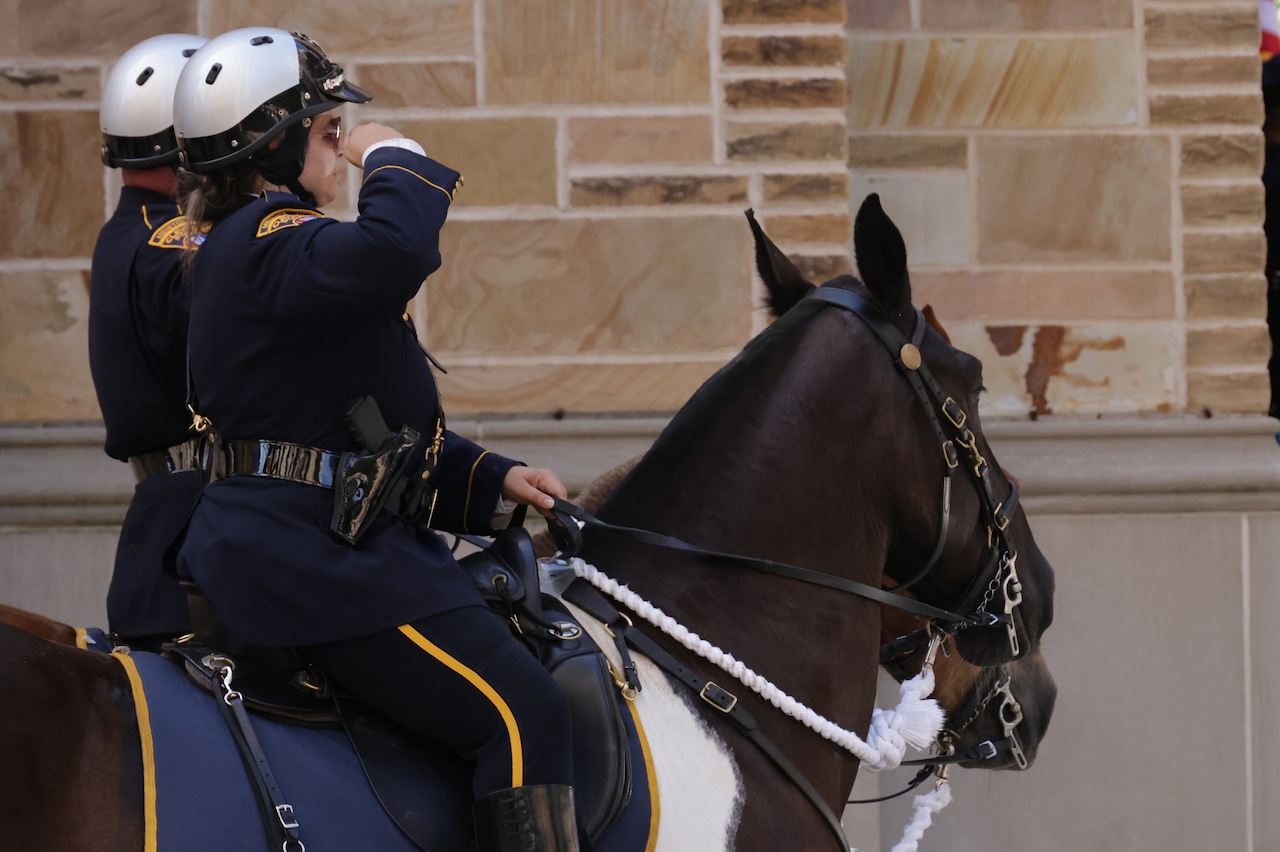
COLUMBUS, Ohio -- Equine veterinarian Dr. Ray Hephner is 75 and still works full-time – he loves his clients and their horses – but when he retires, probably “in the not-too-distant future,” his absence will be felt – and not just by his regular clients. A shortage of veterinarians throughout Northeast Ohio and the rest of the state is looming. In recent years, there has been less interest in rural, large-animal (cattle, swine, sheep, goats or horses) and food systems (swine, cows, poultry, sheep, goats) veterinary work than in small animal (dogs and cats) practices in cities and suburbs, a new report by the Farm Journal Foundation found. At the same time, a significant percentage of veterinarians are at or near retirement age. The report found 699 of Ohio’s 4,382 active licensed veterinarians were 65 and older. Another 719 were between 55 and 64.Altogether, 1,418 veterinarians, or 32.4%, were at retirement age or would reach it within a decade, according to the report, which the foundation submitted to the Ohio Department of Agriculture. This is of particular concern to people in the state’s top industry – agriculture, which contributes $124 billion to Ohio’s economy each year and employs one in eight of the state’s residents in direct farm work or adjacent fields such as the restaurant industry. The report does not estimate the number of open veterinary positions or identify specific shortage areas. But agricultural organizations that responded to Farm Journal Foundation rated the current shortage concern at an average of 7.9 on a 10-point scale.Their average concern rose to 9.1 when asked about the next 10 years. The foundation contacted 27 agricultural industry organizations, collecting responses from a dozen.To combat this shortage, vet schools – including Ohio State University – are increasing acceptance rates. New programs pay off student loans of veterinarians who practice in rural areas. Children in 4-H and Future Farmers of America are being encouraged to consider careers in rural veterinary medicine. Increased demandThere’s continuing demand for food-animal veterinary care, the report found, as many farms have consolidated and grown. From 2002 to 2022, Ohio’s hog and pig inventory increased from about 1.42 million animals to 2.75 million, despite a decline in the number of swine farms. Poultry sales increased from about 28.8 million birds in 2002 to nearly 124 million in 2022.The number of cattle farms fell from 28,672 to 21,126 in that same period, but cattle inventory remained near 1.2 million animals. Hephner, of Walton Hills, has been practicing for 50 years, having graduated from Ohio State University’s College of Veterinary Medicine in 1976. For more than 40 years, he’s taken care of the horses in the Cleveland Mounted Police Unit, he said. He also has had clients in Northeast Ohio’s Amish community for 30 to 40 years, taking care of horses used in farming and pulling buggies. And he has clients with pet or backyard horses. ‘You can only be stretched so far’Vets with solo practices such as Hephner’s generally do not sell their business when they leave.When he retires, his clients will have to find new people to treat their horses among the remaining equine vets or the vets who care for horses in what are considered “mixed” practices of also caring for other types of animals.“It’s harder and harder to replace veterinarians that go elsewhere or retire or whatever,” he said. “Some of these (remaining) practices only do emergency calls for their regular clients. So that leaves a lot of people, if they don’t have a regular veterinarian, in a tight situation as far as getting things taken care of for their animals. But you can only be stretched so far.” Equine and food-systems vets usually travel to the animals. Because they spend a lot of time in their vehicle, they can see fewer animals a day. “If you’re putting a lot of long hours in, you kind of have to prioritize your regular clients,” he said. “I know of some practices that have quit doing Saturday calls, also for the same reason: They’re short-handed and they can only do so much.”Small animals and vet debt Meantime, new veterinarians prefer small-animal practices in the cities and the suburbs, in part due to what they’re culturally used to. Fewer Americans live on farms or in rural areas these days. A gender divide has also led to veterinarians preferring small-animal practices.More women are veterinarians these days than men -- nearly 70% of veterinarians in the U.S. were women in 2023, according to federal statistics. But they’re less likely to practice in rural areas. Earning potential also explains the choice of many vets to work with small animals. Since small-animal vets see more pets in a day, they can make more money. OSU respondents to an American Veterinary Medical Association’s graduating senior survey in 2025 reported that new doctors of veterinary medicine carried an average debt of $201,389.Their average anticipated annual starting salary for full-time practice was $131,553. Just 26 respondents said they planned or preferred to work in a rural community out of a class of about 165.Hephner, a member of the Ohio Veterinary Medical Licensing Board, said he knows of new graduates with $300,000 of debt. “Right now, in the small animal part of the veterinary business, the starting salaries are much higher -- by 30% to 50%,” he said. “If you have a big debt, you’re kind of looking at how you’re going to make ends meet.”Expanding class sizes amid steep competitionThe competition for a spot in a veterinary school class is steep. The report stated OSU’s College of Veterinary Medicine received 3,191 applications for the class entering in 2025. It accepted 168 students, a 5.26% acceptance rate.Ohio residents submitted 370 applications and received 74 offers, the report said. OSU, which has the state’s only veterinary school, is increasing its class sizes to help with the shortage, Rustin Moore, dean of the College of Veterinary Medicine, said. “We’re increasing our class size from 165 to 200,” he said. “Other schools are increasing their class sizes and there are new schools being built. That will help in general the shortage.”The class size has long been 165 students, but the class starting this fall will have 177 students. Next year, it will increase to around 188. The following year, it will have 200 students, Moore said. However, more vet school graduates won’t fix the rural vet shortage if they all go into small-animal practices in the suburbs. Among OSU vet graduates from the classes of 2020 through 2024 whose first-known placement was in food-animal, large-animal, equine or a mixed practice, 53 entered one of those pathways, the report said. The largest group, 22 graduates, pursued equine internships. Eight entered food-animal general practice, four entered large-animal general practice and seven entered mixed-animal practice with a food-animal or large-animal emphasis, according to the report. Recruiting strategiesTo address this mismatch, OSU is targeting recruitment efforts at students more likely to return to rural practice, Moore said. “We know from other sources of information that someone who comes from a geographic area that you’re trying to fill – whether it’s veterinary medicine, human medicine, nurse, dentist, whatever – if they come from that area, they’re a lot more likely to go back,” he said. “So that’s part of what our plan and our strategy is with Protect Ohio.”OSU’s Protect OHIO initiative aims to add up to 35 Ohio students per class, expand large-animal training and rural immersion opportunities, and work with organizations such as 4-H and Future Farmers of America (FFA) to encourage interest in rural veterinary careers. Student loan forgiveness is also a strategy to attract rural veterinarians, the report states. Ohio may submit five shortage nominations annually to the U.S. Department of Agriculture’s Veterinary Medicine Loan Repayment Program. From 2010 through 2022, Ohio submitted 48 nominations, received 31 applications and had 10 awards, including new and renewal awards. That was a 32.3% award rate, compared with a national average of 38.6% over the same period, the report said. From 2022 through 2024, Ohio received 15 designations, 15 applications, six new awards and two renewals through the program. The USDA placed the program on hold for 2025, and the report said those allocations were expected to be used for 2026 applications.Ohio also offers a Resource Shortage Loan Program, administered by the Ohio Veterinary Medical Licensing Board. It raises the funds through a surcharge on vet licenses. The program can provide up to $10,000 annually and $20,000 total to qualifying veterinarians who agree to work in board-identified shortage areas, including large-animal and public-health needs.“These are all things that are being done to encourage students and help them financially be able to go out and get their feet on the ground in an underserved area,” Hephner said. This article was produced with assistance from AI tools and reviewed by Cleveland.com staff.
Ohio faces looming veterinarian shortage as 1 in 3 vets near retirement
Full Article
Original Source
Read the full article at Cleveland →KhanList aggregates and links to publicly available news content. We do not host full articles from third-party sources. Always verify important information with original sources.