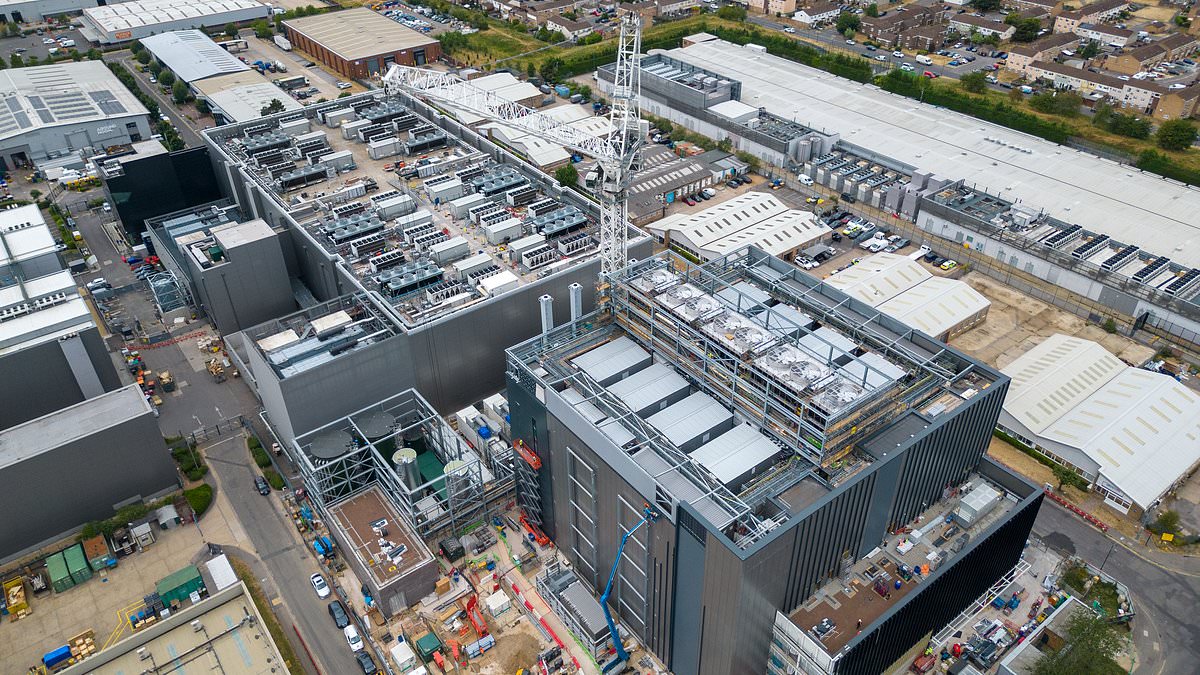
The energy regulator is mulling an upfront but refundable 'commitment fee' on large data centre development projects to free up Britain's electricity grid. Ofgem said it planned to ensure Britain's network capacity was used for projects that are 'ready and able to connect' and tackle speculative data centre projects clogging up Britain's electricity connections queue. Concerns have been mounting that some speculative developers are looking to cash in on higher land values. The upfront fee would be demanded when a project received a connection offer and returned when the data centre was switched on, Ofgem said. If the developer abandoned their place in the queue, the fee would not be refunded. Proposal: Ofgem is considering a new upfront fee on developers for large data centre projectsThe proposed commitment fee would be set within a range of £237,500 to £712,500 per megawatt, equivalent to around 2.5 per cent to 7.5 per cent of average project costs. Alongside the proposed fee, Ofgem said it was consulting on creating 'queue management milestones' for large data centre projects.Data centre developers would need to demonstrate 'tangible progress' through evidence including financial capability, commercial maturity and procurement activity if they wished to retain their place in the queue. The regulator said: 'Ofgem is concerned that a significant number of projects in the queue may not ultimately proceed, potentially delaying viable developments and creating misleading signals about future network investment needs.' Ofgem said there were 315 data centres currently queueing to connect up, representing 73 gigawatt (GW) of demand. This was almost 30GW above the entire country’s peak energy demand of 45GW. Eleanor Warburton, Ofgem's director for energy system design and development, said: 'Britain's electricity demand connections queue has more than tripled in size in less than a year, and consumers should not bear the risks created by speculative projects taking up space in the system.'The connections system must work for consumers and for the projects that are ready to invest, build and connect. Where speculative projects take up space in the queue, they can delay other schemes and create uncertainty about future network needs.'What are data centres? Data centres are buildings that contain information technology equipment. They are used to house, connect, and operate computer systems like servers for data storage, processing or distribution. They are important for cloud computing and artificial intelligence (AI). In September 2024, the government designated data centres as critical national infrastructure.Data centres are the nervous system of AI tools like chatbots but they have increasingly sizeable energy requirements as their usage and capability increases. Britain has around 450 large data centres, with London holding more capacity than the rest of Britain combined. The Slough Trading Estate has 30 data centres in its one square mile, which is the highest concentration in Europe.Owned and maintained by a variety of global companies, the data centres on the Slough Trading Estate store, process and transmit digital information for dozens of clients, including Amazon, Google and Microsoft. Locals have complained that the data centres make a low humming noise which they can hear at night. In February, Ofgem said there had been a 'surge in demand' for connection applications between November 2024 and June 2025, with a significant number coming from data centres. Again in February, Ofgem said there were 140 proposed data centres with energy demands of 50GW. The number of proposed data centres and energy demand levels has since increased, Ofgem said today. Applications for new power connections have more than tripled in less than a year. In July 2025, the National Energy Systems Operator estimated that data centres used around 2 per cent of all electricity in Britain. Most data centre energy powers the server computing directly, with around a third used for cooling. Government emissions forecasts for AI data centres were revised up by around 100-fold this month after officials acknowledged they had significantly underestimated the sector’s future energy demands. DIY INVESTING PLATFORMSAJ BellAJ BellEasy investing and ready-made portfoliosHargreaves LansdownHargreaves LansdownFree fund dealing and investment ideasinteractive investorinteractive investorFlat-fee investing from £4.99 per monthFreetradeFreetradeInvesting Isa now free on basic planTrading 212Trading 212Free share dealing and no account feeAffiliate links: If you take out a product This is Money may earn a commission. These deals are chosen by our editorial team, as we think they are worth highlighting. This does not affect our editorial independence.Compare the best investing account for you
Ofgem pledges crackdown on 'unviable' large data centres to free up electricity grid
Full Article
Original Source
Read the full article at Dailymail →KhanList aggregates and links to publicly available news content. We do not host full articles from third-party sources. Always verify important information with original sources.