
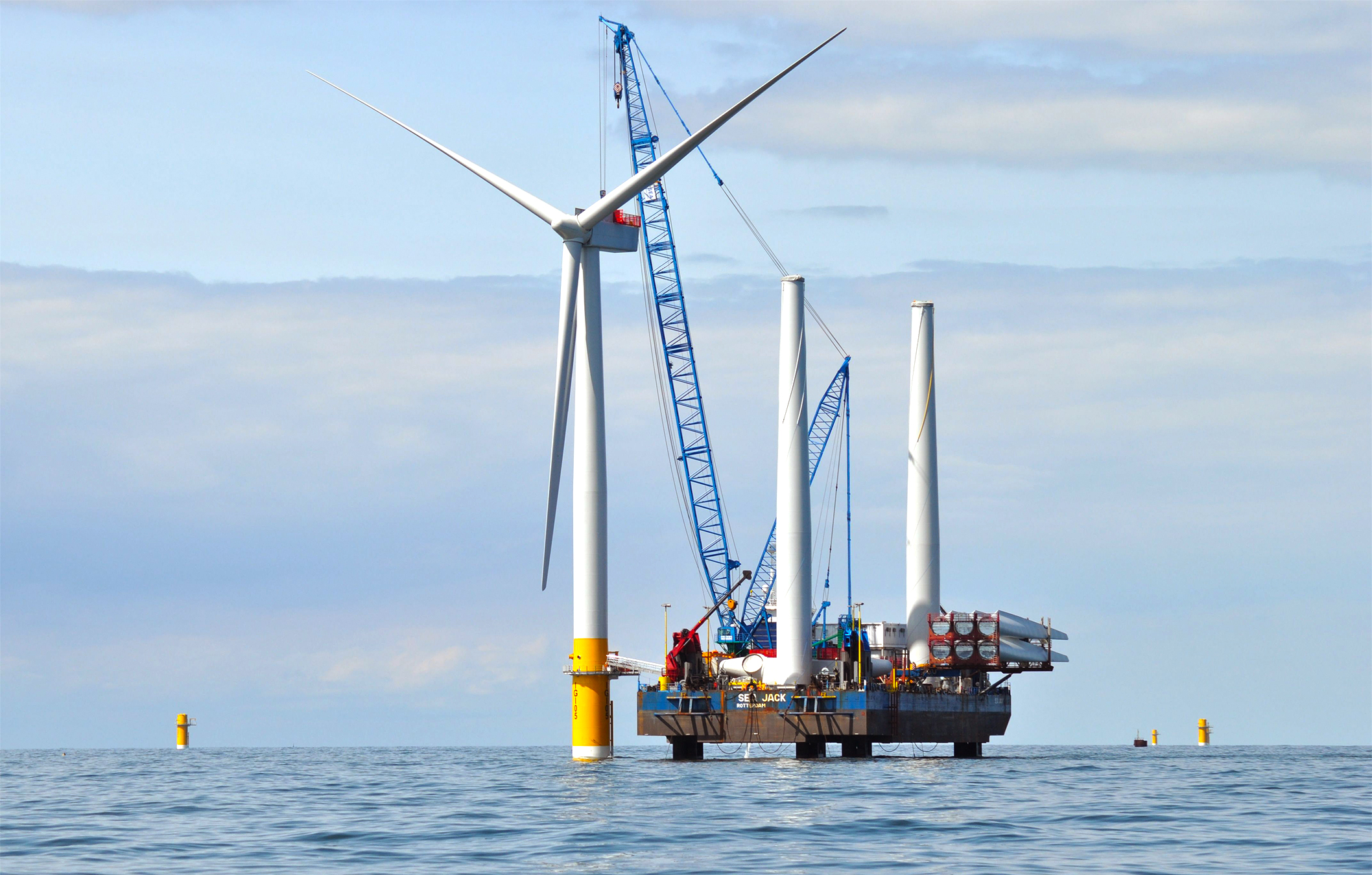
Offshore wind energy is on the rise. Many experts regard it as pivotal to building renewable energy grids around the globe, while also noting that it affects the marine environment.On one hand, offshore wind farms can create mini marine protected areas by prohibiting harmful practices like bottom trawling, and could eventually enable restoration of depleted habitats like oyster reefs.But they also bring notable challenges. Alongside well-documented threats to birds and bats, several issues remain poorly understood, such as how large-scale wind platforms might affect ocean circulation, temperature and the movement of sediment.Researchers say a host of measures can be taken to address some environmental challenges, while underlining the need for continued investment and innovation in solutions. This is Part Three in a Mongabay series about trends in the offshore wind industry. Part One describes the sector’s untapped potential and gaps between installed energy generation capacity and climate goals. Part Two describes challenges the sector faces in scaling up to meet climate goals. Offshore wind farms are growing in number, with many experts saying this renewable source of energy is vital to tackling climate change. But many of the same experts caution that responsible construction is required to avoid potentially large impacts on marine ecosystems as farms proliferate in the coming years. On one hand, offshore wind farms can provide an ecological boon by acting as de facto marine reserves that limit fishing, including harmful practices like bottom trawling. They can also be refugia for fish like sharks and rays, crustaceans and other species, as their structures act as artificial reefs. But offshore wind farms also have a host of negative impacts across their life cycle, from construction to decommissioning. Birds and bats risk collision with offshore wind turbines and loss of habitat to farms, while some marine mammals avoid wind farms or change behavior due to their presence. Bass Rock, Scotland, is home to the world’s largest colony of northern gannets (Morus bassanus). The offshore Berwick Bank Wind Farm is expected to have a significant impact on populations of seabirds like the gannets, as well as guillemots, kittiwakes, razorbills and puffins. Image by Stephen Magee/RSPB. Over the past two decades, offshore wind farm numbers have increased, particularly in China and Europe, and research into the ecosystem effects hasn’t kept pace. A 2025 paper underlines that 86% of possible impacts on ecosystem services remain “unknown.” Long-term data is lacking to understand how biodiversity and ecosystems respond to wind farms over their entire functional lifespan. Though research is relatively abundant from Europe, particularly the North Sea, it’s far scantier elsewhere where offshore wind is projected to grow, such as Latin America and Asia. Amidst this global proliferation of offshore wind farms, experts emphasize that mitigating ecological harm is becoming ever more important, particularly in already disturbed ocean environments. While incomplete, the industry is developing and starting to adopt a range of solutions to many of the problems. “We all know that the oceans are already under a lot of stress, and there’s already a lot of activities ongoing, [such as] fisheries and shipping,” Louise Combret, renewable energy policy associate at The Nature Conservancy, told Mongabay in an interview. “We usually aim for the three C’s. That’s making sure that offshore wind not only delivers for climate, but also for conservation and communities.” A turbine at the Rampion Offshore Wind Farm in the U.K. Image by Mat Fascione via Wikimedia Commons (CC BY-SA 2.0). Marine spatial planning Combret and other experts said carefully selecting where wind farms should be sited is the most important step. “It all starts with ecosystem-based marine spatial planning,” she said. “The best way of avoiding impacts and minimizing impact is always where you’re planning your projects.” Marine spatial planning is a process to map out different uses of the ocean environment. For wind farms, that means identifying sites that avoid potential conflicts with fisheries or ecologically sensitive areas. Thus far, implementation is lacking in what Aedan Smith, head of policy and advocacy for Scotland at the Royal Society for the Protection of Birds, a U.K.-based NGO, describes as a “gold rush” for optimal near-shore wind farm sites in the North Sea and elsewhere. “Our position is super supportive of renewable energy, which includes on and offshore wind,” Smith told Mongabay in a telephone interview. “But it needs to be done in such a way, as that it minimizes damage and ideally directly benefits nature as well.” He pointed to Scotland’s planned Berwick Bank Wind Farm. Once operational, it will have 307 turbines in the water producing enough energy to power roughly six million homes, and be one of the largest offshore wind farms in the world. But it overlaps heavily with important seabird populations, including breeding ground for multiple species. A view of the Sofia Offshore Wind Farm off the coast of the U.K. in the vast ecologically important sandbank known as Dogger Bank. Half of the farm’s 100 turbines are fitted with recyclable blades, according to project operator RWE, a German energy company. Image courtesy of RWE. Predicted impacts on seabirds are “really, really huge,” Smith said, with thousands of birds potentially killed in the first year of operation alone, according to environmental impact assessments. “This is really raising big alarm bells,” he added. The project was approved on the basis of it including a seabird compensation plan that proposes funding on-shore habitat protections, among other interventions. Large-scale wind farms are considered a “high conservation concern” for seabirds, and Berwick Bank is a clear case where marine spatial planning could have prevented siting a wind farm in an ecologically sensitive area, Smith said. Not all wind farms will have such negative impacts on bird populations and recent research from a site in the U.K. suggests that birds may adapt their flight paths to fly around some of them. Organizations such as BirdLife International have developed sensitivity maps to guide planning and offshore development. So far, maps for 13 European countries exist, including Belgium, France, Germany and the Netherlands. “The extent to which they actually inform planning, I would say, varies quite a bit between countries,” Daniel Mitchell, marine program manager at BirdLife International, told Mongabay. He and other experts note a need for greater international collaboration to map out suitable wind farm locations. Nature friendly innovation Knowing where to place a wind farm is a crucial step, but so too is constructing the farm and operating it in a “nature friendly” way, experts say. That requires acknowledging that wind farms leave an environmental footprint. And while the size of the footprint during construction and operation is coming into focus, during decommissioning and turbine removal it remains hazy. People often cite impacts on whales, particularly offshore wind farms causing whale deaths, as a serious concern, but there is no scientific evidence to back such claims, according to the U.S. National Oceanic and Atmospheric Administration. These often originate with local misinformation campaigns against offshore wind in places such as the U.S., U.K. and Australia (a phenomenon Mongabay will explore later in this series). Noise pollution from construction and to a lesser extent operation can disturb cetaceans and other marine life, while increased ship traffic also poses risks. Though no incidents have been reported, collisions with and entanglements in platform cables and anchors are concerns for floating wind farms that necessitate careful mitigation measures. These include selecting appropriate cable type and size, continual monitoring and creating a response plan. Certain steps can be taken to mitigate known impacts, such as deploying bubble curtains to reduce noise during construction, utilizing bio-friendly concrete or other “green” materials and modifying foundation structures to make them suitable as habitat. Other potential mitigation measures are in the experimental stage. Trials are underway to test acoustic deterrents to ward away wildlife during wind farm construction. Increasing the visibility of turbines using lighting or paint could help mitigate some impacts on birds, though probably not for all species. Trials, thus far, on land and at sea, have had mixed results. Research shows that corrosion protection using sacrificial anodes on wind turbines can leach metals into surrounding waters. A 2025 paper estimates European wind farms currently release more than 3,000 metric tons of aluminum, more than 1,000 metric tons of zinc, and 1.9 metric tons of indium annually, posing environmental and human health concerns for proposed shellfish and seaweed farms colocated with wind farms. Alternative corrosion protection methods are under investigation to reduce pollution volumes. At least for mitigating harm, there’s a lot that can be done, Combret says. But when it comes to restoring and achieving “net positive” benefits for ecosystems, there are no clear answers yet, though a host of promising pilot projects are underway. The idea is to integrate pro-biodiversity solutions into the technical design of the wind farm, said Marjolein Kelder, senior project lead at The Rich North Sea, a Netherlands-based NGO. Her organization is involved in trials to set oyster larvae on stones used for scour protection that stabilizes the seabed and prevents erosion around turbine platform foundations. It’s a potential way to restore the North Sea’s heavily depleted oyster reefs, especially well offshore where restoration has proven challenging. “That’s something we think is very promising,” Kelder said. However, the prospect of offshore wind farms becoming “net positive” for biodiversity hasn’t convinced everyone. “I think for me, it’s a bit misleading, because you will never be able to gain back what you destroy,” said Clémentine Mitoyen, a post-doctoral researcher at the Institut de Ciències del Mar in Spain. “There are some things that can be done within the offshore wind farm structure to improve it from a nature-inclusive perspective, but I think we need to be really careful not to see those improvements as a magic solution.” Oysters growing on rock. Trials are underway to restore oyster reefs around offshore windfarms in the North Sea. Image courtesy of The Nature Conservancy. Future unknowns The scale of wind farms planned for 2050 is enormous. The North Sea, for example, will see an increase from roughly 4,000 turbines today to potentially as many as 19,400, according to a study. Researchers are still working out the full consequences of this huge uptick in wind-energy absorbing platforms on coastal ecosystems. Multiple concerns have emerged about offshore turbines’ effect on the physical circulation of air and water, and on the local atmosphere and climate, said Wenyan Zhang, a researcher at the Helmholtz Center, a German research institute. His own research shows that wind turbines in the North Sea can move millions of tons of sediment and stir up thousands of tons of organic carbon each year during normal operations. Wakes caused by spinning blades also affect the mixing of water and can reduce the efficiency of turbines further down wind. One study found that wind and tidal wakes from turbines can also lead to long-term surface warming of 0.2° Celsius (0.36 °Fahrenheit) in areas close to wind farms, causing shifts in local climates with predicted changes to rainfall. Some research indicates that wakes from turbines influence ocean stratification, the layering of water based on density and temperature, Michela De Dominicis, senior scientist at the National Oceanography Centre, a U.K.-based research institution, said in an interview with Mongabay. Although the effect remains poorly understood, any substantive changes in stratification could affect the transport of oxygen and nutrients, with implications for marine food webs from miniscule phytoplankton up to marine mammals, she said. Both De Dominicis and Zhang said these circulatory effects depend on where wind farms are sited and their potential repercussions for ocean dynamics should be considered at the project planning and development stage, alongside biodiversity and other uses. “[Wind farms] are increasingly changing or reshaping the ocean dynamics, but we cannot make a simple judgment whether it’s good or bad at the moment,” Zhang said. “It’s still under discussion, so there’s no consensus yet.” Burbo Bank wind farm, operated by Denmark-based company Ørsted. As wind farms scale research shows they will cause changes to ocean dynamics, potentially affecting stratification, surface temperatures and the movement of sediment, with still-unknown consequences. Image courtesy of Ørsted. Farming the ocean’s wind responsibly Multiple experts underlined that governments should use policy solutions to drive continued innovation to minimize the ecological impact of wind farms. One approach is including “non-price criteria” in the auction and permitting process. This means environmental or social aspects of a company’s bid carry weight in authorities’ decisions about whether to proceed with a project. Some European auctions, such as in the Netherlands and France, have employed non-price criteria to spur innovation on environmental solutions. Offshore wind energy represents a key opportunity for governments, developers and energy companies to create a different model from the purely extractive one the oil and gas sector follows, says Shamini Selvaratnam, director of international climate and clean energy with the Ocean Conservancy, a U.S.-based nonprofit. That model should work with nature, she said. “This would start with avoiding sensitive areas, minimizing impacts during construction and operation, restoring habitat where possible, and integrating biodiversity planning from the beginning,” she said. “There are tools we already have in place to reduce some of the impacts and to build offshore wind in a way that protects biodiversity and supports coastal communities.” Biodiversity on an offshore wind turbine, including blue mussels, plumose anemones, sea urchins, common starfish, barnacles and tubeworms. Image courtesy of Royal Belgian Institute of Natural Sciences / Alain Norro. But achieving this vision of an industry attempting to work with nature is under threat as the sector faces challenges and economic headwinds that are ramping up costs. “Because the business case of offshore wind is under stress a lot of governments are looking into killing as much of the extra criteria as possible,” Kelder said. Since many promising interventions remain unproven and uncosted, experts worry they won’t be widely adopted. “If we kill all the learning and the pilots now, I think we’ll never get to that point where we can say we have a strong scientific evidence base,” she said. Banner image: A turbine being installed at Greater Gabbard offshore wind farm in the U.K. Image by the Department of Energy & Climate Change via Flickr (CC BY-ND 2.0). Citations: Fitkov-Norris, B., Witt, M. J., … Simmons, B. I. (2025). Offshore wind farms act as de facto marine reserves. Science of The Total Environment, 994, 179973. doi:10.1016/j.scitotenv.2025.179973 Knorrn, A. H., Teder, T., Kaasik, A., … Kreitsberg, R. (2024). Beneath the blades: Marine wind farms support parts of local biodiversity – a systematic review. Science of The Total Environment, 935, 173241. doi:10.1016/j.scitotenv.2024.173241 Hermans, A., Sumner-Hempel, A., Brink, X., Berkel, D., Olie, R., Winter, H., … Nijland, R. (2024). Elasmobranchs in offshore wind farms. Ocean & Coastal Management, 266, 107671. doi:10.2139/ssrn.5074948 Shao, K. T., Chang, C. H., Chen, C. Y., Ho, L. T., Shao, Y. T., Chiang, H., … Chang, C. (2026). Spatio-temporal dynamics of fish assemblages at an offshore wind farm and a comparison with mature artificial reefs. Frontiers in Marine Science, 13. 1733177. doi:10.3389/fmars.2026.1733177 Watson, S. C., Somerfield, P. J., Lemasson, A. J., Knights, A. M., Edwards-Jones, A., Nunes, J., … & Beaumont, N. J. (2024). The global impact of offshore wind farms on ecosystem services. Ocean & Coastal Management. 249. 107023. doi:10.1016/j.ocecoaman.2024.107023 Watson, G. J., Banfield, G., Watson, S. C., Beaumont, N. J., … Hodkin, A. (2025). Offshore wind energy: Assessing trace element inputs and the risks for Co-location of aquaculture. npj Ocean Sustainability, 4(1). 1. doi:10.1038/s44183-024-00101-6 Chen, J., Christiansen, N., Porz, L., Miao, B., Ma, M., Schrum, C., … Zhang, W. (2026). Sediment transport pathways and organic carbon burial impacted by offshore wind farms in shelf seas. Communications Earth & Environment, 7(1). 262. doi:10.1038/s43247-026-03390-6 Warder, S. C., … Piggott, M. D. (2025). The future of offshore wind power production: Wake and climate impacts. Applied Energy, 380, 124956. doi:10.1016/j.apenergy.2024.124956 Christiansen, N., Daewel, U., … Schrum, C. (2026). Cumulative hydrodynamic impacts of offshore wind farms on North Sea currents and surface temperatures. Communications Earth & Environment, 7(1). 164. doi:10.1038/s43247-026-03186-8 Cite this articleSean Mowbray (2026). Offshore wind may be good for the climate but can it be good for the ocean, too?. Mongabay Conservation news. DOI: https://doi.org/10.66709/news-329102 Credits Topics
Offshore wind may be good for the climate but can it be good for the ocean, too?
Full Article
Original Source
Read the full article at News →KhanList aggregates and links to publicly available news content. We do not host full articles from third-party sources. Always verify important information with original sources.