
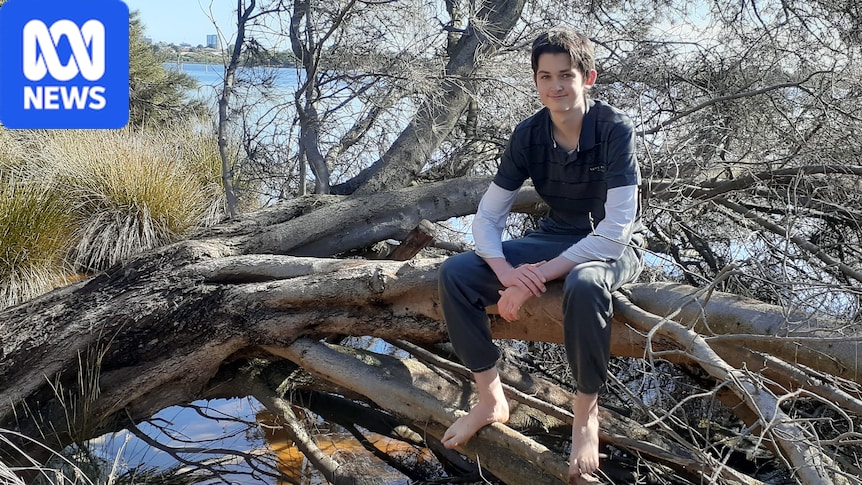
A WA Police officer who responded to reports of a 16-year-old Perth boy hunting strangers with a knife has told a coronial inquest he feared for his colleague's life before tasering the teenager.James Leslie Hollands, 16, was shot dead by police in May 2024 after the boy declared he was following "in the path of jihad", then stabbed a man and chased others, in what authorities later deemed a terrorist attack.WA Police Sergeant Sean Burns, who was one of the attending officers at the scene when James was fatally shot, has told the coronial inquest into the boy's death he and his colleague Constable Cameron La Fontaine had responded to Triple Zero calls about the teen."He kept coming closer to us. I kept telling him to drop the knife," Sergeant Sean Burns said."He kept coming closer, I thought at that point he was going to kill Constable La Fontaine."Sergeant Burns was visually emotional and appeared to be holding back tears while recounting the events of the night to the court.The court heard the two officers tasered James, but the boy continued to approach police, prompting the third officer at the scene, whose identity has been suppressed, to shoot James with his Glock handgun.Mental health issues not identifiedJames had been participating in the police-led Countering Violent Extremism (CVE) program since late-2022, which had deemed him a "low risk" of carrying out an ideologically motivated attack, the court heard.Acting Inspector John Lehane led the CVE unit in WA for part of the 1.5 years James participated in it, and told the court police should not lead the program.John Lehane says police should not have led the anti-extremism program James Hollands participated in. (Four Corners: Rob Hill)"The main challenge is that they [police] naturally prioritise threshold criminal acts … in the early stages of radicalisation," Acting Inspector Lehane said.But that approach meant some underlying concerns, including around mental health, were not identified in the early stages of intervention, and a public health-led model would be more appropriate, he said.The court previously heard evidence that James received a range of supports, including through public psychologists, a private psychiatrist, disability supports through the NDIS, a spiritual mentor and supports in his school.James Hollands had been in a police-run Countering Violent Extremism program in Perth for two years. (Supplied)Under cross-examination, Acting Inspector Lehane accepted James had a "comprehensive suite of therapeutic and mental health supports", but said it had been "very difficult" to attain."There was a reluctance for ownership of all of that … there was a lot of [work] that was done to achieve that," he said."I think with all the people that were working and dealing with him, that there were still some undiagnosed neurodevelopmental vulnerabilities."A [public health model] can identify that more holistically."Acting Inspector Lehane told the court he had reviewed programs internationally, and said models in Toronto and London did not have the same shortfalls he observed in WA."In both those models, mental health is at the forefront," he said.The coronial inquest previously heard evidence from WA Police security operations division Detective Superintendent Ricky Chadwick, who said a police-led model was ideal."Police go forward, have conversations with people … rather than procrastinate and wait and sit on our laurels," he told the court.The court also previously heard that consultancy firm ACIL Allen was conducting an ongoing review of each jurisdiction's CVE programs, with a report due next year.
Officer feared for colleague's life before teen shot dead, inquest hears
Full Article
Original Source
Read the full article at Abc →KhanList aggregates and links to publicly available news content. We do not host full articles from third-party sources. Always verify important information with original sources.