
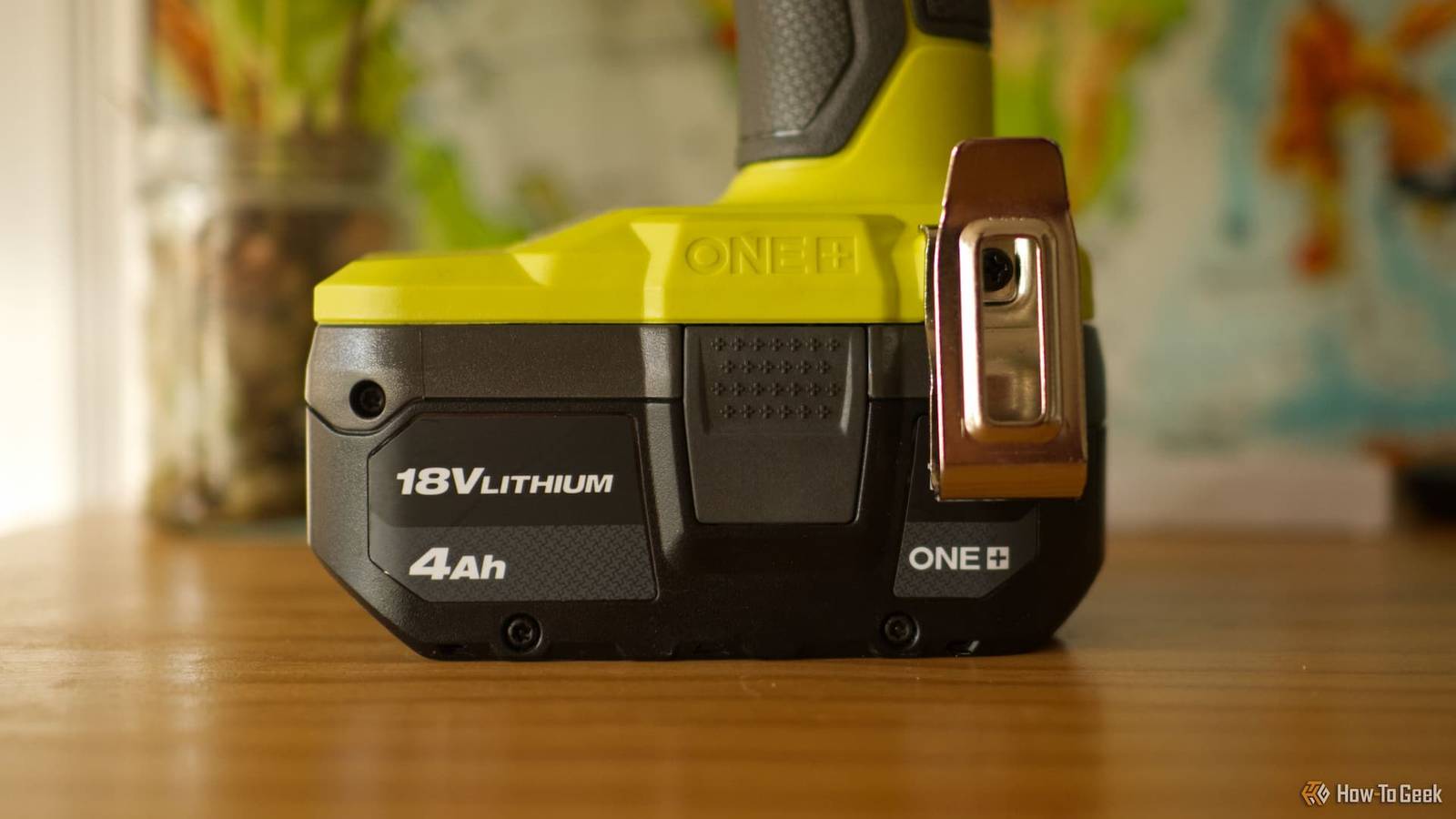
Published Sep 25, 2026, 10:00 AM EDT Aggy is a veteran writer and editor in the technology and gaming space. Having served as a Managing Editor for high-traffic digital publications, alongside being an editor and consultant for over a dozen sites. Aggy's published work spans a wide and respected array of tech and gaming outlets, including WePC, Screen Rant, How-To Geek, Android Police, PC Invasion, and Try Hard Guides. Beyond editorial work, Aggy's direct experience in the tech sphere extends to app development. Aggy has published two games under Tales and is always eager to learn and do more. He also likes working on computers and researching in his spare time. He knows about Windows, Linux, Audio, Video, and much more. I've seen plenty of posts online saying you absolutely need to buy a name brand, but they always assume you're running tools all day on a job site. If you're not, that advice doesn't apply, and following it will cost you money you don't need to spend. Off-brand power tool batteries have a bad reputation that made more sense when third-party manufacturing was less reliable than it is now. You need to consider whether your situation actually calls for a name-brand battery. Light use will never push a cheap battery hard enough Credit: Ryobi Contractors and tradespeople beat up their batteries, and from what I've seen, it's only getting worse. They run them all day, charge them back-to-back, and push them hard with high-torque loads. If you are a true tradesperson who works all day, spending extra on a name-brand pack makes total sense. If you work with these tools regularly, buy extra batteries. But if you're a homeowner who grabs a drill three or four times a year to hang shelves or assemble some flat-pack furniture, you shouldn't waste your money. You're just never going to stress the battery enough to justify the premium. By light use, I mean driving screws into soft wood, a little drilling here and there, hanging a picture, running a work light or a jobsite fan. That basically means you have nothing demanding to do. If the battery is barely working and only drawing a fraction of what it can handle, you can probably save money on batteries. Heat builds up inside a cell based on how much current you're pulling and how much internal resistance the cell has. Cheap batteries usually have higher internal resistance, which is normally a problem under heavy load. But when you're barely pulling any current, that resistance hardly matters. The battery never gets hot enough or pushed hard enough for those cheaper cells to show their weaknesses. Third-party batteries save you from getting locked into one brand Big power tool brands design their batteries to only work with their own tools. The whole point is to get you buying everything from one company, so your batteries stay useful. That system's fine if you're all-in on one brand, but it costs you when you need one tool that another brand just does better. Now you're looking at buying a whole new battery platform for one tool. A real OEM pack from most major brands gets pricey. That's a bad deal for something you'll only use once in a while. People pay that premium because it makes sense when you've got a lot of tools from the same brand. You buy two or three packs and swap them between your drill and your leaf blower. The cost spreads out, and the system pays for itself. Once you've sunk that money in, there's this creeping temptation to buy more tools from that brand just to make the investment feel less wasteful, even if those aren't the tools you'd have picked otherwise. That part's annoying. A third-party compatible battery is almost always the smarter call. Decent third-party packs won't damage your tool, and some even have USB-C charging built right in. Most brands don't make batteries for older tools The major manufacturers have pretty much all dropped support for the old battery designs. The classic 18-volt pod-style NiCd and NiMH packs are a good example. There are others, but they all basically got killed off in favor of the modern slide-in lithium packs everyone uses now. Since the original makers stopped producing genuine replacement packs for these old designs, anyone still running those tools has a real problem. You literally cannot buy a new, factory-fresh battery from the original brand. Your only shot at an official battery is digging through eBay, liquidators, or surplus sellers, hoping to find old stock that's been sitting on a shelf somewhere. When you do find one, it's usually marked up stupidly high for a battery that's lost most of its capacity just from sitting unused for years. I don't even humor the idea that finding a genuine version is worth the money. In this case, buying off-brand is both cheap and the only reasonable option. When a manufacturer walks away from a battery platform entirely, there's not much you can do. Ryobi doesn’t have this issue, but it’s one of the few brands that keeps older batteries around. Small accessories barely draw any real power Cheap batteries run basic gear Modern power tool battery platforms aren't just for saws and drills anymore. There are LED floodlights, radios, personal fans, little inflators, USB chargers, and a whole lot more. Those accessories ask for way less of a battery than an actual tool does. A circular saw or a rotary hammer really abuses a battery and needs a high-end one. That same battery would be wasted on a light or a fan, though. Off-brand packs might skip the fancy multi-pin communication and constant temperature monitoring, but they can handle a slow, steady drain just fine. A radio or a work light pulls power gently, so even a budget pack gives you all the runtime it's rated for without overheating or cutting out. Stop overspending None of this means off-brand batteries are always the right call. If you're a contractor running tools hard every day and your whole kit is from one brand, name-brand batteries are worth the money. Still, paying for the best equipment when you don't need it just isn't a smart idea. VANON 2Pack 3.6Ah P102 18 Volt Lithium ion Battery Battery Type(s) Lithium-ion (Li-ion) Brand Vanon The Vanon is a great replacement for Ryobi 18V Battery Compatible with Ryobi 18V Cordless Tools.
Off-brand power tool batteries are fine for homeowners—here's 4 times when they're not
Full Article
Original Source
Read the full article at Howtogeek →KhanList aggregates and links to publicly available news content. We do not host full articles from third-party sources. Always verify important information with original sources.