
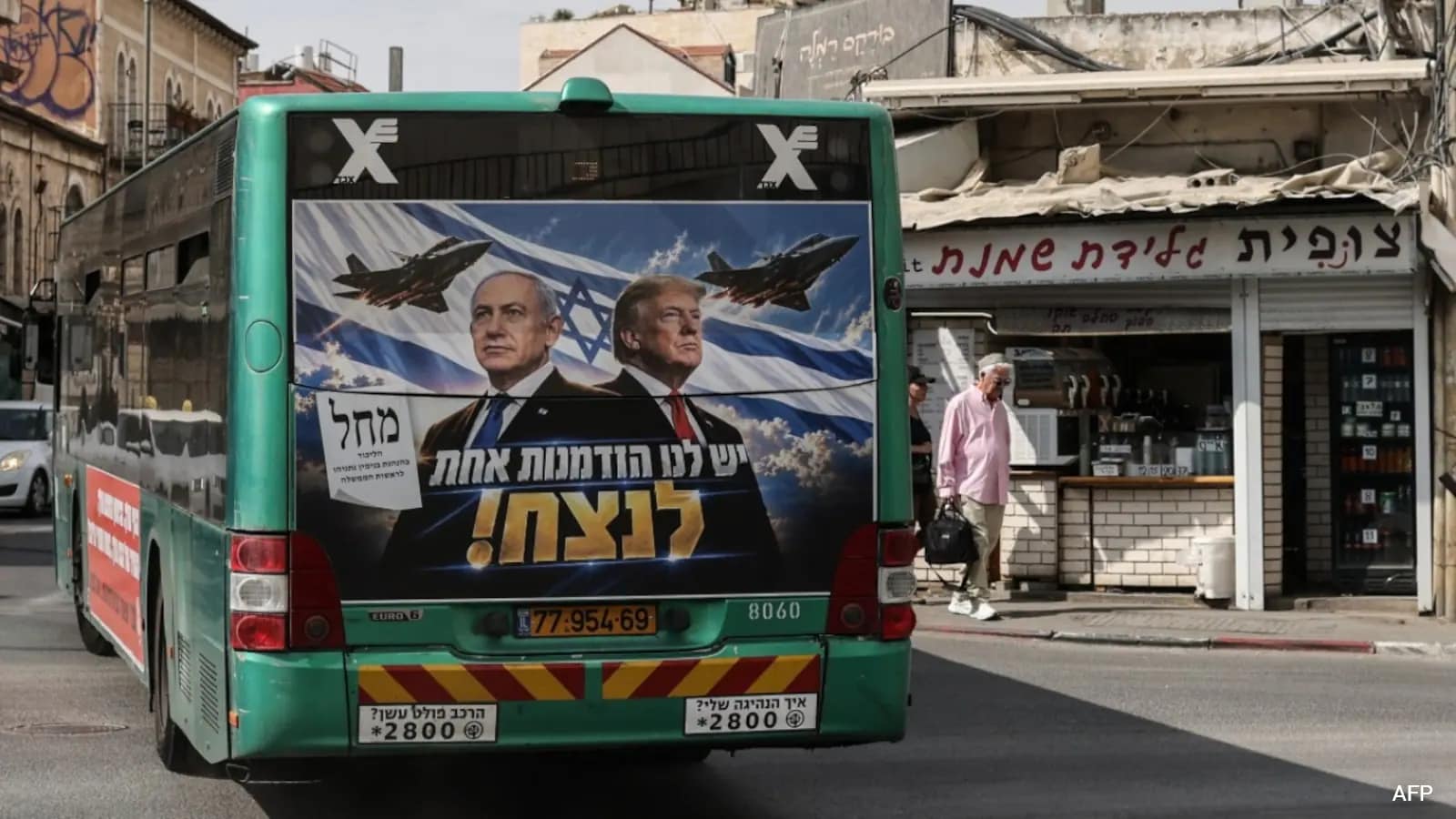
Tel Aviv: In Israel, the electorate remains divided over the government's handling of the October 7, 2023, Hamas-led attacks that reshaped the Jewish nation's security paradigm as voters move toward an election that could chart the country's political trajectory in three years.Prime Minister Benjamin Netanyahu is running for re-election on a platform of national security and military victories over Israel's regional enemies. But his ruling coalition is in for a tight race, with centrist opposition leader Gadi Eisenkot emerging as a serious challenger and far-right parties looking to shore up their support among young voters.Opinion polls released last week showed the ruling coalition and the opposition bloc in a very close race ahead of today's vote. Some half a million first-time voters are expected to vote, and tens of thousands of Israelis living abroad have reportedly returned to cast their ballots.The election is taking place amid a growing public debate over accountability for the October 7 attacks, the future of Gaza, compulsory military service for ultra-Orthodox Jewish men and the state of Israeli democracy.Netanyahu's Main ChallengerEisenkot, a former chief of staff of the Israel Defence Forces and now the leader of the centrist Yashar party, has sought to present himself as an alternative to Netanyahu's confrontational political style.His military background and his relatively low-key public persona have helped make him popular. He has also played on his working-class Moroccan Jewish roots, presenting himself as an outsider to Israel's political and economic establishment.Eisenkot cast the election as a choice over the country's identity during a campaign event in Ramle, a city with a large Ethiopian Jewish population. "These elections are about many things," he told supporters, ticking off security, the economy and education. The central question was what kind of Israel the country wanted to become, he said, describing his vision as Jewish, democratic, liberal, tolerant and egalitarian.Some 1,200 people were killed in Israel and 251 others taken hostage in the October 7 attacks, Israeli data said, and opposition leaders, including Eisenkot, have pledged to establish a state commission of inquiry.Netanyahu has been against such calls for an investigation, arguing against a process that would include the Supreme Court. There is a major sticking point over who is politically responsible for the security lapse.The opposition also wants to enforce court orders for military conscription for ultra-Orthodox men, a matter that has strained Netanyahu's governing coalition and divided Israeli society.Netanyahu's CampaignsNetanyahu has based his campaign on the argument that his government has bolstered Israel's security by launching military strikes against its enemies.His supporters cite the Gaza and Lebanon campaigns and the standoff with Iran as evidence that Israel has regained its deterrent power. Netanyahu has portrayed his opponents as less capable of dealing with the threats facing the country."He is partly responsible for October 7," said a long-time Netanyahu supporter in Jerusalem's Mahane Yehuda market, but added that the prime minister's military decisions since then had shifted the balance in the region.Other voters who previously supported Likud, Netanyahu's party, have shifted further right.A retired IDF official who runs a regional civil defence unit said the October 7 attacks had profoundly changed his perspective. He lives in the town of Sderot, just inside the Gaza border. He lost friends and colleagues in the attacks and said he would vote for the far-right Jewish Power party led by National Security Minister Itamar Ben Gvir, not Likud."My family, which has always voted Likud, has become more hardline politically since the attacks," he said.The change is a sign of a bigger problem for Netanyahu. Some voters blame his government for the security lapse; others think Israel needs to take an even tougher line with the Palestinians.Far Right's Youth FocusFar-right parties have worked hard to appeal to younger Israelis, using social media campaigns and messaging based around security, military strength and territorial control.An October 9 poll published by Israeli newspaper Yedioth Ahronoth indicated that over 16 per cent of first-time voters were expected to back far-right parties.At a religious college near Sderot, four teenagers said the Oct. 7 attacks had shaped their political outlook more sharply than that of their parents. They said they would vote for Religious Zionism, headed by Finance Minister Bezalel Smotrich.Their position reflects the thinking of some younger voters that negotiations and compromise haven't delivered security.The debate comes at a time of Israel's devastating military campaign in the Palestinian territory of Gaza. The Hamas-run Gaza health ministry, whose casualty figures have been broadly accepted as credible by the United Nations, reported more than 74,000 Palestinians killed by October 2026.The destruction in Gaza and the continuing argument over Israel's military goals continue to shape the country's international image and domestic politics.October 7: Survivors and Families The attacks have also bolstered calls for political change among Israelis who once lived in communities that were associated with the country's left.Reporting figures indicate that 47 residents of Nir Oz, one of the kibbutzim most affected on October 7, were killed, and 76 were taken hostage.Some of the returning residents are questioning whether the government's approach has made Israel safer.Galia Pauker, whose father-in-law died in the attacks, said she wanted a change in government. Her concerns went beyond security, she said, to what she termed a lack of humanity in the country's political leadership.She's going to vote for Eisenkot, who she thinks is a more realistic alternative to Netanyahu.Her son Gal is torn between Eisenkot and the left-wing Democrats party led by former military chief Yair Golan. "Israel's problems are not only the immediate security threat but also the economy, education, healthcare and social divisions," he said.The differing views underscore the tough spot opposition parties find themselves in. They have sought to make accountability and democratic institutions the centrepiece of the campaign, but many hold hardline views on Gaza and oppose a fully-fledged Palestinian state.Eisenkot has said Hamas' rule in Gaza must end within 18 months, by either a US-led arrangement or military action. He also referred to a future Palestinian arrangement based on autonomy or a limited form of statehood, under Israeli security control.Coalition ArithmeticIn Israeli politics, coalition building matters as much as the number of seats individual parties win. But a strong showing for the opposition may not be enough to unseat Netanyahu if neither side can command a parliamentary majority.Arab parties could become kingmakers if the big political blocs are unable to muster enough numbers to form a government. But most Jewish opposition parties have ruled out relying on either of the two blocs of Arab parties.So the election offers voters competing visions for Israel's future, but not necessarily a clear break on every major policy issue.Security is at the heart of the campaign. But the debate is also about responsibility for the October 7 attacks, the balance of power between government and judiciary, military service and the country's treatment of Palestinians.The vote is a test for Netanyahu: can his argument that military strength is the best guarantee of Israel's survival outweigh public anger over the security failure?The opposition's task is to convert discontent with the government into a viable parliamentary majority.The result may leave Israel mired in yet another period of political paralysis, its rifts unexplored even after the electorate has spoken.
October 7 Attack To Ballot Box: Battle For Israel's Future Begins
Full Article
Original Source
Read the full article at Ndtv →KhanList aggregates and links to publicly available news content. We do not host full articles from third-party sources. Always verify important information with original sources.