
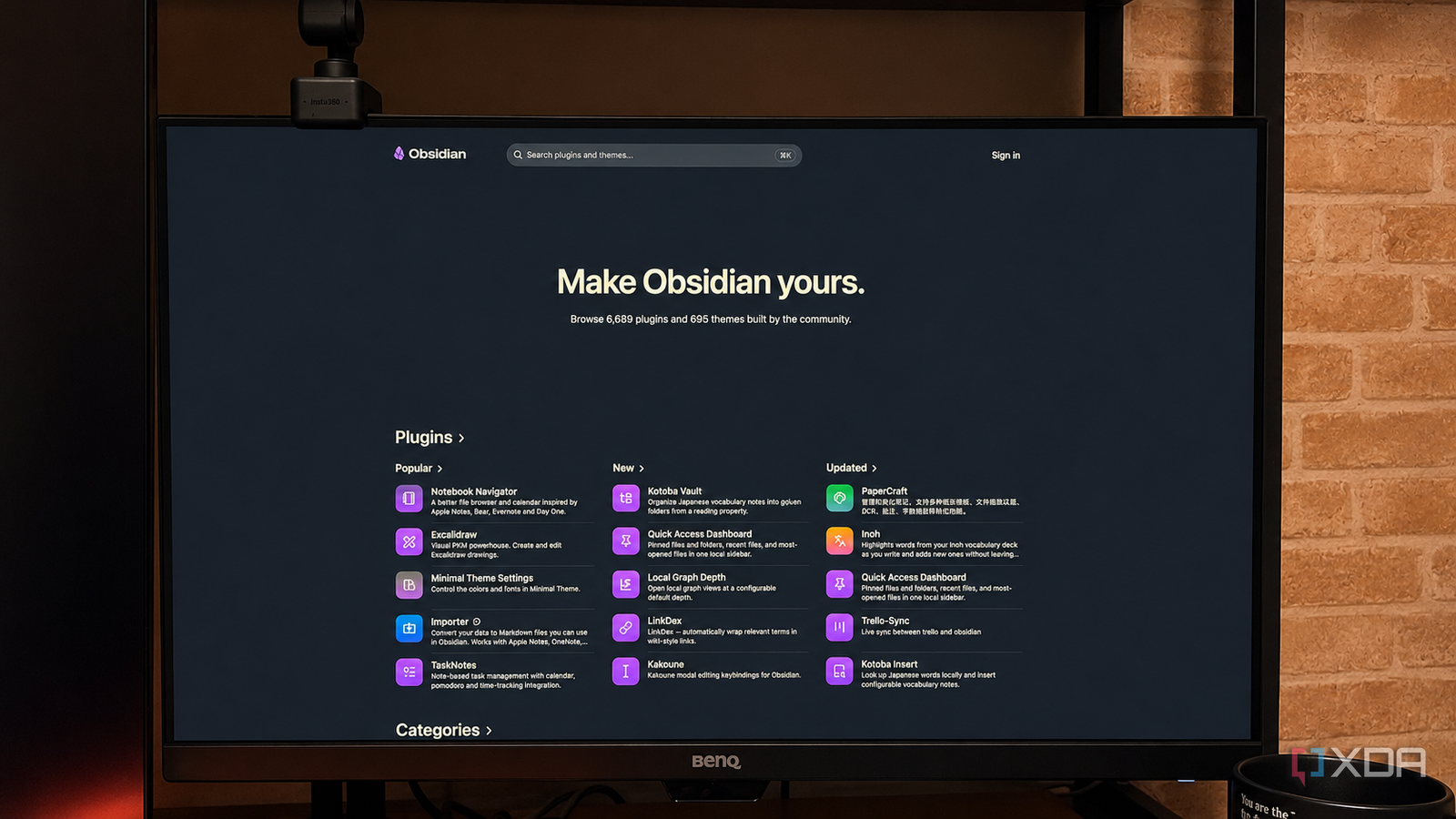
Published Aug 20, 2026, 4:00 PM EDT Patrick is a seasoned writer with more than a decade of experience, specializing in any and all things tech. His work has been featured on platforms like CNET, Yahoo, Xfinity, and many other outlets. When not typing away, he can be found with his nose in a book. Obsidian's plugin library is the source of its magic, and I've written at length about the numerous options. Whether it's an aesthetic, homepage plugin like Hearth, a writing-focused tool like StoryLine, or even just a tool to automatically set up the plugins I need in a new vault, I spend a lot of time tinkering with the various options that are out there. In that time, I've noticed one glaring issue that only gets worse with each passing day. Far, far too many plugins are vibe-coded. A quick look at the Obsidian subreddit will show a dozen plugin announcement threads that admit to vibe-coding, and I've seen Claude making commits in the GitHub repos. New plugins are releasing left and right. When I first started using Obsidian in mid-2025, the community library had a little over 2,500 plugins. Now? There are 6,660 as of this writing. I'm sure there will be more by the end of the day. Normally, I'd say that more variety of plugins is a good thing, but that was before it became so difficult to separate well-maintained plugins from experimental ones. At this point, I'd have serious concerns about using any plugin that hasn't been properly vetted. Obsidian's CEO launched a new plugin browser in response to the flood But I fear it's only a temporary solution On May 12, Kepano (Obsidian's current CEO) released a blog post detailing Obsidian Community, a "directory and developer dashboard" for Obsidian that would make it easier to browse all the available plugins and themes. At the time, there were a little over 4,000 available plugins. Given it's only been three months since then and another 2,000 have hit the community, launching the directory was the right call — as was its feature for automated plugin reviews. This system "verifies that it adheres to our developer policies, that the source code follows best practices, and that it is free of known vulnerabilities." The system itself is a great plan. Obsidian's community pours a lot of time and effort into the plugins, and giving developers the ability to link to their Patreons and websites for recognition is long overdue. The Obsidian Community also provides a "Health" and "Review" score for each plugin that shows whether it passed review or not, and is graded on a variety of criteria such as time since last commit, whether it has a README, and other factors. The team still manually reviews plugins, but it takes longer (and, I suspect, they review plugins based on need; the more popular newcomers get checked out first, although I can't confirm this). The automatic system is helpful, but not as thorough as I'd like, and that's where the trouble with vibe-coded plugins comes in. Many are coded without understanding The developer should know the code Before I start explaining, let me clear something up: I'm not anti-AI. I think it's an incredible tool, and I'm fascinated by the thought of one day creating true artificial sentience. I have no problem with coders using AI to help them. The problem is that people with no coding experience are using AI to write plugins, and that lack of experience means they don't understand the final product. And if they don't understand how the plugin works, how can they maintain it? Claude, ChatGPT, Kimi K2 are all excellent at writing code and aren't a half-bad hand at troubleshooting. It's possible to maintain the plugin for a while just by letting the AI do its thing. But eventually, the developer will have to understand the code to tell whether the AI's solution is correct. And that's where the problem arises. If the plugin is popular enough, the community will ensure it keeps going. I can't imagine seeing Dataview or Templater fall by the wayside, even if the developer abandoned them. That's not the case for more niche plugins, and those developers might be faced with the choice to drop support for the plugin or learn how to code. Coding is for everyone, but I'd like disclaimers Just a heads-up is enough Anyone using Claude to write an Obsidian plugin probably has at least a passing interest in coding, but that's not the same as a working understanding of a language. Most Obsidian plugins are written in JavaScript or TypeScript, and while those aren't difficult coding languages to learn, they still take time to pick up. I don't want to start using a plugin, fall in love with it, and suddenly lose access because someone didn't understand how to fix it (especially one that might affect the structure of my vault). I would love to see the Obsidian development team add a requirement that vibe-coded plugins come with disclaimers. Maybe a badge that indicates whether the developer can actively maintain the plugin or if it might need community assistance. I don't want them pulled from the store; I just want to know beforehand whether the developer understands the codebase. Something has to give Plugins keep pouring into the Obsidian community, and they're showing up faster and faster. The inrush of vibe-coded plugins could turn the Obsidian plugin browser into a more-productive version of the Wii Store: filled with shovelware. I wouldn't be surprised to see more changes around the corner, along with ways to sort and filter plugins written with AI from those that weren't. Obsidian's plugin library is one of its best features, but the plugin rush is making it hard to tell which ones might stand the test of time. Obsidian OS Windows, macOS, Linux, iOS, iPadOS, Android Individual pricing Free normally; $4/month for Obsidian Sync Obsidian is a feature-rich note-taking app that's available on different platforms and offers a neat and clean interface. It's also free-to-use for individuals.
Obsidian's plugin library is drowning in vibe-coded abandonware
Full Article
Original Source
Read the full article at Xda-developers →KhanList aggregates and links to publicly available news content. We do not host full articles from third-party sources. Always verify important information with original sources.