
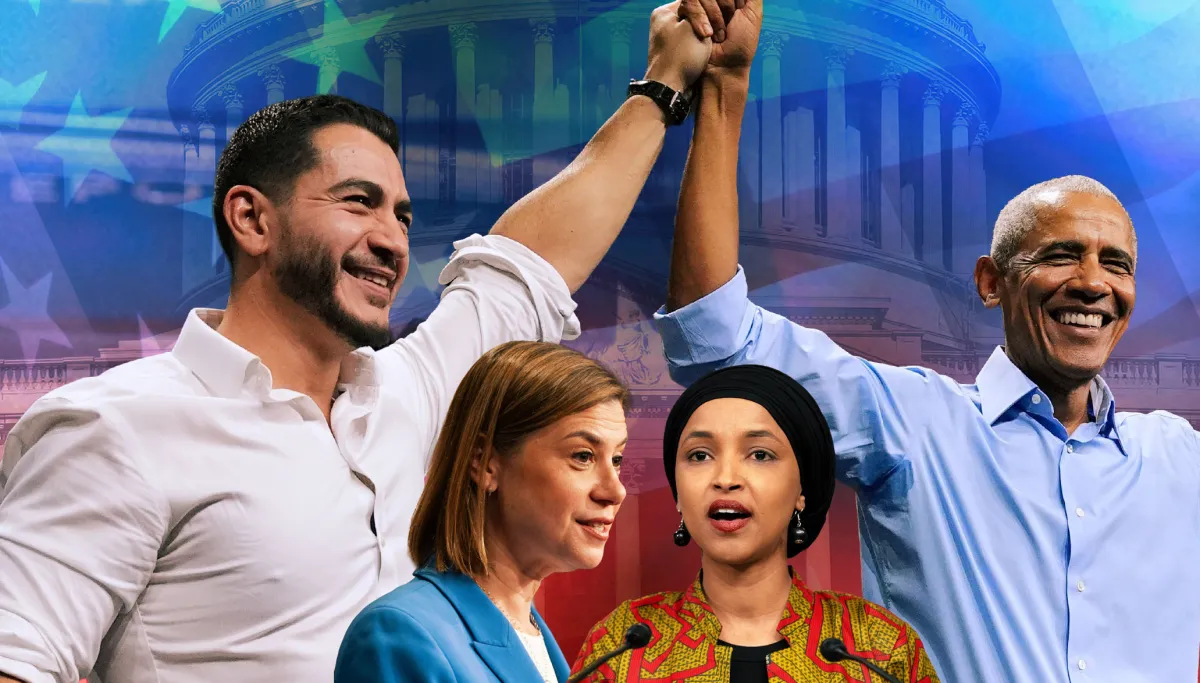
Gerard Baker’s recent lament in the Wall Street Journal, “America Abandons Ideals at Its Peril,” is the work of a man who came to this country by choice and loves it the way converts love a faith. He invokes Gen. Mark Clark standing on the soil of Normandy, where Americans died not to conquer territory, but to liberate people from tyranny. Their sacrifice represented something larger than American power: a belief that freedom and national sovereignty were worth defending.Baker fears that America is abandoning that inheritance. President Donald Trump’s recent accommodation of Russian President Vladimir Putin gives him reason for concern. Washington has waived significant sanctions on Russia, pursued a diesel arrangement with Moscow, and entertained negotiations over Ukraine that could marginalize Kyiv. These decisions raise a question Baker is right to ask: What happens to American credibility when expediency displaces principle?Indeed, America’s commitment to freedom, sovereignty and the rule of law should not depend on political convenience, whether in Ukraine or at home. But Baker’s criticism is too one-sided, holding Trump accountable for abandoning American ideals while giving insufficient attention to how Democrats have contributed to their erosion. The problem extends well beyond foreign policy. Both parties have become increasingly comfortable invoking American principles when they serve a political purpose and overlooking them when they become inconvenient. Consider what happened the same week Baker published his essay.Sen. Elissa Slotkin (D-MI) told a University of Chicago audience she wanted to investigate people who “enabled” Trump, then explained that she wanted young graduates considering administration jobs to fear the consequences.“I want that deterrence message sent,” she said.Slotkin subsequently insisted she meant only those who broke the law, an important distinction but hardly her initial message. Investigating misconduct is legitimate; making prospective public servants fear working for the opposing party is something else.That same week, Obama called the federal investigation of Rep. Ilhan Omar (D-MN) “appalling” and warned that such tactics could become normal. He has a point. Political investigations should never become instruments of intimidation.But where was that concern when Republicans made similar complaints?Abdul El-Sayed, who is running for US Senate in Michigan, former President Barack Obama, Sen. Elissa Slotkin (D-MI), and Congresswoman Ilhan Omar (D-MN). Obama need not look far for precedents. The FBI opened Crossfire Hurricane against individuals associated with Trump’s campaign in July 2016. Inspector General Michael Horowitz subsequently identified 17 significant errors and omissions in surveillance applications involving Carter Page. Special counsel John Durham later sharply criticized the bureau’s reliance on uncorroborated intelligence.Those findings did not establish that Obama ordered a political investigation. They did establish serious institutional failures. The Joe Biden years brought further controversy, from Alvin Bragg’s prosecution of Trump to Jack Smith’s federal indictments and Fani Willis’s Georgia racketeering case. Each had its own legal circumstances, but together they deepened suspicions that politics and prosecution were becoming inseparable.Democrats repeatedly insisted that no one was above the law. Correct. But that principle cannot justify aggressive prosecution of opponents while demanding special caution for allies.None of this settles the Omar case. Federal agents searched her Washington home amid reported questions about immigration records, while her financial disclosures have attracted separate scrutiny. If investigators have evidence of wrongdoing, pursue it. Otherwise, close the matter.Trump deserves the same standard. His threats against political opponents and attempts to turn grievances into investigations warrant scrutiny. Justice cannot depend on who occupies the White House. Otherwise, each administration inherits the previous one’s excuses.I served in Venezuela during the April 2002 coup attempt against Hugo Chavez. I watched the distinction between political opponents and enemies steadily disappear. Each side justified its conduct by pointing to the other’s abuses. Eventually, institutions that should have belonged to the country became instruments of political survival.The problem extends beyond the justice system into how leaders interpret history and decide whose grievances deserve recognition. On the same day Baker warned about abandoning American ideals, the Wall Street Journal published Elisha Wiesel’s rebuke of Obama. The two essays belong in the same conversation.Discussing Jewish history and Palestinian grievances during an October 13 appearance in Belfast, Obama said Jews “took land off people” and were “excessive.” Elisha Wiesel, son of Nobel laureate and Holocaust survivor Elie Wiesel, challenged that account in the Journal. His objection was not that Palestinian grievances should be ignored, but that historical context cannot be selectively applied.Wiesel recalled the 1929 massacre of Jews in Hebron, two decades before Israel existed, and Israel’s withdrawal from Gaza in 2005. Neither fits comfortably into a history explaining hostility toward Jews primarily through Israeli territorial actions. Obama’s broader remarks urged nonviolence, but that does not relieve him of responsibility for historical precision.The elder Wiesel once challenged Ronald Reagan over his visit to the German military cemetery at Bitburg. He admired Reagan but refused to excuse what he considered a moral error. His son is applying that same standard to Obama.Obama is also campaigning for Michigan Democratic Senate candidate Abdul el Sayed, who has called Israel “bloodthirsty” and a “rogue state” and declined repeated opportunities to affirm its right to exist. Supporting a candidate does not mean endorsing everything he says. But a former president who lectures Americans about democratic ideals should challenge troubling rhetoric from his own side.American credibility suffers when Washington appears willing to trade long-standing commitments for short-term advantages. But it also suffers when political leaders defend constitutional protections, historical truth, and institutional independence only when convenient. These are not competing concerns — they are different manifestations of the same problem.Baker writes that Americans voted for Trump because they believed their leaders had abandoned American values. He is right. What he leaves insufficiently examined is how both parties contributed to that loss of confidence and now use each other’s conduct as permission to go further.DOJ URGED TO INVESTIGATE SLOTKIN OVER THREATS TO YOUNG PROFESSIONALS SEEKING WORK IN TRUMP ADMINISTRATIONAmerica cannot remain exceptional if it abandons the principles that made it so. Those principles belong to neither party, but both have a responsibility to defend them. So do the American people. Our politicians sometimes forget that responsibility, and when they do, it is our job to remind them.Baker’s ledger needs two columns. So does ours.
Obama and Slotkin’s selective defense of American ideals
Full Article
Original Source
Read the full article at Washingtonexaminer →KhanList aggregates and links to publicly available news content. We do not host full articles from third-party sources. Always verify important information with original sources.