
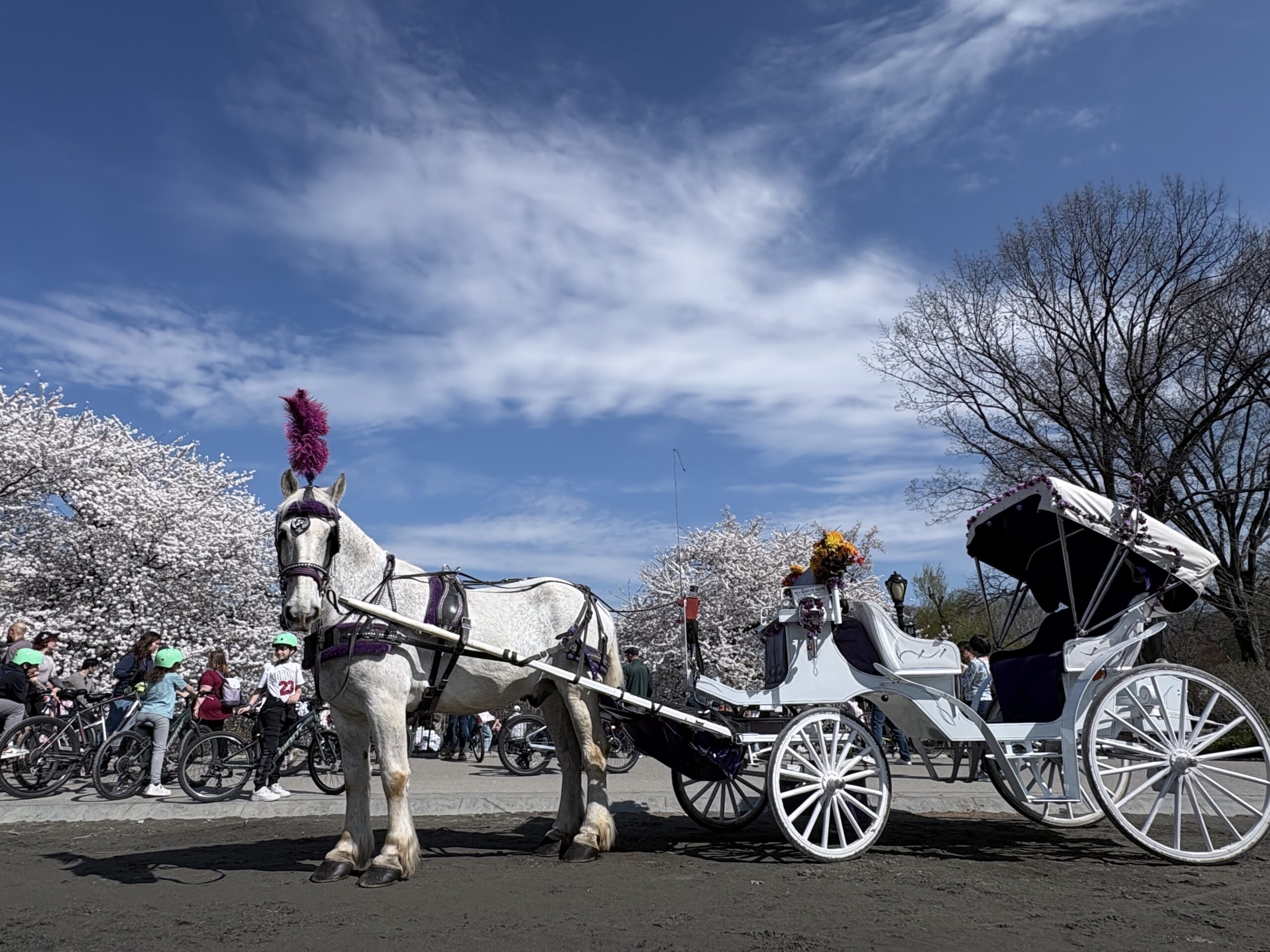
The industry is preparing to make a final stand in federal court after the city council voted for the barring of horse-drawn carriages.MANHATTAN (CN) — Central Park’s horse-drawn carriage drivers face an uncertain future after the New York City Council voted Thursday to ban the tradition, more than a century old.Romanch’s Law, drafted after 18-year-old tourist Romanch Mahajan was fatally thrown from a carriage earlier this year, passed the council with a veto-proof 40-7 majority despite months of protests from drivers. They argue the city failed to examine the ban’s economic impact, which takes effect in June 2028.With the bill passed, the judicial system may be their last hope. Once Mayor Zohran Mamdani signs it into law, presumably in the coming weeks, the drivers are preparing to sue the city in a final effort to prevent the elimination of their industry.“They can’t take away your property without due process,” Arthur Schwartz, an attorney for the Transport Workers Union, which encompasses the carriage drivers, told Courthouse News on Friday. “Sometimes the government can act quickly to try to eliminate a public nuisance, but no one is claiming that the horses are a public nuisance.”Schwartz said he and the drivers plan to file a federal complaint in the Southern District of New York, claiming violations of the Fifth Amendment and the state constitution. They hope a federal judge will find the legislation unconstitutional, forcing the city to address their concerns or drop the ban altogether.“You can regulate businesses, you can adopt reasonable measures to prevent abuses,” he said. “But to take away property for no reason that bears any relationship to the welfare of the public? It’s unconstitutional.”Schwartz also cited a 1943 ruling in Good Humor Corp. v. City of New York, in which the New York Court of Appeals barred the city from imposing a total ban on itinerant peddling.On the eve of the vote, Schwartz sent a letter to the New York City Law Department warning of litigation if Romanch’s Law passed. A department spokesperson told Courthouse News it is “confident the legislation is grounded in the law and will be prepared to defend it.”Calls to ban horse-drawn carriages grew louder this summer after two tragedies thrust the industry into the national spotlight. On June 9, a 16-year-old carriage horse named Deniz collapsed and died of sudden cardiac arrest, prompting outcry from animal rights activists who have long claimed the horses endure brutal working and living conditions.A week later, Mahajan’s horse bolted and threw him from his carriage.Christina Hansen, a carriage driver and TWU shop steward, told Courthouse News she sympathizes with both incidents. But she believes the city didn’t fully consider its options before passing the law, leaving drivers uncertain about their future.“None of us know what our lives will look like,” Hansen said of her and her fellow drivers. “They don’t know what kind of job they’ll be able to find and how much it’s going to pay. They don’t know if they’re going to be able to stay in their apartment or if they’re going to get evicted because they can’t pay the rent.”Carriage driver Medet Fidan in Central Park, New York City. (Image courtesy of Medet Fidan)If enacted, Hansen said the ban would affect more than New York City’s roughly 150 active carriage drivers. It could also put Manhattan stables out of business and render carriage medallions, similar to taxi medallions, effectively worthless after owners paid as much as $400,000 for them.The legislation doesn’t specify how the city will address the economic fallout for drivers, only that it will put forth a plan in the coming months.“Those medallions are our property, and they’re merely going to consider compensating us for them?” Hansen said.It’s déjà vu for fellow driver Medet Fidan, a former cabbie who joined citywide protests in 2021 after rideshare apps tanked taxi medallion values. He gave up two taxi medallions afterward and turned to driving carriages.Now, he finds himself in a familiar situation.“There are young people who work in this,” Fidan said Friday. “There are 76-year-old drivers. Some drivers have cancer, some have kids with special needs. The human tragedy side of the story is really devastating.”More than anything, Fidan said he is most worried about his two horses.It remains unclear how the city will help relocate the horses if it’s forced to close its stables. PETA has pledged $50,000 toward their future care, but Hansen said that amounts to less than $300 per carriage horse, hardly enough for a long-term solution.“Most of our horses will end up dead or missing,” she said.New York City Council Speaker Julie Menin has championed the legislation since it was introduced earlier this year. She said its passage Thursday responded to “decades of mounting concerns” about public safety and animal treatment.“From longstanding animal welfare concerns and increasingly extreme heat conditions to historic overcrowding in Central Park, which now welcomes more than 42 million visitors annually, the status quo has become unsustainable and unsafe for horses and people alike,” she said in a statement.Hansen sees things differently.“The only cruelty in the New York City carriage business is the cruelty that the city is inflicting upon the people in it,” she said.Subscribe to our free newslettersOur weekly newsletter Closing Arguments offers the latest about ongoing trials, major litigation and rulings in courthouses around the U.S. and the world, while the monthly Under the Lights dishes the legal dirt from Hollywood, sports, Big Tech and the arts.Additional Reads
NYC horse carriage drivers gear up for legal war after citywide ban
Full Article
Original Source
Read the full article at Courthousenews →KhanList aggregates and links to publicly available news content. We do not host full articles from third-party sources. Always verify important information with original sources.