
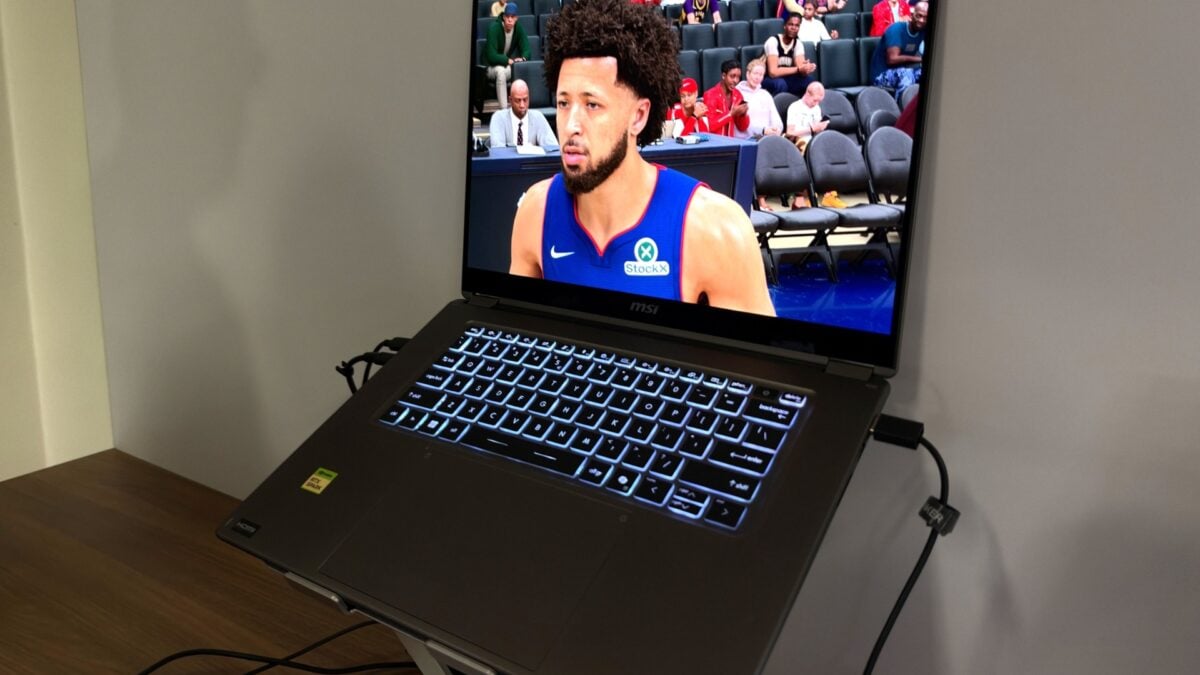
Nvidia has spent the last several months telling us the future of in-game graphics is AI, which the world’s most valuable company still wants you to call DLSS 5. The technology is slowly reaching into more games, though judging by the latest updates, Nvidia’s trying to make it less obtrusive than it has been, even if it still messes around with in-game visuals. The new updates to DLSS 5, which launched fully last month after modders managed to get it running in various games, don’t explicitly say Nvidia has changed its tune. However, you can note how its latest press release says that DLSS 5 allows developers “to realize their original artistic vision.” The updated model infuses scenes “with lifelike lighting and materials while ensuring the engine frame defines what must remain, and the artist directs what may change.” Ever since Nvidia first shared details of its “neural rendering” DLSS 5 tech, gamers haven’t been—let’s just say—”smitten” with how it apparently corrupts in-game visuals. Initial screenshots showed how the AI models didn’t account for in-game textures and seemingly ignored artistic intent. The notorious shots of Grace Ashcroft from Resident Evil Reqiuem were the most high-profile examples, but less publicized shots from Hogwarts Legacy also drew jeers from the anti-AI crowd for how it took teenagers and made them look like they were 40 years old. Left: Hogwarts Legacy running without DLSS 5; Right: the game running with DLSS 5 enabled. The new screenshots are indeed less drastic. DLSS 5 is now coming to the aforementioned Hogwarts Legacy as well as the China-centric action game Where Winds Meet. The AI doesn’t seem to be adding any more lines to characters’ faces in a desperate attempt to make them look more “detailed.” Scenery in these screenshots looks brighter overall, though not as many color values change when DLSS 5 is turned on. However, Nvidia seems to imply the drastic haloing of light cast by the pixie behind the main character in these screenshots is somehow more realistic. Ostensibly, the real-time ray tracing enabled in this game would have already created an illumination model to handle light reflecting, but the AI seems to think a light the size of a thumb can illuminate the back of a character’s scalp. Nvidia invited me to an event where we could see some of these updates to DLSS 5 firsthand. The first game featuring the AI tech, NBA 2K27, includes a simple toggle that lets you turn the AI on and off. In-game, running directly in front of me, the visuals didn’t seem inherently drastic. Instead, the AI appeared akin to a Photoshop filter, adding contrast and drop shadows where they didn’t exist before. Left: Where Winds Meet running with DLSS 5 on; Right: the game running with DLSS 5 off. What is more important is what DLSS 5 does to faces. While the AI could pay more attention to adding detail to the faces of players, it also added more details to the raving background spectators. The AI model did seem to understand if it was looking at a red leather jacket when boosting the lighting and textures on models. Again, this didn’t change their looks so much as it gave each more definition. In effect, it turns these background characters from dead-eyed mannequins into awkward marionettes with an ounce more life. I didn’t get to see the model running on Hogwarts Legacy in person. However, Nvidia did show how the model now no longer eats away 50% of a game’s framerate. Nvidia says its DLSS 5 model is shrinking to 118 million parameters, while its total GPU VRAM cost is down 20%. What that means is instead of cutting your game’s framerate by half, it may instead reduce it by a third, depending on your GPU and resolution you’re playing at. That performance boost may be a big deal for some older games as well. Nvidia says it’s letting the independent RTX Remix devs, those modding modern DLSS technologies into older titles, to let them use DLSS 5. That’s still a demanding proposition. Nvidia is getting ready to launch its RTX Spark PCs this week, such as the Microsoft Surface Laptop Ultra. These are billed as high-performance, gaming-ready machines, and that means you should be able to play them with DLSS 5. Nvidia showed us its demos running on these new laptops, though based on what I’ve seen, you’ll still likely only achieve playable framerates with upscaling and frame generation enabled. Whether the added shadows and extra facial pores are worth the performance hit will be up to you. (Full disclosure: travel and lodging were paid by Nvidia, and Gizmodo did not guarantee any coverage as a condition of accepting the trip).
Nvidia’s DLSS 5 Is Now Less in Your Face, Less Performance-Hogging
Full Article
Original Source
Read the full article at Gizmodo →KhanList aggregates and links to publicly available news content. We do not host full articles from third-party sources. Always verify important information with original sources.