
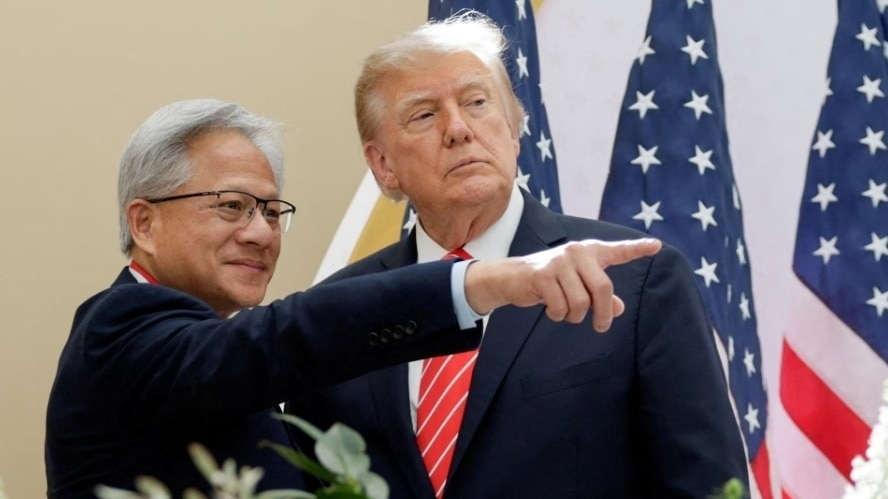
A CEO is back, a President is taking credit, and Nvidia's board is facing questions about its independence. Could this set a precedent for corporate boardrooms worldwide?Trump claimed he influenced Huang's reinstatement decision. (File Photo: Reuters)Jensen Huang is back at Nvidia, days after stepping down as CEO amid allegations of extramarital relationships, including one with a woman suspected of links to Chinese intelligence. The board that had initially ruled out his return has now reinstated him, calling him the best person to lead the company.The turnaround has been swift. But the bigger concern is what the episode says about the independence of corporate boards when governments intervene in decisions that are meant to be theirs to make.US President Donald Trump has openly said he played a role in bringing Huang back, including intervening with Nvidia's board. The board, meanwhile, acknowledged receiving input from senior US government officials before deciding to reinstate him.That raises a question extending beyond Nvidia: when governments step into boardroom decisions, where does legitimate national-security intervention end and interference in corporate governance begin? A BOARD'S DECISION UNDER SCRUTINYHuang resigned on November 12 after allegations about his personal relationships and scrutiny over his association with Alice Huang, a businesswoman suspected of links to Chinese intelligence. Nvidia's board accepted his resignation and initially indicated it did not intend to reinstate him.On November 23, however, the board unanimously brought Huang back as president, CEO and director. Nvidia said directors were satisfied with Huang's candour and ability to lead the company after discussions with him. It also said input from senior US government officials helped it conclude that his reinstatement posed no national-security risk. The board's independent investigation, however, is still continuing.The reversal has drawn criticism from investors and corporate governance experts. Reuters reported that critics questioned whether the board had enough information to make an independent judgment, particularly when it expressed confidence in Huang before its investigation was complete.New York City Comptroller Mark Levine, whose office manages retirement funds holding Nvidia shares, told news agency Reuters the board had “proven they're not independent”, adding that independence was the defining quality needed from any board.WHEN POLITICS ENTERS THE BOARDROOMTrump has said he intervened and convinced Nvidia's board to bring Huang back. His role has become a central part of the controversy, with the President publicly taking credit for the reinstatement.The US government has a legitimate interest in Nvidia. The company is central to America's AI ambitions, while its advanced chips are at the heart of Washington's technology competition with China. Export controls and national-security assessments are therefore an important part of Nvidia's operating environment.But there is a difference between government regulation and intervention in corporate leadership decisions.Nada Kakabadse, a corporate governance professor at Henley Business School, questioned Nvidia's reliance on government input. “It hands the board's judgment to the state,” she told news agency Reuters, warning that the arrangement could make Nvidia politically dependent.Morningstar's Lindsey Stewart also questioned who was best placed to provide governance and oversight of a company at the centre of the global AI ecosystem.The criticism is not that governments should stay out of national-security matters. It is whether political influence should extend to decisions that boards are expected to make independently.HUANG BACK DESPITE ONGOING MEGASPEED PROBEThe controversy also intersects with the investigation into Megaspeed, a Singapore-based company under scrutiny over suspected export-control violations and the possible diversion of advanced Nvidia chips to China.US authorities have been investigating the company, with the Commerce Department and Justice Department involved in the probe. Investigators, working with Singaporean law enforcement, conducted an on-site end-use check at Megaspeed in June 2025 and interviewed its CEO, Alice Huang.Megaspeed was subsequently added to the Commerce Department's Entity List, restricting US companies from doing business with it without the necessary licence. Authorities have said the investigation is continuing.The probe is separate from Nvidia's board decision. But it adds to scrutiny of the company's national-security exposure and the government's role in enforcing export controls.CONCERN FOR BOARDROOMS?The broader concern is what happens if political intervention in corporate board decisions becomes more common.Kathleen Day, a lecturer at Johns Hopkins Carey Business School with expertise in corporate governance, said Nvidia's board had a duty to represent shareholders, not its CEO, and called on shareholders to demand a new board. Peter Cohan, an associate professor of management practice at Babson College, was also critical of the board's decision to yield to Trump. He argued that bringing Huang back could endanger Nvidia by signalling that the CEO could act without consequence.The concern is particularly relevant beyond Nvidia. Boards across sectors such as AI, semiconductors, defence, telecommunications and energy operate in areas where governments have strategic interests. Political leaders may have legitimate reasons to intervene on security or regulatory grounds. But if that influence begins extending to board decisions on leadership, it could blur the boundary between oversight and interference.Nvidia's board may ultimately stand by its decision to bring Huang back. But the episode raises a question that could resonate far beyond Silicon Valley: when politics enters the boardroom, who ensures that the board is still acting independently?- Ends
Nvidia, Trump and a boardroom precedent that could worry companies worldwide
Full Article
Original Source
Read the full article at Indiatoday →KhanList aggregates and links to publicly available news content. We do not host full articles from third-party sources. Always verify important information with original sources.