
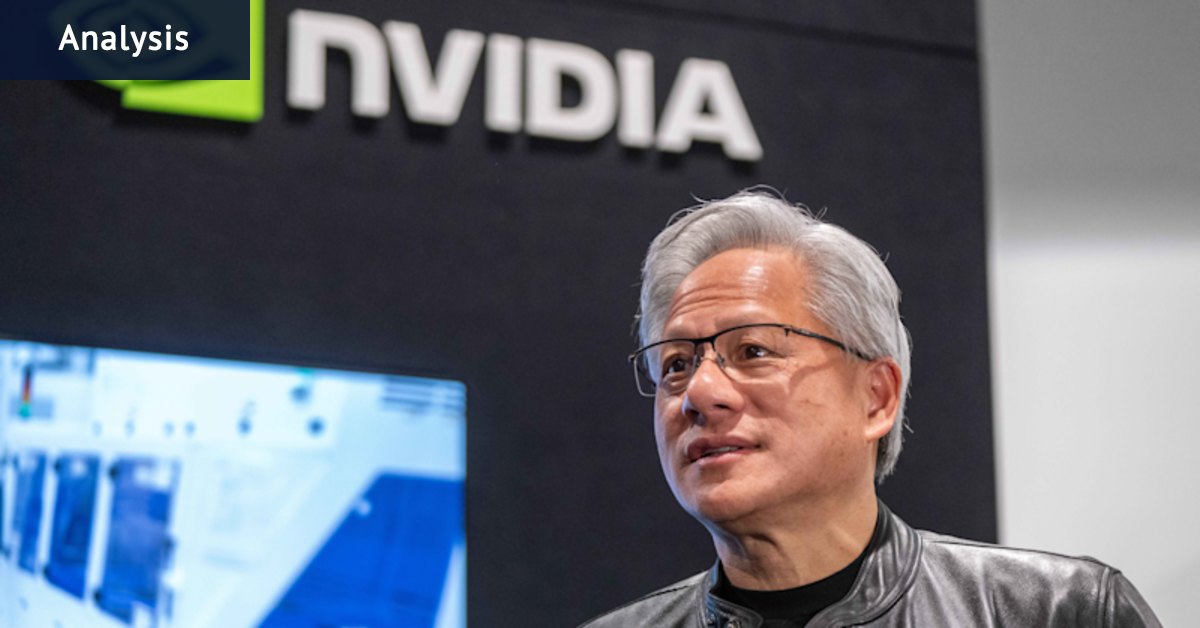
Peter Martin and Philip J. HeijmansNovember 14, 2026 — 7:30pmSingapore: The Jensen Huang saga is the latest example of what governments around the world say is a broad push by China to steal commercial and technological secrets and gather intelligence on foreign leaders and military plans.The revelation that Nvidia’s now ex-CEO had an affair with a woman suspected of spying for China has rocked the US artificial intelligence boom and thrust allegations that Beijing is seeking to infiltrate Western tech giants into public view. It fits into what foreign officials say is a globe-spanning project.In Germany, prosecutors allege a married couple posing as interpreters and car industry employees cultivated professors in AI, computer science and aerospace, drawing some to China for paid “civilian” lectures delivered to state arms companies. New Zealand intelligence says a Chinese observatory with close government ties tried to install space-tracking equipment through a local company – gear that could also collect military intelligence. Taiwan says Chinese operatives trawl social media for indebted soldiers, offer loans, then press them for secrets and introductions to colleagues.The revelation that Nvidia’s now ex-CEO, Jensen Huang, had an affair with a woman suspected of spying for China has rocked the tech world.APSecurity agencies around the world have raised the alarm. The Federal Bureau of Investigation (FBI) calls Chinese espionage “a grave threat to the economic well-being” of the US. Britain’s MI5 said it was running seven times as many China-related investigations in 2022 as four years earlier. Canadian intelligence calls China its “greatest counter-intelligence threat”, while Dutch intelligence says Chinese digital espionage against technology companies is happening on a “large scale”.Beijing has dismissed the Huang espionage allegations as a smear, accusing Washington of fabricating “Chinese spy narratives” to justify restrictions on technology exports. Despite those denials, the suspected spy at the centre of the scandal that toppled Huang is now in China with the knowledge of the Chinese government.At stake is the balance of power between the world’s two largest economies. America has bet that its lead in AI and advanced semiconductors will underpin its continued economic strength and military superiority, while its ability to project force across the Pacific constrains Beijing’s ambitions over Taiwan. Espionage offers China a way to erode those advantages, accelerating its technological rise while gaining insight into Washington’s military plans and political decision-making.“There is a lack of appreciation for how professional the Chinese services have become,” said Holden Triplett, who ran the FBI’s office in Beijing and founded Trenchcoat Advisors, noting that parts of China’s intelligence service now rivalled the US Central Intelligence Agency and Russia’s Federal Security Service.“They’re hitting on human frailty and vulnerability and they’re spending all day thinking about how to do this,” he added. “Anyone can fall for it.”China’s spying push is intensifying in its backyard as Beijing continues to expand its military footprint in the South China Sea.In the Philippines, suspected Chinese spies claimed to be using drones to carry fishing bait as they monitored warships around Subic Bay. Others posed as seafood buyers while flying drones near a naval base. In Manila, hired drivers cruised past the presidential palace, military camps and the US embassy in cars fitted with fake mobile phone towers capable of collecting data from nearby phones. Another vehicle, equipped with cameras and mapping technology, visited more than 120 locations, including bases used by American forces.The alleged operations reached deep inside the Philippine government. Authorities say suspected Chinese agents also recruited people inside the country’s defence establishment, obtaining names of naval personnel and schedules for troop rotations and resupply missions to disputed South China Sea outposts.The cases offered a rare glimpse into the scale and sophistication of Beijing’s espionage operations – which an investigator said were carried out by a spy network that numbered in the hundreds. China has dismissed the allegations as baseless.“It is extremely widespread because that is the modus operandi of the Chinese,” Philippine Defence Secretary Gilberto Teodoro said in an interview. “It’s not only here – the United States. How many are being arrested? Within Australia, how many? In the UK, how many?”China’s Ministry of State Security (MSS) is at the centre of Beijing’s increasingly brazen espionage push. The country’s main civilian spy service combines the overseas remit of the CIA with a domestic remit like that of the FBI. Under Chinese President Xi Jinping, reforms have tightened Beijing’s control over provincial and municipal intelligence bureaus, allowing the MSS to co-ordinate operations across the country and pursue more ambitious missions overseas.“It’s become more aggressive,” said Randy Phillips, a former CIA Beijing station chief. “If you look at the kinds of targets they’ve gone after in the last 10 years, they’ve become a much more emboldened organisation.”The MSS is only one arm of what Britain’s parliamentary watchdog has called “the largest state intelligence apparatus in the world”: the People’s Liberation Army runs military, signals and cyber intelligence; the Ministry of Public Security operates at home and abroad; party bodies cultivate political, business and academic networks overseas.Xi has also handed intelligence agencies broader powers and obliged citizens and institutions to help them. The 2017 National Intelligence Law says every organisation and citizen must “support, assist, and co-operate” with intelligence work.While the US and other countries spy on adversaries and allies, most argue that they don’t engage in industrial espionage the way that the MSS does and none has its scale.‘They’re hitting on human frailty and vulnerability and they’re spending all day thinking about how to do this.’Holden Triplett, who ran the FBI’s office in Beijing and founded Trenchcoat Advisors“The numbers in military and civilian intelligence and in the public security apparatus that feeds into intelligence are probably well into the millions,” Phillips said.As the AI revolution has taken off, the technology that underpins it has become a crucial target for Chinese spy agencies, including obtaining it through hacking and human sources, which has made people working at the cutting edge in government, industry and academia potential targets, according to Western officials familiar with the matter.“The CCP considers itself as in pretty much an existential contest with the United States and other democracies. The hinge on which this contest will turn is scientific and technological power and central to that will be artificial intelligence,” said Peter Mattis, a former CIA counterintelligence analyst who is now president of the Jamestown Foundation. “Any C-suite in the AI industry is going to be an interesting target.”AI is also reshaping Chinese spycraft. The biggest gains come early in recruitment, helping services sift huge pools of potential targets and tailor approaches before a human officer steps in.In June, the FBI and Justice Department said suspected Chinese spies used fake consulting firms, lucrative job offers and AI-generated photographs to lure Americans with security clearances onto encrypted messaging apps. In October, US counterintelligence officials warned that Beijing was using AI tools, including DeepSeek, to profile American executives and government officials, identify their vulnerabilities and gain leverage over them.“With AI, you just set up the algorithm to go after targets. You save a tremendous amount of manpower and searching – it’s a force multiplier,” said Dennis Wilder, the CIA’s former deputy assistant director for East Asia and the Pacific. Then, once targets were identified, Chinese agents could meet them online instead of undertaking risky travel overseas, Wilder said. “Human espionage doesn’t any more have to be sneaking around back alleys.”AI is also bolstering China’s already formidable cyber capabilities. Microsoft said last month that the China-linked group Storm-0940 used agentic AI to automate attacks against hundreds of organisations worldwide.In September, Britain’s MI5 warned that the China General Technology Research Institute was funding research in AI and cybersecurity primarily to strengthen the Ministry of State Security’s espionage capabilities. More than 100 UK-linked academics had contributed to projects ultimately funded by the MSS, MI5 said, sometimes without knowing who was paying.“This isn’t the only [alleged] operation against Nvidia. You should assume there are another 10 or more going on and, of course, it’s not the only operation going on against US tech,” said Triplett, the former FBI agent. “My guess is that they’ll be encouraged by how this worked out and they’ll do more and more of these operations.”BloombergGet a note directly from our foreign correspondents on what’s making headlines around the world. Sign up for our weekly What in the World newsletter.More:China relationsAnalysisAICIAFBIChinaTaiwanUKUSAXi JinpingChina's Spy SecretsNvidiaJensen HuangFrom our partners
Nvidia scandal raises new concerns about scale of Chinese spying
Full Article
Original Source
Read the full article at Smh →KhanList aggregates and links to publicly available news content. We do not host full articles from third-party sources. Always verify important information with original sources.