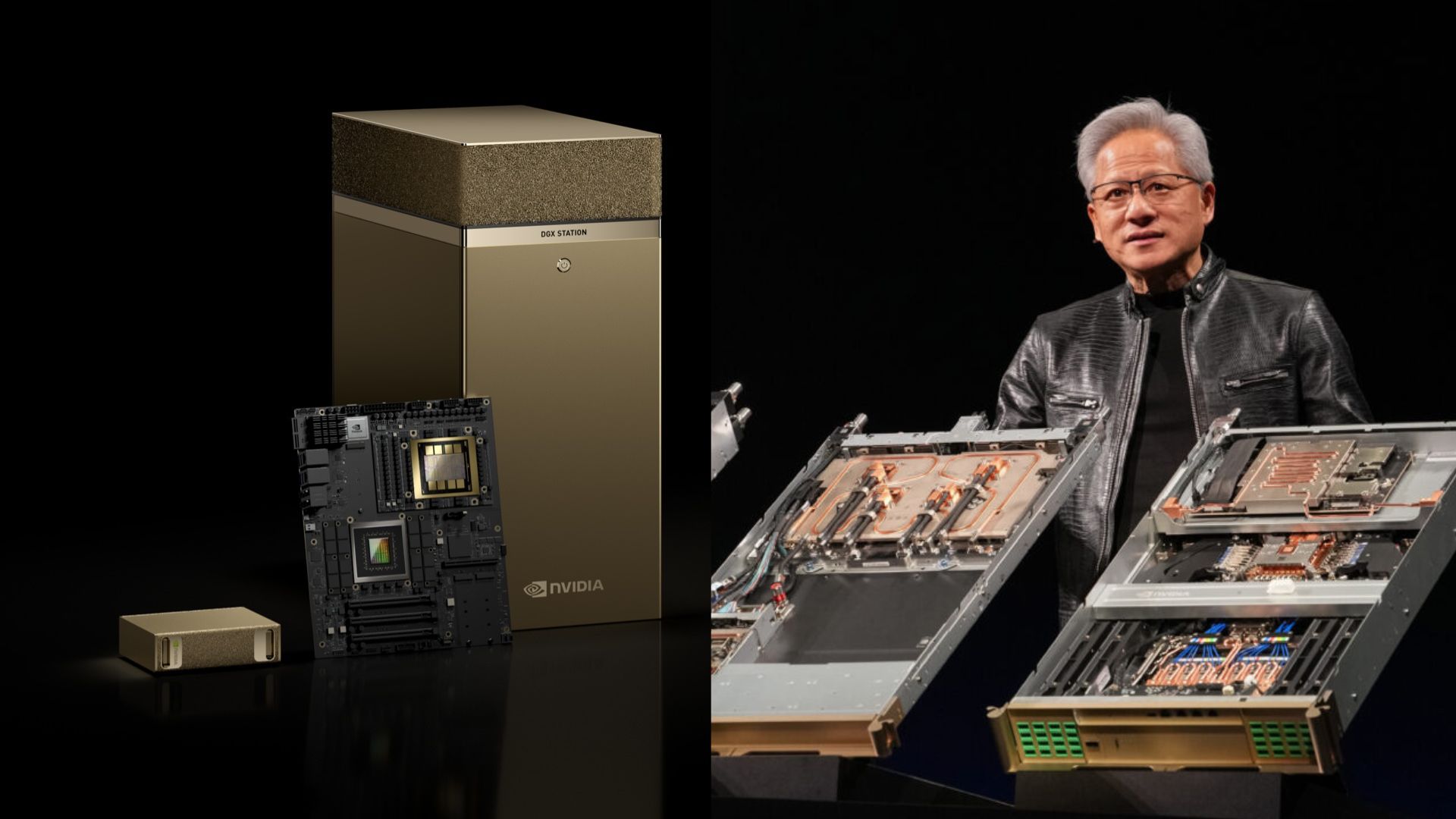
NVIDIA has launched a smaller open model designed to handle the repetitive, high-volume tasks that keep autonomous agents running, aiming to cut the cost and latency of long-running agent workloads. Called Nemotron 3.5 Lightning, the model has 30 billion total parameters but activates only 3 billion for each token. NVIDIA says this mixture-of-experts design allows it to deliver the capacity of a larger model while using compute closer to that of a much smaller one. The model is aimed at the execution layer of autonomous agents, where systems repeatedly call tools, check results, run commands, and delegate tasks. Instead of using a large reasoning model for every step, developers can use Lightning for routine work while reserving larger models for planning and complex decisions. Nemotron 3.5 Lightning is also designed to run locally, including on NVIDIA’s DGX Spark, Jetson systems and GeForce RTX 5090 graphics cards. It can also be deployed in data centers, giving developers options for running high-volume workloads closer to where they are generated. Smaller models take over NVIDIA is positioning Lightning as part of a broader shift toward systems that use multiple models rather than relying on one model for every task. Larger reasoning models can handle planning and orchestration, while smaller models take care of execution. The model has been trained with popular agent harnesses in mind, including OpenClaw and Hermes Agent. NVIDIA says this training helps agents make more accurate tool calls while reducing latency during repetitive tasks. The company is also releasing the model as an open offering, including its weights, training data, and recipes under the OpenMDW-1.1 license. Developers can fine-tune it using NVIDIA’s NeMo tools or run reinforcement learning and environment-based evaluations. NVIDIA says Nemotron 3.5 Lightning can deliver up to four times the output speed of similar-sized models. On PinchBench, it reached 86 percent accuracy while completing 10,000 tasks 30% faster than Qwen3.6 35B at similar accuracy. The model also supports speculative decoding, a technique that allows multiple tokens to be proposed and then efficiently checked. NVIDIA has included multi-token prediction during training and provides two additional draft models, DSpark and DFlash, for different inference workloads. Routing work by complexity The launch also highlights NVIDIA NeMo Switchyard, a model-routing library designed to direct different tasks to different models. A complex request can be sent to a more capable reasoning model, while routine execution can be routed to Nemotron 3.5 Lightning. That approach could reduce the amount of expensive compute used by always-on agents, particularly systems that perform thousands of small actions over long periods. The model is supported across a growing ecosystem of inference platforms, agent frameworks and cloud services, including Ollama, LM Studio, Amazon SageMaker JumpStart, Google Cloud, Microsoft Foundry and Oracle Cloud Infrastructure. NVIDIA says Nemotron 3.5 Lightning can be downloaded through Hugging Face and ModelScope, while developers can also access it through NVIDIA’s own platform and OpenRouter. Recommended ArticlesGet the latest in engineering, tech, space & science - delivered daily to your inbox.With over a decade-long career in journalism, Neetika Walter has worked with The Economic Times, ANI, and Hindustan Times, covering politics, business, technology, and the clean energy sector. Passionate about contemporary culture, books, poetry, and storytelling, she brings depth and insight to her writing. When she isn’t chasing stories, she’s likely lost in a book or enjoying the company of her dogs.
NVIDIA launches Nemotron 3.5 Lightning to make repetitive agent tasks up to 4x faster
Full Article
Original Source
Read the full article at Interestingengineering →KhanList aggregates and links to publicly available news content. We do not host full articles from third-party sources. Always verify important information with original sources.