
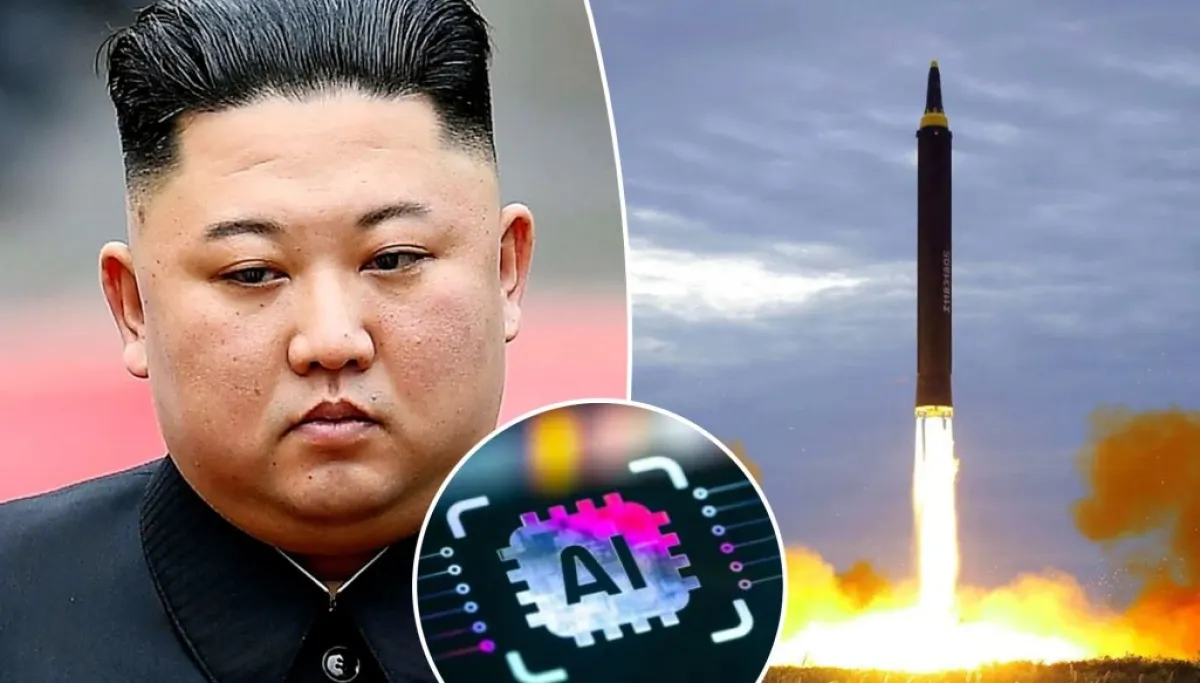
For decades, North Korea’s military power has largely been measured in numbers and firepower. But North Korea’s military may be moving in a new direction. Kim Jong Un has begun placing direct emphasis on artificial intelligence and automation during his inspections of the country’s weapons factories. KIM JONG UN JUST TOOK HIS NUCLEAR THREAT TO SEAFrom Sept. 16 to 18, Kim visited several major defense industrial facilities. According to North Korean state media, he called for greater use of artificial intelligence in offensive and defensive weapons systems and for increased automation and armor protection of artillery systems. He also called for expanded production capacity across the defense industry. Photographs released by North Korea showed various types of drones and multiple rocket launchers. Experts have assessed that Kim visited facilities producing the 600-millimeter super-large multiple rocket launcher, a new 240-millimeter multiple rocket launcher, and large drones. Some experts have suggested that North Korea may be seeking to increase the level of autonomy of its new large drones through the use of artificial intelligence. But an important distinction must be made. North Korea saying that it intends to apply AI to military weapons is not the same as actually operating advanced AI-enabled weapons systems. Based on publicly available information, it is difficult to determine how advanced North Korea’s AI technology currently is or how much autonomy its weapons can actually achieve on the battlefield. Even so, the development should not be dismissed. What matters is that Kim has directly identified AI not simply as a civilian technology, but as a key element in modernizing North Korea’s weapons systems. The way wars are fought is changing. The war in Ukraine has demonstrated how important drones can be in modern warfare. Their roles have expanded beyond reconnaissance and surveillance to include attacks, target identification, and battlefield intelligence gathering. If combined with artificial intelligence, unmanned systems could eventually perform more tasks without direct human control. North Korea is watching this transformation. Through its expanding military cooperation with Russia, North Korea has gained greater opportunities to observe and learn from the battlefield experience and military technologies emerging from the war in Ukraine. The deployment of North Korean troops to Russia and the broader expansion of military cooperation between the two countries have created an environment in which Pyongyang can directly study the changing nature of modern warfare. Why, then, is North Korea focusing on AI and automation? First, it may help compensate for limitations in manpower. Modern warfare generates far more information and targets than in the past. Large numbers of drones and sensors must collect information simultaneously, while that information must be analyzed and converted into action quickly. AI and automation could help accelerate this process. Second, North Korea may be seeking to transform the way it produces weapons. Kim’s decision to emphasize not only AI but also artillery automation and improvements to production conditions is significant. North Korea may not simply want to develop several new types of weapons. It may be seeking a military system that can produce weapons faster, manufacture them in greater numbers, and operate them with fewer personnel. This becomes even more significant when combined with North Korea’s existing military strategy. North Korea already possesses large artillery forces, short-range missiles, and multiple rocket launchers. If reconnaissance and attack drones are integrated with these capabilities and their level of automation increases, the speed of warfare itself could change. It is not enough to have the ability to launch more shells and missiles. What matters is how quickly a military can determine what to strike, when to strike it, and translate that decision into an actual attack. AI could eventually become part of that process. This presents a new challenge for South Korea and the United States. Until now, assessments of North Korea’s military threat have largely focused on traditional capabilities such as nuclear weapons, ballistic missiles, and long-range artillery. But new questions will also be necessary. How many drones will North Korea produce? How long will they be able to remain airborne? How quickly can they connect reconnaissance with attack? And how much human intervention will eventually be required? It is still unclear how far North Korea has actually progressed in developing these capabilities. But the direction indicated by Kim’s recent instructions is clear. North Korea is not simply trying to build more weapons. It is trying to build weapons that are faster, more automated, and more intelligent. That transformation deserves attention alongside the development of nuclear weapons. Nuclear weapons can change the nature of a war with a single use. But AI and unmanned systems could change the way a war begins in the first place. If more drones fill the skies, more sensors monitor the battlefield, and targets are identified at greater speed, the first few minutes of a conflict could become far shorter than they are today. And this is not a challenge unique to North Korea. The U.S., South Korea, and other major military powers are also accelerating the development of AI and unmanned systems. The issue is not simply how quickly the technology advances. It is also about how much control humans will retain over the weapons they create. It remains unclear how advanced North Korea’s AI-enabled weapons actually are. But the fact that Kim is now discussing AI inside the country’s weapons factories makes one thing clear. North Korea’s military power can no longer be measured simply by how many weapons it possesses. We must also consider how quickly, autonomously, and intelligently those weapons can operate. TOKYO JUST CHANGED KIM JONG UN’S NUCLEAR CALCULUSNorth Korea’s weapons have met artificial intelligence. And what we should be watching is not simply how well North Korea can use AI, but how far the technology could change the way North Korea wages war.Park Joonhye is a research fellow at the Institute for Far Eastern Studies, Kyungnam University. She holds an M.A. and Ph.D. in Politics and Unification Studies from the University of North Korean Studies. Her research focuses on North Korean politics, nuclear policy, society and culture, and unification discourse. She has published peer-reviewed research and writes regularly on North Korea and Northeast Asian security.
Nuclear weapons end wars. Kim Jong Un’s AI will start them
Full Article
Original Source
Read the full article at Washingtonexaminer →KhanList aggregates and links to publicly available news content. We do not host full articles from third-party sources. Always verify important information with original sources.