
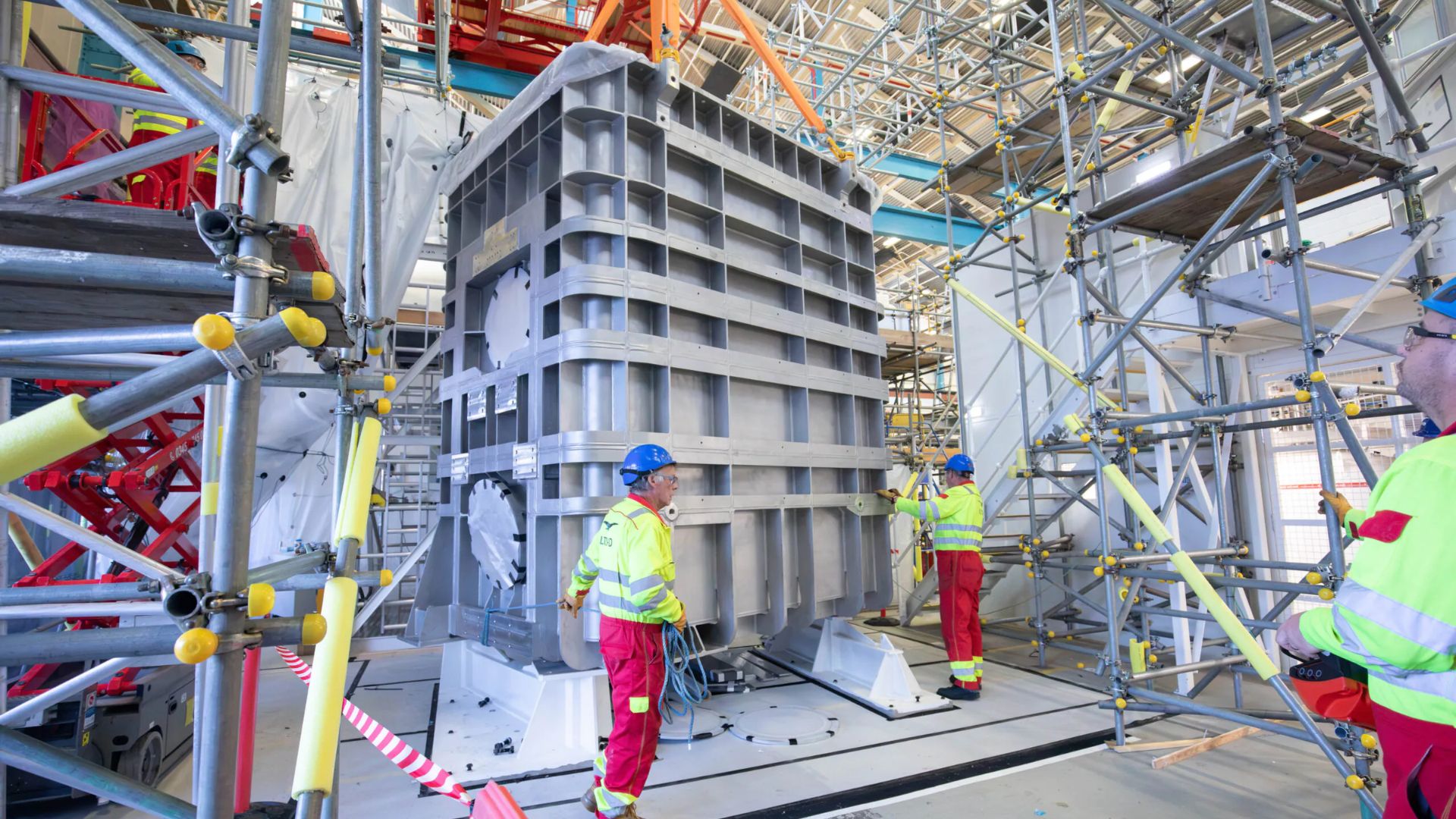
Engineers in Oxfordshire have lowered a 12-tonne (13-ton) steel structure into position for the UK’s flagship fusion experiment. The move marks a key engineering milestone on the path to limitless clean energy. The component, known as a double beam box, was hoisted into place at the Culham Campus of the UK Atomic Energy Authority (UKAEA). It forms the backbone of a major upgrade to the MAST Upgrade facility, a compact, spherical fusion device designed to test reactor physics. The new box will house two neutral beam injectors. These systems fire high-energy neutral atoms straight into superheated gas, or plasma. The bombardment heats the fuel toward the extreme temperatures required for commercial fusion. Once completed, the double-decker system will double the machine’s neutral beam heating power from 4.4 megawatts to 8.8 megawatts. In turn, core plasma temperatures are expected to soar from 30 million degrees Celsius to roughly 60 million degrees. Reaching such heat is vital for the UK’s long-term fusion ambitions. The extreme environment will give researchers an ideal test bed for STEP, or Spherical Tokamak for Energy Production, the prototype commercial plant Britain plans to build in Nottinghamshire. Andrew Thornton, who leads MAST Upgrade operations, called the successful lift a huge step forward for the facility. He noted that doubling the heating power allows the team to explore extreme conditions that were previously out of reach. The experiments will test whether the reactor’s exhaust system can endure the punishment of such high-performance plasma without degrading. Building the hardware requires specialized metallurgy. The vessel is crafted from 316L stainless steel, an alloy trusted in medical implants and offshore platforms for its strength and resistance to corrosion. Because fusion reactors must replicate the empty void of space, the steel also maintains an ultra-high vacuum with minimal outgassing and leakage. When fully assembled with its lid, the chamber will weigh approximately 15 tonnes (16.5 tons) and enclose 20 cubic meters of space. Maintaining high vacuum inside beam box The crane lift represents one piece of an ongoing overhaul across the Culham site. Technicians are currently fitting an electron Bernstein wave microwave system to inject extra heat into the plasma core. Nearby, teams are repurposing surplus electrical power gear from the retired Joint European Torus (JET) reactor, which closed in 2023. Further work includes building positive ion injectors and installing an internal cryopump to maintain high vacuum inside the beam box. The engineering work follows scientific success earlier this year. In August, MAST Upgrade operators completed the facility’s fifth experimental campaign, running over 1,100 plasma pulses and achieving record plasma pressure without losing control of the gas. Preventing unstable plasma from tearing apart is one of fusion’s hardest riddles. Engineers expect to fit all remaining interior equipment by late autumn 2027. Once the vessel is sealed and vacuum-tested, the next phase of scientific experiments will begin in 2028. Get the latest in engineering, tech, space & science - delivered daily to your inbox.An active and versatile journalist and news editor. He has covered regular and breaking news for several leading publications and news media, including The Hindu, Economic Times, Tomorrow Makers, and many more. Aman holds expertise in politics, travel, and tech news, especially in AI, advanced algorithms, and blockchain, with a strong curiosity about all things that fall under science and tech.
Nuclear fusion reactor gets massive 13-ton beam box to achieve 108 million °F
Full Article
Original Source
Read the full article at Interestingengineering →KhanList aggregates and links to publicly available news content. We do not host full articles from third-party sources. Always verify important information with original sources.