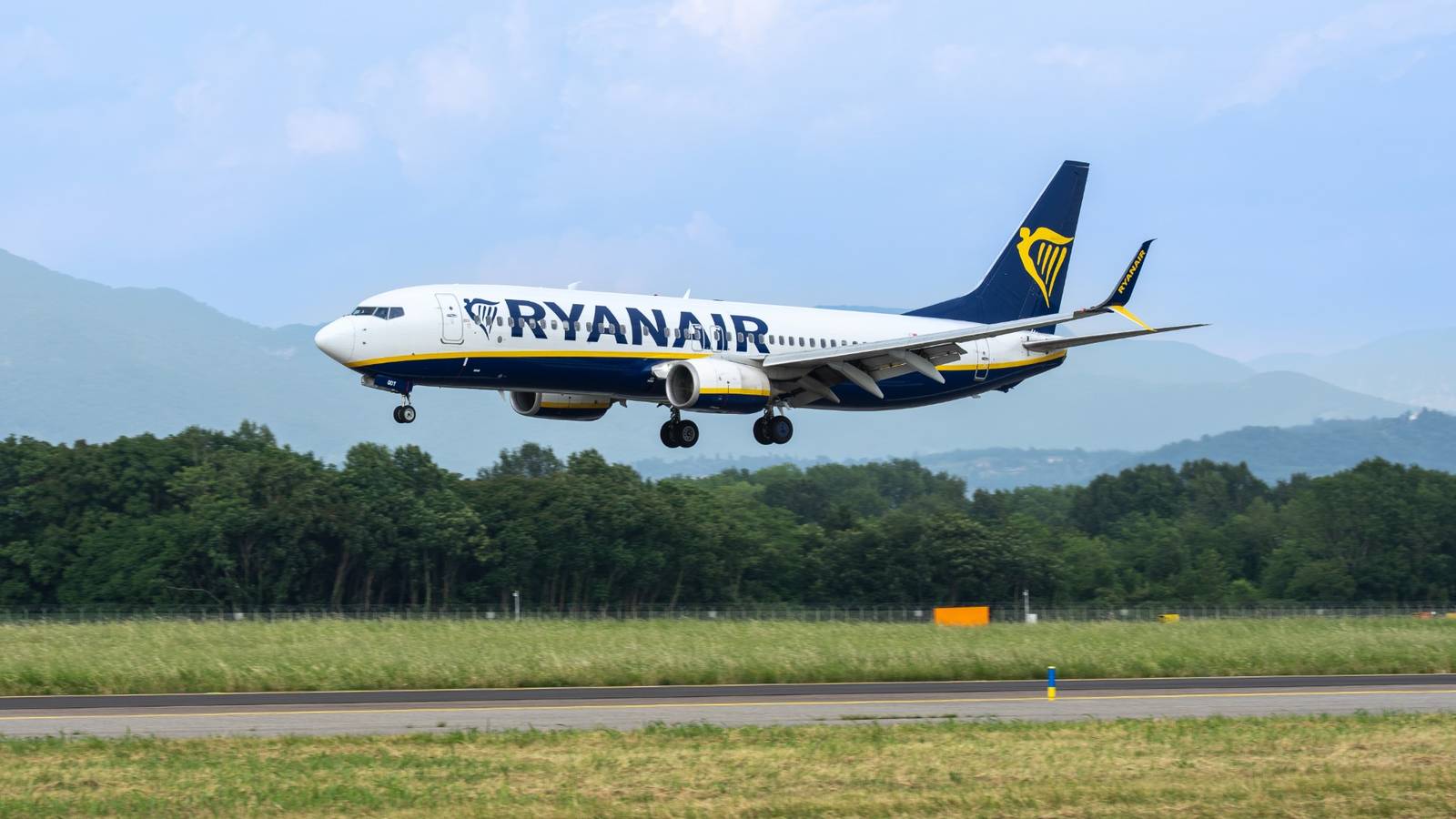
Credit: Shutterstock Published Aug 14, 2026, 12:13 PM EDT Louis is a military historian and the staff writer for History of War magazine, a leading military history monthly. He also has an interest in private and commercial aviation. Sign in to your Simple Flying account On July 10 in Polykastro, Greece, the Serbian national Ljubisa Karović had his head and right shoulder sucked out of the plane window. Karović suffered serious injuries aboard Ryanair flight 1879, which was operated by Malta Air. His wife had to desperately hold onto his legs in fear that he may have been sucked from the aircraft. The incident occurred when engine parts smashed the window next to him during the climb from Thessaloniki International Airport (SKG). A replacement aircraft then picked up the passengers to take them to Memmingen Airport (FMM) with a four-hour delay. The National Transportation Safety Board (NTSB) has now released its preliminary report. The initial indication is that a bird strike was involved. Bird remains, including feathers, have been found in the affected engine. The NTSB's investigation into all aspects of this accident, including the potential involvement of a bird strike, continues. A Recent History Of Bird Strikes Could Have A Part To Play Credit: Shutterstock The NTSBpreliminary report reveals what has initially been discovered, while drawing no conclusions about the ultimate cause of the accident: "Bird remains, including feathers, were recovered from the forward face of IDG oil cooler, one of the thrust reverser blocker door drag links, and the lower (6 o’clock position) of the engine fan case near the thrust reverser split flange." Both the remains and samples from the fan blades have been taken to the Smithsonian Institution Feather Identification Lab in Washington, DC for examination and identification. It is unclear whether there was a bird strike during the flight itself, or if the engine parts disconnected because of previous damage. However, flight crews had reported four bird strikes to the no.2 engine involved in the incident in the 12 months previous to July 2026. The Discovery Of Bird Remains Seems In Line With Ryanair's Previous Speculation Credit: Shutterstock After the accident, the RyanairCEO, Michael O'Leary, was quoted in the Irish Star speculating that it "looks like foreign object damage to the engine on takeoff at Thessaloniki." O'Leary did not give further details as to what that foreign object could be, avian or otherwise. He made the comments in a public earnings call. The NTSB Chair, Jennifer Homendy, responded on July 20 that the investigators had made no such determination. She also expressed her displeasure that O'Leary had violated the agency's rules in a letter directly addressed to O'Leary. She claimed he had violated International Civil Aviation Organization (ICAO) rules that govern information disclosure during ongoing safety investigations. Ryanair's chief executive, Eddie Wilson, gave an interview to RTE news, although he was more careful than O'Leary. He did acknowledge that the engine was clearly severely damaged, saying "There are photographs." However, he refused to speculate further, stating that he would wait until conclusions had been drawn by both the NTSB and the relevant Greek authorities. Simple Flying contacted Ryanair for comment on the accident. They refused to do so until the NTSB investigation has been completed. The Aircraft Had Followed Prescribed Maintenance Procedures Credit: Photo: Kaskip | Shutterstock Examination of the engine revealed serious damage. "There was cracking and 360° shear buckling on the exhaust case immediately aft of the engine turbine rear frame," reads the report. However, the NTSB acknowledges in its preliminary report that prescribed high-tech examinations had been properly carried out. The fan blades underwent ultrasonic inspections on November 11, 2025. This measure is required by CFM service bulletin (SB) 72-1033 revision 3. Further ultrasonic inspections were carried out on May 24, 2026. This was 253 cycles before the accident flight. Both inspections resulted in no findings, including no crack development. The NTSB has also found that procedures inside the cabin were followed. For example, all oxygen masks were deployed properly.
NTSB Investigators Found Bird Remains In Engine After Ryanair Passenger Sucked Through Window
Full Article
Original Source
Read the full article at Simpleflying →KhanList aggregates and links to publicly available news content. We do not host full articles from third-party sources. Always verify important information with original sources.