
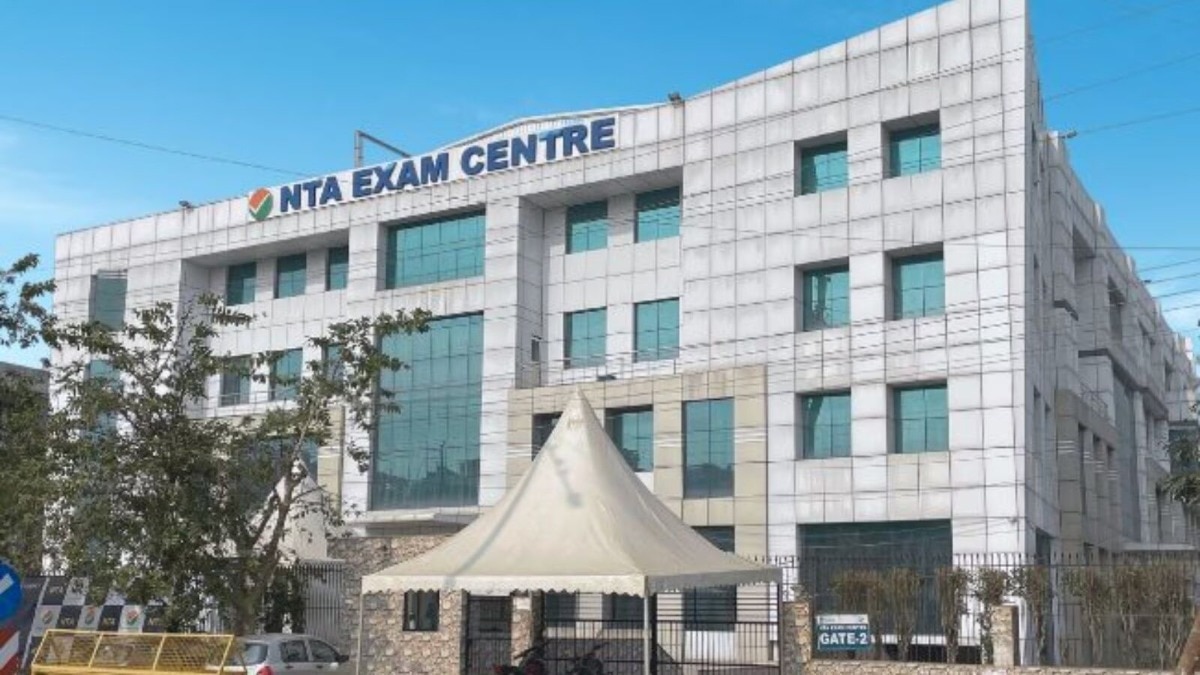
Former UGC chairman Mamidala Jagadesh Kumar said the NTA needs deep structural strengthening to tackle recurring exam-security concerns. He said sustained reforms across the full testing chain are needed to restore trust without replacing the agency.NTA must strengthen exam security systems without replacing agency, says ex-UGC chiefThe National Testing Agency (NTA) requires “deep structural strengthening” to address recurring examination-security concerns, but replacing the agency altogether may not be the most effective solution, former UGC Chairman Mamidala Jagadesh Kumar said.Speaking to PTI, Kumar, Chairman of the Review Committee for NEP 2020, said recurring paper-leak concerns should be treated as an “end-to-end examination-security challenge” considering the scale and complexity of examinations conducted by the NTA.The Centre recently ordered several measures to strengthen the NTA and the examination system following the NEET UG paper leak issue, which triggered widespread student protests and culminated in the resignation of a minister. This was followed by errors in the UGC NET examination.NTA NEEDS STRONGER SECURITY ACROSS EXAM LIFECYCLEThe government has also constituted a high-level committee under technocrat Nandan Nilekani, while Parliament recently passed a law aimed at curbing unfair means in public examinations by prescribing stricter punishments. “NTA operates examinations involving more than one crore candidates each year. At this scale, security depends on subject experts, digital systems, printers, transport, storage, centres, invigilators and service providers,” Kumar said.He said the Radhakrishnan Committee had reviewed the entire testing process and recommended stronger standard operating procedures, improved data security, clearly defined responsibilities and closer coordination with states. “The government and NTA have since introduced several recommended measures. The long-term solution is continuous risk assessment, fewer people handling confidential material, digital traceability and independent checks at every stage,” Kumar said.He said these measures could “steadily make breaches much harder and protect students' trust.”Asked whether the NTA had become overburdened by conducting too many examinations, Kumar said its workload was “very large”, but the number of examinations alone did not establish that the agency was overburdened.“The real issue is the complexity behind each examination,” he said, adding that the Radhakrishnan Committee had proposed a partnership model under which ministries, regulators or institutions seeking an examination would be responsible for the syllabus, subject experts, question quality and academic validation.According to Kumar, the NTA can focus on providing the secure platform, centre network, candidate verification, examination delivery and result processing.On whether different examinations should be handled by separate agencies, Kumar said he would not recommend dividing examinations among several agencies merely to reduce the visible workload.“A single national testing body offers common security standards, technology, candidate services and result procedures. Creating many new agencies could duplicate costs and produce uneven safeguards,” he said.Kumar said the entire examination system needed a holistic review covering question setting, translation, review, digital storage, printing or transmission, examination centres and invigilation.“Every handover needs traceability and strict access control,” he said.He also emphasised the need for permanent expertise in test design, cyber-security, languages, quality analysis, logistics and vendor management.“Centre quality and candidate support must remain consistent across hundreds of cities,” he said.35 OF COMMITTEE'S 46 MAJOR ACTION POINTS HAVE BEEN IMPLEMENTEDKumar said the Radhakrishnan Committee had addressed these areas and considerable action had followed, noting that the government reported in July that 35 of the committee's 46 major action points had been implemented.On whether the NTA needed a complete overhaul, Kumar said the agency had accumulated experience, technology, examination records and a national centre network, which should be strengthened rather than discarded.“NTA needs deep structural strengthening, but replacing the institution itself may not be the most useful answer,” he said.“The reported refresh of about 600 experts, onboarding of new specialists and introduction of four-tier question-paper scrutiny are important steps,” he said.“My assessment is that the expert-panel refresh is a strong corrective measure. Yet no single measure can complete an institution-wide reform. The wider reform programme is therefore necessary and is underway,” Kumar said.He said the government's long-term approach should be to develop the NTA as a “mission-critical professional institution”.“The Radhakrishnan Committee recommended strengthening NTA, defining responsibilities clearly, building institutional links with states and making the bodies requesting examinations active knowledge partners,” he said.Kumar said these recommendations provided a “sound roadmap” and that government action had already begun through senior appointments, specialist leadership positions, authentication systems and state-level coordination.On whether the NTA's existing infrastructure was adequate to conduct high-stakes examinations on a large scale, Kumar said the focus should not simply be on whether infrastructure existed, but on how the agency could keep pace with changing requirements.“Infrastructure must therefore be tested and upgraded continuously,” he said, adding that the next stage should focus on creating more accredited centres, preferably in dependable public institutions.“NTA's capacity is strong but it should continue to grow with its increasing responsibilities,” Kumar said.Kumar identified three reforms that should receive immediate priority: securing the complete examination lifecycle, building permanent professional capacity, and making examination centres and candidate services dependable.On examination security, he said every stage, from question selection, translation and review to storage, printing or digital delivery and centre-level handling, should maintain a secure record of every access or change.“The new four-tier question-paper check should be combined with limited access, encryption and independent security testing,” he said.The second priority, he said, should be building permanent professional capacity in areas including test design, cyber-security, languages, quality analysis, logistics and candidate communication.“The recent leadership strengthening, expert-panel refresh and specialist recruitment are useful beginnings,” he said, adding that selection, conflict-of-interest disclosure, training and performance review should become regular institutional processes.The third priority should be ensuring dependable examination centres and candidate services, Kumar said.“Accredited centres should provide CCTV monitoring, biometric verification, reliable power, connectivity, accessibility and trained staff,” he said.- EndsPublished By: Mridusmita DekaPublished On: Aug 22, 2026 16:50 IST
NTA needs deep structural strengthening, not replacement: Former UGC chief
Full Article
Original Source
Read the full article at Indiatoday →KhanList aggregates and links to publicly available news content. We do not host full articles from third-party sources. Always verify important information with original sources.