
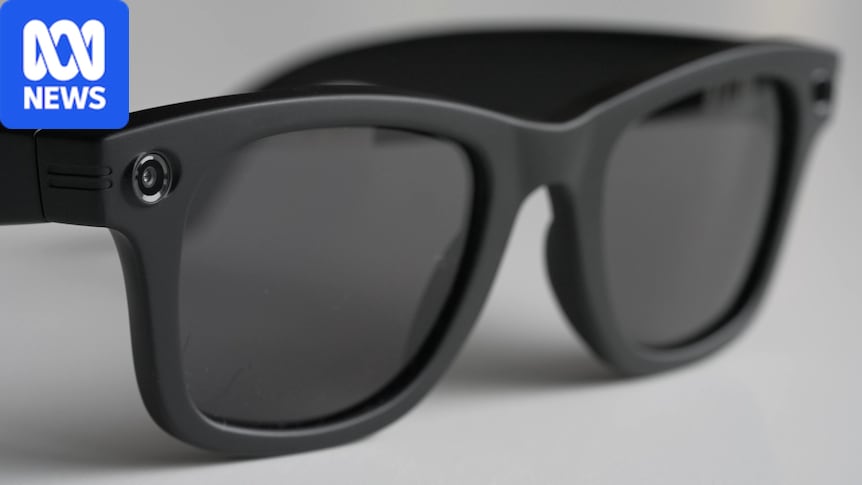
NT Health has issued a ban on smart glasses at all of its clinical sites, as part of an internal department review into its privacy policies prompted by a breach at Royal Darwin Hospital earlier this month.The breach involved a medical observer, Dr Neda Mogharehabed, who was visiting Royal Darwin Hospital (RDH), posting images and videos containing the confidential medical information of 12 pregnant patients to her 28,000 followers on Instagram.It is not suggested Dr Mogharehabed used such a device at RDH during her three-day placement there.The ban follows a data breach affecting pregnant patients at Royal Darwin Hospital. (ABC News: Che Chorley)In an email sent to all NT Health staff yesterday afternoon, chief executive Susan Bowden told employees the risk of "recording-capable wearables, particularly smart glasses" had been identified by a review group as an "elevated risk to patient privacy and confidentiality"."Personal recording-capable wearable devices, including smart glasses, are not to be used to record, photograph, livestream or otherwise capture patients, clinical interactions, or protected information in clinical settings," she wrote."It is important that all staff understand and adhere to this."When staff wear these devices without informing the patient, it decreases trust worthiness and can cause distress and unease."Ms Bowden said she recognised that technology was "increasingly providing opportuneness to improve patient care" but that ultimately "patient consent comes first". Susan Bowden says smart glasses and similar devices can affect health staff "trust worthiness" and "cause distress and unease". (ABC News: Michael Donnelly)She added that staff would only be able to use smart glasses — or similar devices — if their use was explicitly approved by NT Health, for a "legitimate clinical, therapeutic, communication, accessibility, safety, or operational purpose" and met existing standards around patient consent, privacy, and record security and management. The email, which has been seen by the ABC, was sent to all staff a little over an hour after the ABC enquired about whether NT Health had a policy regarding smart glasses.The chief executive said in her email the decision to ban the device was led by the work of the medical observer review group, which would also examine broadly "the impact of emerging technology and privacy from a whole of government perspective".On Wednesday last week, NT Health Minister Steve Edgington told the media that the medical observership program, which Dr Mogharehabed took part in, would be paused, with its policies being reviewed internally by a group.He also said he had referred the breach to the NT Information Commissioner and NT Police for investigation.AMA supports ban of smart glassesThe vice-president of the Australian Medical Association's NT branch (AMA NT), Dr Dayna Duncan, said the peak body supported NT Health's decision."Privacy and trust within the health profession is essential for us to be able to do our jobs; we can't make decisions clinically, diagnose and treat disease if we don't have all the information about patients, and patients can't give us the information if they don't feel safe and comfortable to do so," Dr Duncan said."It's a good thing that NT Health has been so clear about the policy."Dayna Duncan says protecting the privacy and trust of patients is critical for health professionals. (ABC News: Pete Garnish)Dr Duncan added that as new technology emerged, it would be important for the department to make a case-by-case assessment on how to respond."Sometimes it is an outright ban, but sometimes as these technologies are more developed, they can be integrated into the clinical space to allow us to deliver more care," she said."Especially in a health system where we are already stretched, where we have such a sick population and we're spread across such a vast geographical area, we need to use and harness these emerging technologies in a way that's safe for our patients."
NT Health bans staff from wearing smart glasses, citing 'elevated risk'
Full Article
Original Source
Read the full article at Abc →KhanList aggregates and links to publicly available news content. We do not host full articles from third-party sources. Always verify important information with original sources.