
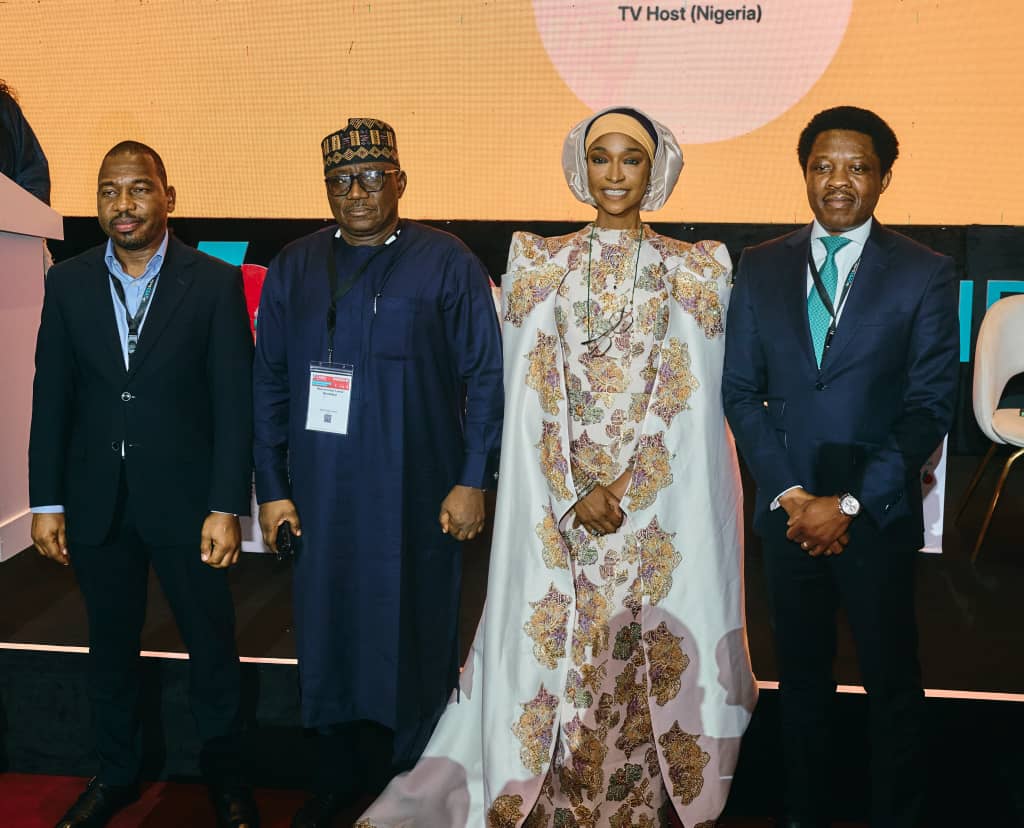
Executive Director, Policy and Compliance, Mr. Shettima Tamadi; Executive Director, Finance and Corporate Services, Mr. Muhammed L. Abubakar; Minister of Art, Culture, Tourism and the Creative Economy, Hannatu Musa Musawa; and Executive Director, People, Stakeholders and Communication, Mr. Obinna Ihedioha, who represented the NRS Executive Chairman, Zaach Adedeji, at the 2026 edition of CANEX WKND. Follow THISDAYLIVE on GoogleAdd us as a preferred source to see more of our stories in Google Follow us on Google .Says clarity, formalisation, investment and partnership critical to sector’s growth By Emmanuel Jonathan The Nigeria Revenue Service (NRS) has called for simpler, clearer and business-friendly tax rules to unlock the investment potential of Nigeria’s creative economy, stressing that tax administration must facilitate enterprise growth, innovation and prosperity. The Service said the emergence of digital business models, intellectual property-driven enterprises and cross-border transactions required tax system creators, entrepreneurs and investors could easily understand and navigate. The Executive Chairman of the NRS, Dr. Zacch Adedeji, made the call at a high-level dialogue on taxation and investment in the creative economy at the Creative Africa Nexus (CANEX) event in Lagos. He was represented by the Executive Director, People, Stakeholders and Communication, Mr. Obinna Ihedioha. Adedeji described Nigeria’s creative economy as one of its most promising economic assets, noting that the country’s greatest resource was the minds and talents of its young people. He said the sector had evolved beyond entertainment into a major economic enterprise capable of generating jobs, earning foreign exchange, attracting investment and expanding economic opportunities. According to him, digital platforms and emerging business models had changed how value was created, with creative entrepreneurs building businesses around copyrights, designs, brands, digital products and audiences. He said the development required a corresponding shift in tax administration to ensure that fiscal policies did not discourage innovation, investment or business expansion. “Government needs sustainable revenue to invest in education, security, technology and infrastructure. But how we tax matters as much as what we collect. It shapes whether businesses start, whether investors come, and whether enterprises grow or stay small,” he said. Adedeji stressed that taxation should not be pursued at the expense of enterprise but should support the expansion of prosperity through a productive economy, noting that growing businesses would ultimately strengthen government revenue and its capacity to deliver public services. He said the new tax laws provided an opportunity to reset the system around clearer rules, fewer burdens for small businesses and an administration built on service, understanding and support. He identified clarity, understanding and value as critical pillars of an effective tax system for the creative economy, adding that formalisation should provide businesses access to finance, contracts, investment, larger markets and protection. The NRS, he said, participated in CANEX as a partner in enterprise through a high-level dialogue, an Investment and Tax Advisory Hub for creators and investors, and the Creative Economy Tax and Investment Initiative (CETII), designed to sustain engagement beyond the event. The Minister of Art, Culture, Tourism and the Creative Economy, Hannatu Musa Musawa, underscored the importance of the creative sector to Nigeria’s economic diversification agenda, describing it as a major opportunity for job creation, wealth generation and youth empowerment. Musawa said the sector had continued to expand even before the establishment of a dedicated ministry, adding that government policies should enable creative entrepreneurs to earn more from their talents and intellectual property. She identified intellectual property protection, digital infrastructure and access to funding as priorities, noting that Nigeria could draw lessons from countries such as South Korea, which had transformed its creative industries into major drivers of economic growth. The Executive Director, Finance and Corporate Services, Mr. Muhammed L. Abubakar, addressed concerns surrounding income earned abroad, explaining that tax residency status and double taxation agreements between Nigeria and other countries were important considerations in determining applicable tax treatment. Similarly, the Executive Director, Policy and Compliance, Mr. Shettima Tamadi, said tax simplification required identifying practical difficulties businesses encountered under existing rules. He said understanding taxpayers’ challenges was essential to making the system more efficient and responsive. “For entrepreneurs in the creative sector, simpler rules can make it easier to understand their tax obligations and plan for them as their businesses grow,” Tamadi said. During a panel discussion, tax policy expert, Mr. Simeon Onyegbula, examined provisions in the tax framework that could support creative enterprises, including income tax relief for qualifying small companies, changes to minimum tax provisions and the implications of recovering Value Added Tax paid on qualifying business equipment for cash flow. Mr. Mustapha Akaje said tax incentives were designed to encourage investment and promote economic development, explaining provisions relating to the zero per cent Company Income Tax rate applicable to qualifying small companies. Speaking on business formalisation, Mr. Kazeem Lawal stressed that formalising creative enterprises was essential to their growth, credibility and sustainability. He said operating business transactions through personal accounts could constrain expansion, while proper business registration and structures gave enterprises a distinct legal identity, improved record-keeping and compliance, and strengthened their ability to attract investors, strategic partners and access local and international markets. In his closing remarks, Ihedioha said the dialogue had underscored the need to move the relationship between tax administration and the creative economy from apprehension to understanding, and from compliance as a burden to formalisation as an opportunity. Drawing on the story of Kenneth Nnebue, the Onitsha trader whose use of unsold videotapes to produce Living in Bondage in 1992 helped lay the foundation for Nollywood, he said the creative economy demonstrated how ideas could transform circumstances and create entire industries. He noted that although the tools of creative production had evolved from videotapes to laptops, digital platforms and global audiences, the ingenuity driving the industry remained the same. Ihedioha said interactions at the NRS Investment and Tax Advisory Hub revealed that uncertainty, rather than unwillingness to comply, was a major concern among creative entrepreneurs. He recounted the experience of a young animator who had earned income from international clients for two years without filing tax returns but feared registering her business because of possible penalties for past non-compliance. According to him, NRS officials provided guidance on registration, tax obligations, provisions supporting small businesses and digital channels for compliance, with the aim of replacing fear with clarity and enabling entrepreneurs to enter the formal economy with confidence. He identified three lessons from the engagement: clarity was an incentive in itself; formalisation must deliver tangible value; and sustainable growth of the creative economy required partnerships among government, creators, investors, financial institutions, regulators and development partners. “Uncertainty is a tax nobody collects but everybody pays,” Ihedioha said, emphasising that creators and investors were more likely to formalise, invest and grow when tax rules were clear, predictable and accessible. He said the NRS regarded CANEX WKND as more than a one-off engagement, noting that the Investment and Tax Advisory Hub had demonstrated the value of direct engagement with creative entrepreneurs. He added that CETII would provide a continuing framework for collaboration on tax education, business formalisation, investment facilitation and policy dialogue. Ihedioha commended the Minister, the Federal Ministry of Industry, Trade and Investment, Afreximbank, speakers, panellists and other stakeholders for their contributions, reiterating the NRS’s commitment to creating an enabling environment for creative businesses to formalise, grow, attract investment and contribute to national development. The Group Director, Corporate Communications and Stakeholder Engagement (GD-CC&SE), Mrs. Yinka Akpata, was among the stakeholders from the NRS that participated at the event to ensure the successful outing of the 2026 edition of CANEX WKND. *Emmanuel Jonathan is a Communications Expert and Head of Editorial Unit, Corporate Communications Department, Nigeria Revenue Service, and writes from Lagos.
NRS Pushes For Simpler Tax Rules To Unlock Nigeria’s Creative Economy
Full Article
Original Source
Read the full article at Thisdaylive →KhanList aggregates and links to publicly available news content. We do not host full articles from third-party sources. Always verify important information with original sources.