
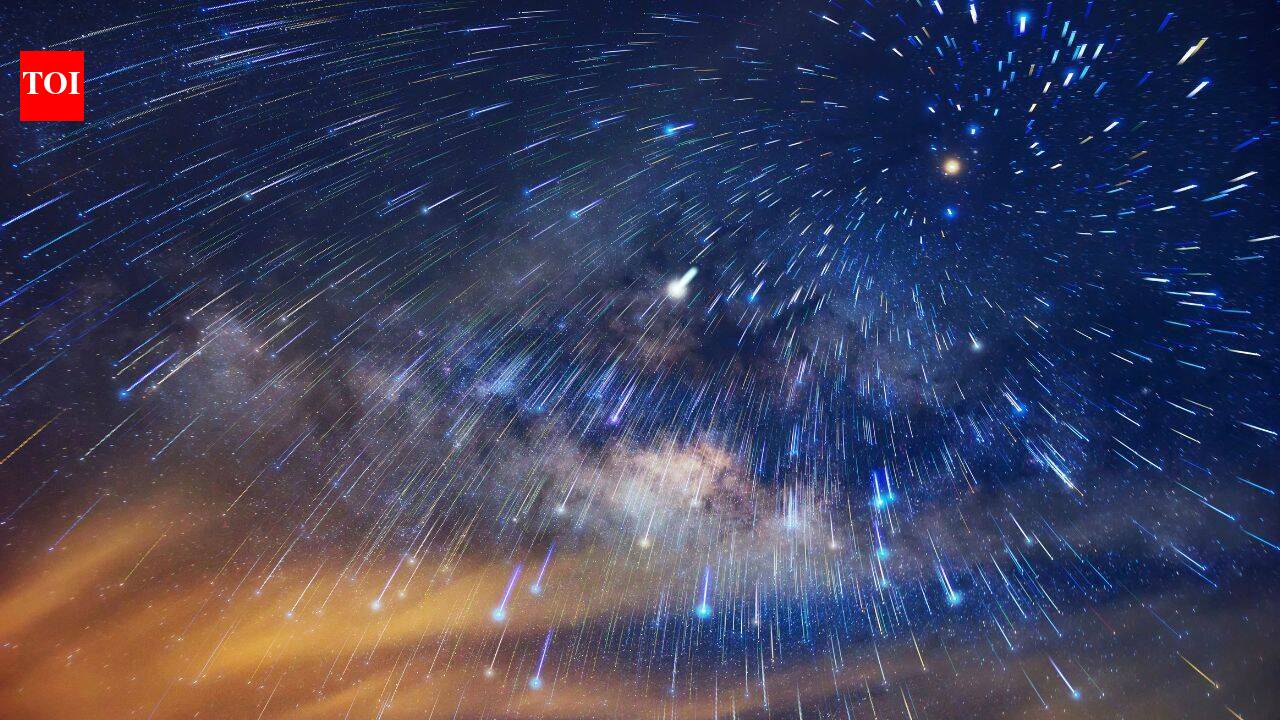
Representative Image of meteor shower (Image Credit: Canva)The sky holds mysteries that the most evolved humans have not been able to figure out yet. The galaxies, moons and celestial bodies withheld in the vastness of the universe depict phenomena that occur only once in a while. An even rarer event is actually witnessing some of these events in the sky. While sleeping under the stars has become a fantasy in the modern world, the sky remains under close observation by the scientists to constantly know more about the world beyond Earth. This November, the universe is offering plenty of reasons to step outside, leave the city lights behind and look up.According to NASA’s November 2026 guide for skywatching, a tempting combination of celestial events are awaiting you. Some of them are the Leonid meteor shower around November 17 and 18, the bright fireballs associated with the Taurid meteor showers, and a full supermoon on November 24.1. The LeonidsBest time: Before dawn on November 17-18, after the Moon sets.If you have ever wanted to make a wish on a shooting star, mark these dates on your calendar. The Leonid meteor shower is expected to offer its best viewing opportunity in the early hours of November 17 and 18. Under ideal dark-sky conditions, observers could see around 15 meteors an hour, although the actual number of meteors visible to anyone may be lower.The Leonids are remnants of Comet 55P/Tempel-Tuttle. As Earth passes through the trail of debris left behind by the comet, tiny particles enter our atmosphere at extraordinary speeds, heating up and creating the bright streaks we call shooting stars. Leonids are particularly speedy, travelling at around 70 kilometres per second.For the best experience, find a spot away from streetlights, settle into a reclining chair and give your eyes about 30 minutes to adjust to the darkness. The Leonids, as the name suggests belong to the constellation Leo.In India, consider a quiet, permitted stargazing spot in Ladakh, Spiti or another low-light destination, checking local weather and access conditions before setting out.2. The TauridsPeak dates: Around November 5 for the Southern Taurids and November 12 for the Northern Taurids.NASA notes that the Southern Taurids peak around November 5, followed by the Northern Taurids around November 12. Each typically produces only a handful of meteors per hour under ideal conditions, but the showers are known for occasional bright fireballs. Taurid meteors are associated with relatively large particles, which helps explain their reputation for producing these striking displays.(Image Credit: Canva)The showers are active across a broader period, so missing their peak dates does not necessarily mean missing every opportunity. If you are travelling in early November, try spending an evening somewhere with an unobstructed view of the sky.3. A supermoonBest time: The evening of November 24, around moonrise.On November 24, a full supermoon will rise, beginning a sequence of three consecutive supermoons spanning November, December and January.A supermoon occurs when a full Moon coincides with a relatively close point in its orbit around Earth. Because the Moon's orbit is elliptical, its distance from us changes over time. When a full Moon occurs closer to Earth than usual, it can appear slightly larger and brighter than an average full Moon.How to plan your own stargazing escapeYou do not need to chase all three events in one trip. Pick the experience that appeals to you most.A few simple preparations can make a significant difference:Escape artificial light. Choose a dark-sky location away from brightly lit roads, hotels and city centres.Check the forecast. Clouds can spoil even the most promising astronomical event.Dress for the night. Temperatures can fall sharply after sunset, particularly in mountain destinations.Bring a chair and a blanket. Meteor watching involves looking at a large portion of the sky, not craning your neck at one small patch.Put your phone away. Bright screens interfere with dark adaptation; if you need an astronomy app, use its red-light setting.
November sky: Leonids peak Nov 17-18, with full supermoon due on Nov 24
Full Article
Original Source
Read the full article at Timesofindia →KhanList aggregates and links to publicly available news content. We do not host full articles from third-party sources. Always verify important information with original sources.