
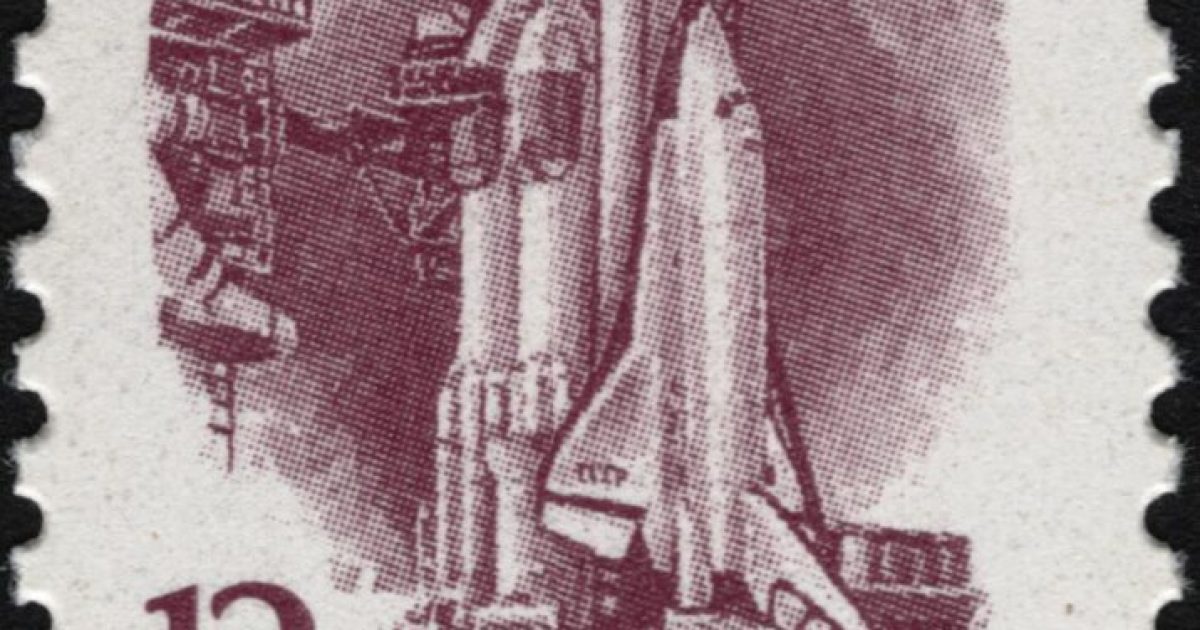
Today in the history of astronomy, the Soviet answer to the space shuttle makes its only flight. | Published: November 15, 2026 The similarities with the design of the American space shuttles are evident in Buran, seen here on a 1991 Soviet postage stamp. Credit: USSR Post (рисунок В. Э. Коваля., Public domain, via Wikimedia Commons In 1976, the Soviet Union began development of the Buran orbiter. Concerned that the American space shuttle program might be used for military purposes, the Soviets responded with Buran and its Energia booster rocket, which were capable of carrying antisatellite and antimissile weapons and targeting locations on Earth’s surface. Though the nonmilitary objectives for Buran included ferrying crew and supplies to the Mir Space Station, Buran was also capable of flying unmanned and fully automated. The Buran program marked several achievements – the development of 230 new technologies, a fully recoverable rocket capable of lifting 220,000 pounds (100,000 kilograms) to orbit, a shuttle that could carry up to 10 cosmonauts. However, it only made a single flight: On Nov. 15, 1988, Buran launched from the Baikonur Cosmodrome in Kazakhstan, performed two orbits, and returned to Earth. The 206-minute flight was seamless, and was performed fully under remote control, with no crew members aboard. Despite this success, the colossal expense of the program and the 1991 collapse of the Soviet Union meant the end of Buran. In 2002, the roof of a hangar at Baikonur collapsed, killing eight people and destroying the orbiter and its rocket. Elisa Neckar is senior production editor of Astronomy magazine, and the editor of the Today in the History of Astronomy feature on Astronomy.com.
Nov. 15, 1988: The Buran orbiter launches
Full Article
Original Source
Read the full article at Astronomy →KhanList aggregates and links to publicly available news content. We do not host full articles from third-party sources. Always verify important information with original sources.