
Menopause hit Ms Joanna hard two years ago.The 51-year-old the civil servant, who asked to be identified only by her first name, was facing a perfect storm of pressures.She was coping with menopause-related mood swings, difficulty readjusting to life in Singapore after living overseas for more than two years, the demands of caring for ageing family members and the deaths of several family members and friends. Her symptoms, including hot flushes and disrupted sleep, had begun when she was around 47, she recalled. But as the pressures mounted, her emotions became overwhelming and began to affect her performance at work. That's when she knew she needed professional help. "I had never felt depressed before – never such a depression that I would actually burst out crying for no reason. So it kind of scared me when it happened to me." She said that she had lost her motivation to work: "I just felt like I didn't want to work anymore. I was thinking, 'What's the meaning of life, and what do I want to do?'" When she sought professional help at the Institute of Mental Health, she was diagnosed with an adjustment disorder. "There wasn't a definitive cause. It was just a combination of everything – fluctuating emotional changes from menopause, stress, coming back to Singapore, life." She eventually decided to take a year of unpaid leave from work, with the support of her managers.During her time off, she travelled, spent time with friends and family, and learnt more about menopause. She attended the inaugural Menopause Festival in November 2024 and joined Dynamite Daisies, a menopause interest group under KK Women's and Children's Hospital. A year ago, she finally felt ready to return to work, she said."Work is work, but I think you also need to take time out for yourself," she reflected. She counts herself lucky that her workplace was supportive of her year-long break. For some women, however, flexible work arrangements or extended leave are not options. Ms Dawn Lum, 54, who works in retail, said that her menopause-related mood swings and brain fog had largely subsided after she started hormone replacement therapy two years ago. However, she still experiences discomfort, including fluid retention in her legs after standing and walking for eight to 10 hours each shift. She continues to work full shifts, sitting down whenever she cam.Despite the swelling, Ms Lum prefers longer shifts that give her full days off, rather than shorter shifts every day.She enjoys her work, but she also relies on the income, and cutting back on her working hours would mean earning less.Dr Clara Ong, an obstetrician and gynaecologist at Parkway MediCentre, said that many women simply push through menopause symptoms while working, which is why employers should take the issue more seriously.After all, menopause symptoms can affect and even be detrimental to a woman's well-being and her ability to function, she added. Menopause can affect everything from a woman's energy levels to emotions, health experts say. (Photo: iStock) Menopause is reached after a woman has gone for 12 consecutive months without a menstrual period. Before that, women may go through a long period of perimenopause, also known as the menopausal transition. Women experiencing perimenopause or menopause are typically around 45 to 50 years old, Dr Ong said, and the transition can last for years.The Ministry of Manpower's Labour Force in Singapore Advance Release 2025 report showed that women made up 47.7 per cent of Singapore's resident labour force.And as Singapore's labour force continues to age, the toll of menopause may become increasingly difficult to ignore, women's health advocates told CNA.Ms Sangeetha Yogendran, manager of advocacy and research, at the Association of Women for Action and Research (AWARE), said that many employers and managers are still unaware of the issue. There are no publicly available statistics on the economic impact of menopause in Singapore. However, in the United Kingdom, for example, one in 10 women aged between 40 and 55 had left a job because of menopause symptoms, as reported in a 2022 study by the women's rights charity Fawcett Society. In Japan, symptoms associated with menstruation and menopause cost the country an estimated 2,296.3 billion yen (US$14.4 billion) in 2022, as stated in an article published in the medical journal Reproductive Health. A 2024 report by the Swedish Institute for Health Economics also estimated the annual per-person productivity cost of vasomotor symptoms such as hot flushes and night sweats across the Nordic countries. The estimates ranged from about 4,600 euros (US$5,155) per person in Denmark to 8,700 euros per person in Norway. In Singapore, menopause remains overlooked, one academic told CNA.Adjunct Assistant Professor Huang Zhongwei from the National University of Singapore's Yong Loo Lin School of Medicine said: "We need to do further research, but I'm glad that our data has come in, and is raising awareness."The deputy director of the Bia-Echo Asia Centre for Reproductive Longevity and Equality (ACRLE) co-authored a 2025 white paper titled Menopause and the Bottom Line: A Critical Leadership Challenge for APAC Leaders.The paper provided some of the first real-world data showing how menopausal symptoms affect the professional and personal lives of women in the Asia-Pacific region. "I think that quantifying the economic loss (due to the impact of menopause) will also add value to what we are talking about: how it will impact workplace practices, productivity and efficiency if this is not resolved. I think we need that data," he added. OVERLOOKED AND UNDERSTUDIED Menopause is a major health issue and merits further research on that basis alone, Adj Asst Prof Huang said.His study found that women in Singapore appeared to be particularly affected by symptoms, with around two-thirds reporting two or more menopause symptoms. In Indonesia, for example, women more commonly reported fewer symptoms.More research is needed to understand the difference and why this was so, he said."Is it something biological that signals how these women respond? Is it the environment? Is it work stress? There are a lot more facets to it than meets the eye.”Advocates said that menopause also deserves more attention because women have long suffered in silence.Madam Rahayu Mahzam, Minister of State for Health, recently commented: “Menopause is something that, I think, sometimes, is really put at the back."Even though much progress has been made in maternity and postnatal care, menopause is still something women simply endure, she said at a community event called Menopause Matters last month.Ms Goh Han Yan, Member of Parliament (MP) for Nee Soon GRC, said that the People's Action Party (PAP) Women's Wing had heard from women who experienced unfamiliar changes in their bodies and feared something was seriously wrong, without realising that these could be signs of perimenopause.Ms Goh, who is the adviser for health and well-being from the PAP Women's Wing, said that a joint survey with NTUC Women and Family also showed that women were anxious about how others would perceive them during menopause, underscoring the need for greater awareness. The survey, which polled 2,375 women in August, found that only one in five were confident their symptoms would not affect how others viewed their performance or capability. The PAP Women's Wing is also planning a series of listening sessions to better understand women's lived experiences, Ms Goh said. The first session is scheduled for Dec 5. Ms Christina Ang, chief executive officer of HeyVenus Integrated Healthscience, which worked with Adj Asst Prof Huang to publish the menopause white paper, said that more data is also needed on the women who are falling through the cracks.Besides research efforts, her health technology company also runs an application that allows women to track menopause symptoms and access resources.HeyVenus and ACRLE also partnered to form a Cross Sector Menopause Taskforce, which released its Menopause Care Playbook in September. Building on the white paper the two organisations published last year, the playbook offers recommendations for managers and companies on supporting employees going through menopause. "I would prioritise how women navigate care, whose needs we are missing and which support measures actually help," Ms Ang said. "We need to understand differences across income groups, ethnicities and occupations, including shift workers and women outside formal employment."Beyond being a health issue for women, menopause could also be an economic one.The white paper by ACRLE and HeyVenus found that 74 per cent of Singapore-based women aged 45 and above who reported at least two menopause symptoms said that these interfered with their ability to do their jobs and diminished their quality of life. In light of these findings, experts said that it was worth looking at quantifying the economic impact of menopause in Singapore. "When health needs go unsupported, the consequences can reach a woman’s earnings, career progression and an organisation’s ability to retain experience … Better evidence should guide how we improve access for our ageing population and workforce health as women and men are staying longer in the workforce," Ms Ang said. Associate Professor Kelvin Seah, from the Department of Economics at the National University of Singapore (NUS), said that menopause-related drops in productivity, absenteeism and resignations could have broader economic implications such as lower labour productivity and a reduction in labour supply, Studying the economic impact of menopause in Singapore would help determine the scale of the issue and whether better workplace support measures were needed, he said. Such an assessment would require information on the prevalence and severity of menopause-related symptoms among working women in Singapore, as well as the extent to which these symptoms affect their ability to work, he added."One thing to note is that simply observing lower productivity or higher absenteeism among women experiencing menopause does not necessarily mean that menopause is the cause," Assoc Prof Seah cautioned, adding that being able to isolate the effects of menopause would be ideal for researchers.MORE THAN JUST HOT FLUSHESHot flushes are usually the first thing that comes to mind when people think of menopause symptoms. But they are far from the only symptom.The wide range of symptoms can affect everything from a woman's ability to function at work, to her mood and social life, Dr Ong from Parkway MediCentre said. Women in Western countries going through menopause most commonly experience hot flushes, while women in Singapore most commonly experience muscle and joint discomfort, Dr Ong added. The reason for this variation remains unclear.Other symptoms include sleep problems, vaginal dryness, physical and mental fatigue, brain fog, difficulty concentrating, and even itchy skin, Dr Ong said.Brain fog and poor concentration can directly affect complex problem-solving, decision-making and multitasking at work, she added. Some women with persistent joint pain or bladder urgency may also find it difficult to stand, sit or commute for long periods.Often, women can struggle to recognise that they are in perimenopause because their menstrual periods can remain regular or only mildly irregular. Symptoms such as anxiety, joint pain and fatigue can also be mistaken for work stress, ageing or clinical depression, Dr Ong said.When real estate agent Tien Chua, 46, first began experiencing blurred vision two years ago, she thought she was developing presbyopia, the gradual loss of the eyes' ability to focus on nearby objects. Real estate agent Tien Chua (pictured) said that her perimenopause symptoms include dry eyes, ringing in her ears and hot flushes. After a new pair of spectacles failed to fix the problem, she did her own research and concluded that she had dry eyes, which she attributed to perimenopause. Dry eye occurs when tears do not adequately lubricate the eyes. She also began perspiring more, which made her self-conscious around clients. As a real estate agent, image is everything, Ms Chua said. These days, she carries portable fans and cooling wipes and sprays with her to property viewings. Ms Joanna, the civil servant, has been postmenopausal for the past for the past two years. Although she said that magnesium supplements and herbal teas had helped, she still experiences occasional sleepless nights. Her sleep is also sometimes interrupted by repeated trips to the bathroom.For now, she manages these symptoms by listening to her body and resting when needed."I've been lucky that if I need time off for medical appointments, I can take half a day off from work," she added. Her boss also allows her to leave work early for appointments when necessary.Ms Ang, the CEO of HeyVenus, also experienced disrupted sleep during perimenopause while working in a demanding corporate role."I still had the same responsibilities the next day, but less energy to manage them," the 53-year-old recounted. She had to manage her own symptoms. Changes to her exercise and diet routines, consultations with her doctor and evidence-based care helped, she said. "My own experience made this personal; my corporate experience helped me understand how organisations could respond." An employee who has slept poorly because of disrupted sleep might benefit from a simple accommodation such as agreeing with the boss to have a later start to the workday, she suggestedMs Mhairi Jerga, a counsellor with Insightful Counselling who specialises in supporting women through perimenopause and menopause, said that symptoms can gradually undermine women's confidence and cause anxiety. "Women who once led meetings with confidence may begin to approach them with apprehension, worrying about losing their train of thought or struggling to find the right words. Coupled with persistent exhaustion, particularly as the day progresses, these experiences can gradually affect their sense of competence and confidence."These physical and emotional changes can be particularly challenging alongside the other responsibilities, Ms Jerga added. Women going through menopause are often part of the "sandwich generation", caring for children and ageing parents at the same time. WHAT MENOPAUSE SUPPORT LOOKS LIKEMr Gerald Giam from the Workers' Party who called for greater menopause support for women during the 2024 Committee of Supply debate in parliament, acknowledged that drawing attention to the issue could be a double-edged sword. But the Aljunied GRC MP said that it was important nonetheless.He told CNA: "The point is not to single out female workers at this life stage, which could inadvertently hurt their employability, but to normalise open conversations and provide sensible workplace flexibility so employees can attend to periodic health needs."He also called on the government to ensure that health consultations and check-ups for women in this age group specifically address perimenopause.Fostering both health literacy and practical flexibility would help women sustain long, fulfilling careers, he said.HSBC Singapore has taken a similar approach, introducing its menopause-related initiatives and medical benefits in 2025.The bank's head of people Mukul Anand said: "With a significant proportion of our female colleagues in Singapore within the menopausal age bracket, it was important to take a proactive approach." Bank employees from HSBC Singapore attending a workshop on using traditional Chinese medicine to manage menopause symptoms in August 2026. (Photo: HSBC) The bank encourages open discussions about menopause among its workers through support groups. Its employees and their insured spouses also have access to up to S$10,000 in menopause medical coverage, including medical consultations, diagnostic tests, hormone therapy and other treatments recommended by a physician, Mr Anand said."This combination of healthcare coverage, education, community support and manager guidance is important. A benefit is most effective when employees know it exists and feel comfortable using it."Ms Deepali Kidambi, co-chair of HSBC Singapore's Balance Employee Resource Group, who has been spearheading its menopause awareness activities, said that the bank's support group sessions have helped employees become more comfortable discussing menopause.She recalled the experience of one participant: "She felt so much better that she knew others were there and were going through similar things ... it gave her the confidence to speak about it not only to colleagues but also family members." Although comprehensive medical benefits are welcome, menopause support does not always have to involve large budgets, Ms Ang from HeyVenus stressed. "The first step can be just a conversation. I think the most important thing is that an employee knows she can ask for support without being judged."At homegrown wellness chain Cheryl W Wellness, founder Cheryl Wee follows this "no-judgment" philosophy. A sub-brand of the 44-year-old Jean Yip Group, her company employs 40 people, most of them women, including about 10 of menopausal age.Ms Wee said that she and her mother Jean Yip try to maintain an open, family-like culture, Many Jean Yip Group employees have been with the company for decades, she added. Employees going through menopause – or facing other circumstances that require flexibility – can ask for shorter working hours or explore transitioning to less physically demanding roles, Ms Wee said. For example, a masseuse who no longer feels physically up to the role may request to move to a desk-based position in customer service. The company offers training and mentorship to support career progression and facilitate these transitions, she said. The key, Ms Wee said, is a hands-on management style and regular check-ins with staff members, a habit she picked up from her mother."We see each other often enough, so trust is built with the staff. They feel like they can openly share with us,” Ms Wee added.As an entrepreneur, she understands the challenges facing small‑ and medium‑sized enterprises when it comes to making workplace accommodations. Even setting aside space for a nursing room can be difficult, let alone introducing menopause support programmes, she said. "My advice would just be to maintain open communication with your workers," Ms Wee said. "At the end of the day, they are your first customers, right? They have to be happy and they have to be supported."Menopause platform Surety is another Singapore company hoping to lead by example. Founded four years ago, it runs free and paid community events, as well as corporate programmes, to help companies become more menopause-friendly. Although Surety has a small team and no employees of menopausal age, it has a workplace culture and measures in place to support women who may join in the future, co-founder Valery Tan said. Ms Valery Tan, 28, founder of Surety, a menopause and women's health advocacy group, pictured on Nov 6, 2026. (Photo: CNA/Syamil Sapari) Besides flexible work arrangements, the company is prepared to offer dedicated menopause leave, as well as subsidies and co-payments for menopause management options such as strength training.Co-founder Elmer Yap said that a big part of creating a menopause-friendly workplace was fostering an environment where colleagues felt comfortable expressing their needs without having to explain or justify every personal detail. "I think one of the most important things I have learnt is that being supportive does not necessarily mean going out of the way for someone. I feel that it is about being more thoughtful in the ordinary ways we work with one another," Mr Yap added. This includes being flexible about schedules and understanding when someone needs a break."For me, being an 'ally' is less about demonstrating how much I know about menopause and more about using that knowledge to become a better colleague," he continued. "I think the real test of a menopause-friendly workplace is not whether people are comfortable talking about menopause, but whether someone who chooses not to talk about it can still feel supported."Standard Chartered has also made allyship a focus. Part of the bank's efforts to strengthen workplace support across its global offices since 2021 include training and a Menopause Conversation Guide for line managers. Mr Wong Yang-sheng, its head of human resources for Singapore and ASEAN, said that the bank also runs education sessions open to all employees, including virtual sessions on the role of male allies. Ms Au Yoke Mei, 56, pictured on Nov 4, 2026. She said that having an understanding manager made a difference when she went through surgical menopause. (Photo: CNA/Raydza Rahman) For Ms Au Yoke Mei, 56, who previously worked in operations at an insurance company, trust is the most important factor."Even if (your company has) formal support policies, if you have a bad manager, they might not be understanding."Ms Au, who is now semi-retired and runs art workshops, said that managers should take employees at their word when they say they are unwell and need time off. Six years ago, she underwent surgery for endometriosis that resulted in surgical menopause. Her female boss was so supportive that she even recommended gynaecologists to her, she recalled.Working in a mostly female team at the time made it easy to open up, she said. By contrast, when she experienced debilitating endometriosis pain in her 40s and reported to a male boss, she was reluctant to share her difficulties with him. She would take half-days off when her menstrual cramps were particularly severe, but found explaining the situation to him too personal. She recounted: "When you're trying to explain to your male boss why you're not okay in the morning, but now you're okay, it feels very strange."This is why Ms Ang from HeyVenus believes that companies should not make disclosure of an employee's menopause status a prerequisite for receiving workplace support."I would encourage companies to make menopause visible without making women disclose that they are going through it, if they are uncomfortable to do that. Normalising the conversation needs to be thoughtful and intentional, with psychological safety built in."Companies can do this by explicitly including menopause in broader health and well-being arrangements that employees can access, she explained. The Singapore College of Insurance (SCI), which has 38 employees, 20 of whom are women, said that its partnership with HeyVenus helped it take that approach when it launched its menopause-friendly initiatives in April. SCI's menopause programme includes gender-specific health screenings and access to HeyVenus' digital health management platform. The employees can access support privately, as HeyVenus does not share personal health information with SCI, the college told CNA. In the programme's first quarter, more than a third of eligible women voluntarily made use of the benefits."For us, the programme's success is not measured solely by participation," SCI said. "What matters is whether employees know where to turn for credible information, feel comfortable seeking support and are better equipped to make informed decisions about their health and well-being."Sometimes, it is really just about the small gestures that make a difference. Ms Tan, Surety's co-founder, said that she had heard encouraging feedback in her engagements with companies here."Employees tell me they're getting time off for appointments. Sometimes, it's also gestures like companies providing desk fans and peppermint oil for hot flushes.""As women we are always being told to tahan (endure), and even more so in Asia, there is stigma around talking about periods. It's a generational thing, but it is changing."
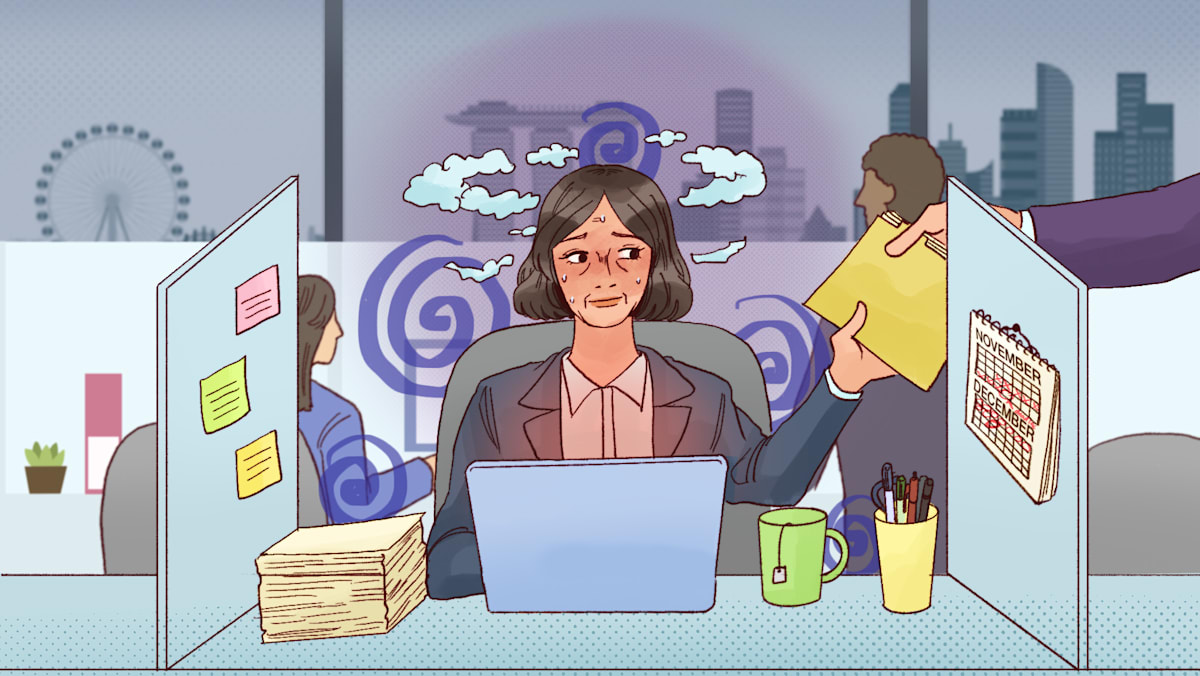
Not just a women's issue: The hidden cost of menopause on the economy
Full Article
Original Source
Read the full article at Channelnewsasia →KhanList aggregates and links to publicly available news content. We do not host full articles from third-party sources. Always verify important information with original sources.