
It had to happen. The pendulum is swinging to the right across Europe, and toward the far right, buoyed by opposition to immigration and feminism, and by a diffuse but widespread sense of social discontent. The shift is even more pronounced among young men, which suggests it may be long-lasting. It was evident in Spain’s regional elections. It is visible in France and Germany, where far-right parties are on track to become the leading political forces. Excluding Spain, only three of the 27 governments in the European Union are led by socialists, including Denmark, which has embraced plans to deport asylum seekers to Rwanda. Latin America is a more mixed picture: Luiz Inácio Lula da Silva’s comeback in Brazil and the Democrats’ success in the U.S. midterm elections have their counterexamples in Colombia, Chile and Peru. Yet this broader global trend should not obscure the domestic factors behind a decisive victory for Spain’s right-wing parties, the victory that slipped from their grasp in 2023 by only a handful of seats.It’s about emotion. Spanish Prime Minister Pedro Sánchez is a deeply polarizing figure: that has helped him mobilize the left (and attract voters from his coalition partners), but it also energizes those who despise him. Hence the record turnout.It’s about governing. The outgoing government boasted that, even without a budget, the economy and employment were growing. It was slower to address what was not working: housing. The railway disasters and the crisis in Ceuta damaged that image. The former pointed to poor planning: it turned out that governing without a budget was not inconsequential. The latter taps into Spanish nationalism and anti-immigration sentiment, two powerful drivers for the right. Alberto Núñez Feijóo, the leader of the conservative Popular Party (PP), points to his 13 years as premier of Galicia as proof of his managerial credentials, but he is no technocrat: he will need a strong team around him.It’s about corruption. If Pedro Sánchez reached 2023 without any major scandals hanging over him, he was later hit by the Ábalos-Cerdán-Koldo affair (involving kickbacks received by two of his former number twos), as well as the Leire Díez case, which has all the hallmarks of political dirty tricks, and the continuing controversy surrounding former prime minister José Luis Rodríguez Zapatero, whom he still defends. The cases involving his wife, Begoña Gómez, and his brother, David Sánchez, were far more debatable and did less damage politically. Taken together, however, all of this was bound to take its toll. The corruption scandals that plagued the PP under José María Aznar and Mariano Rajoy no longer weigh on Alberto Núñez Feijóo.It’s about national identity. The last term began with significant concessions to Catalan separatism: the amnesty law (aimed at forgiving crimes — both proven and alleged — committed by Catalan separatists during a chaotic attempt to hold an independence referendum in the region six years ago) and a document signed with Together for Catalonia (Junts) that largely accepted the party’s account of Catalonia’s failed 2017 independence drive. Other promises never materialized, including the transfer of immigration powers and full control over tax revenues. The Spanish Socialist Workers’ Party (PSOE) failed to gauge the impact this would have in Spain’s interior and southern regions. A large share of the voters who moved directly from the Socialists to the right came from those areas. They will be hard to win back.It’s about immigration. Immigration has brought major benefits to Spain, but its downsides were largely ignored for fear of fueling a growing xenophobic backlash. A subjective sense of insecurity spread, alongside a more tangible perception that public services were under strain. The sequence of events, from the government’s migrant regularization plan to the backlash it triggered across the EU and the subsequent crisis in Ceuta, proved politically damaging.Tough times ahead. Growth is slowing, prices are likely to remain high for many months, interest rates are rising, and European recovery funds are running out. Budget tightening lies ahead. If the right follows through on its pledge to cut taxes, it will have to reduce spending. Vox has floated broad plans to slash €112 billion ($122 billion) from public expenditure. A return to harsh austerity would likely provoke a backlash in the streets.One million homes. This is Feijóo’s flagship promise, and he will be judged on whether he delivers. His approach is not to regulate the housing market but to free up land and speed up planning approvals. Yet Spain’s construction sector is no longer what it once was: many firms have shifted toward infrastructure projects, and labor shortages are widespread. Young people are unlikely to be patient. They will take to the streets again.Explosive issues. Vox’s idea of “national preference” is illegal. If it means tying benefits to length of residence, EU rules do not allow requirements exceeding five years of registration. “Remigration” carries obvious echoes of ethnic cleansing. Removing immigrants from the public healthcare system would be reckless from a public health perspective. Any attempt to roll back abortion rights, euthanasia or LGBTQ+ legislation would invite conflict. The PP cannot afford to give ground on gender-based violence.A swift inauguration... or not. Don’t assume there will be a new government in place by January. In influential conservative circles, there is deep mistrust, if not outright fear, of Vox, the PP’s coalition partner. The division of power will be fiercely negotiated. Feijóo will be reluctant to hand over key ministries of state, but Vox leader Santiago Abascal is likely to demand some, with the Interior Ministry a possible target. Vox has not grown as much as it had hoped, which also limits how hard it can push. It would make political sense for the left to offer abstentions to allow Feijóo to govern without Vox ministers, but that option is not currently on the table. Uncertain stability. With a comfortable majority in Congress, one might expect the next legislature to last four years. That should not be taken for granted. Vox knows that coalition governments tend to weaken the junior partner, as happened to Ciudadanos, Podemos and Sumar. At some point, it may be tempted to repeat the tactic it used in several regional governments in 2024 and resign from office as a political shock move. The PP understands that the far right does not merely want to share power. It wants to replace them.The future of the PSOE. It would be unprecedented for a defeated prime minister to remain leader of the opposition for long. Felipe González, for example, stayed on for only a year after losing the 1996 election. Pedro Sánchez believes he has the legitimacy to remain in charge, and he has consolidated control over the party apparatus by installing loyal allies in key regional positions. Whether that holds will depend in part on what happens after May’s regional and municipal elections. Power can bind a party together, but losing it can just as easily pull it apart. Sign up for our weekly newsletter to get more English-language news coverage from EL PAÍS USA Edition
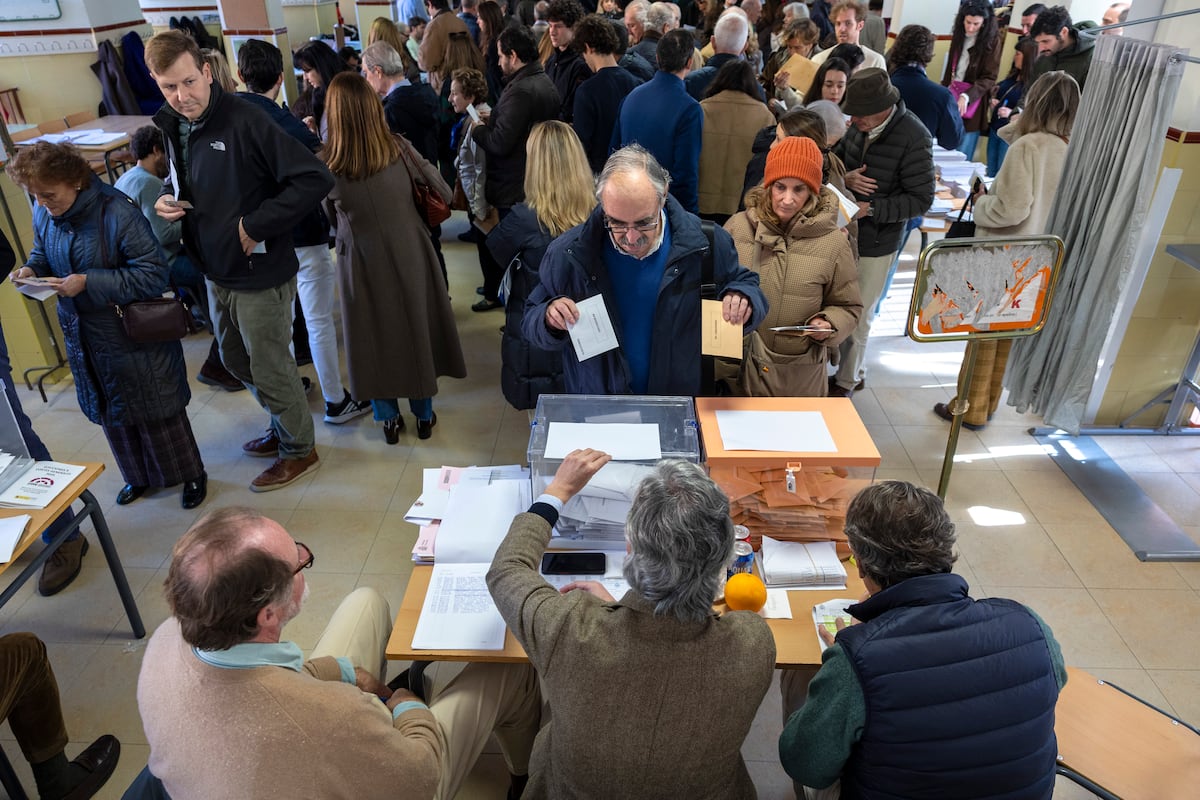
Not just a global trend: 12 keys to the right’s victory in Spain
Full Article
Original Source
Read the full article at English →KhanList aggregates and links to publicly available news content. We do not host full articles from third-party sources. Always verify important information with original sources.