
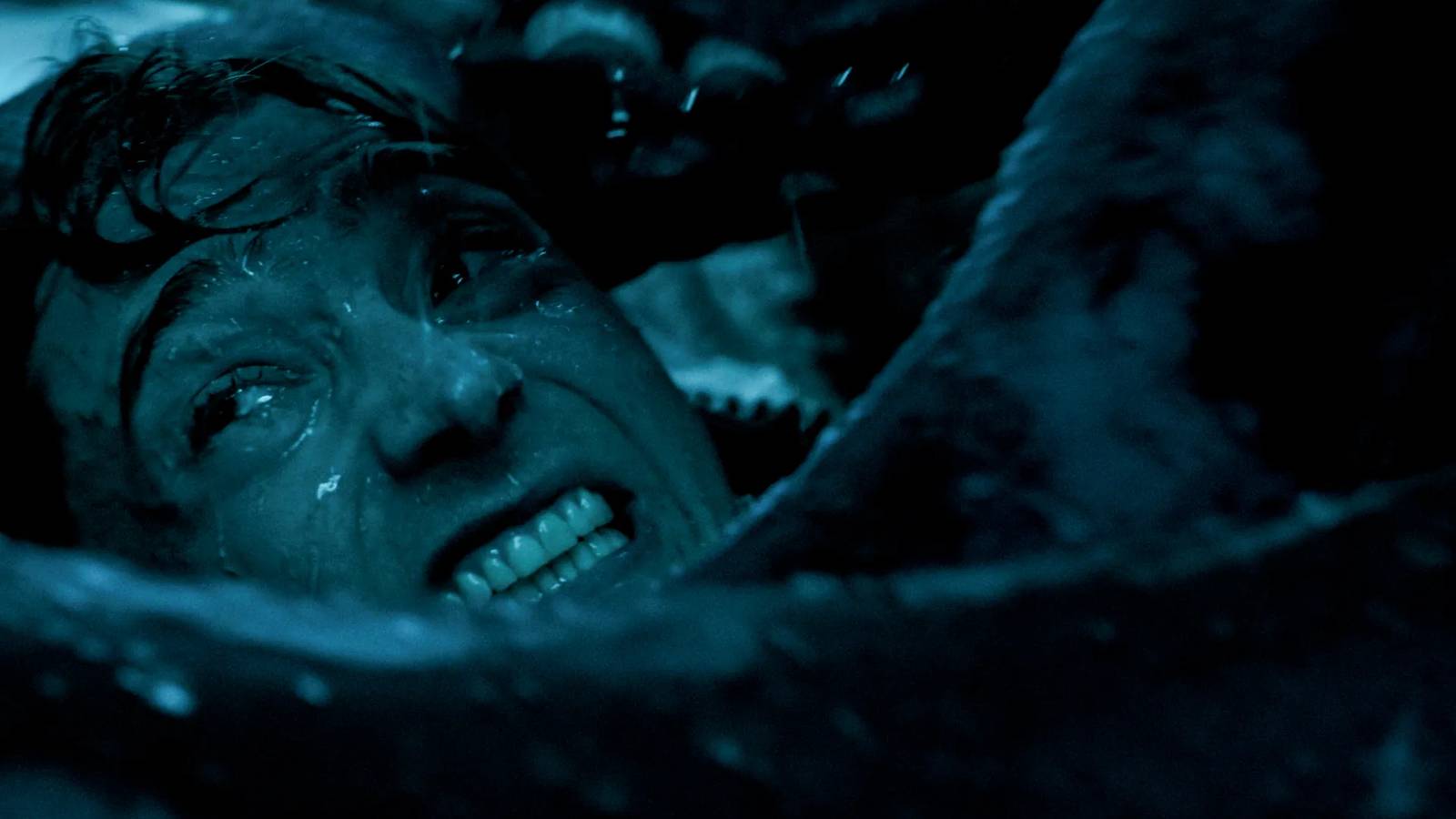
Published Oct 16, 2026, 10:20 AM EDT Brandon Zachary is a Lead Writer for Screen Rant's New Movie Team. He also writes or has written for Comicbook.com, CBR, That Hashtag Show, Just Watch, and TVBrittanyF. Brandon is an Emerging Screenwriters Semi-Finalist, co-writer of a Screencraft Quarter-Finalist, a seasoned on-screen interviewer, and a MASSIVE nerd. You can reach him at bs.zachary@gmail.com The following contains spoilers for WhalefallWhalefall spends much of its runtime as a realistic and tense natural thriller, only to become a very different kind of story in the third act. Based on the book of the same name, Whalefall is mainly focused on the unfortunate circumstances surrounding Jay's encounter with a sperm whale. Accidentally swallowed by the creature while deep underwater, the movie is largely focused on his efforts to escape. In these sections, the movie works really well as a survivalist thriller, recalling other movies like 127 Hours that put the emphasis on the resilience and dread that comes with a grim situation. However, Whalefall takes a weird tonal shift in the third act that undoes a lot of what makes it work tonally. While it fits the themes of the movie, the tone shift in Whalefall kind of ruins the experience. Whalefall Is A Tense Survival Thriller... Until It's Not For the most part, Whalefall leans into a tense "man vs. nature" thriller vibe. After a first act that establishes Jay as a character and cements his arc focusing on his efforts to reckon with his father's suicide, the film very quickly embraces a desperate tenor once Jay's efforts to find his father's body in the ocean lead to him being swallowed whole by a whale. The movie shifts fully into a horror vibe for much of the next hour, quickly ratcheting up the stakes by having Jay realize he only has a limited amount of oxygen left and a furious squid to contend with inside the whale's stomach. The monstrous attack is quickly replaced with an overwhelming sense of claustrophobia, as Jay barely survives the crushing stomach muscles that kill the squid. Beyond even the underlying terror of the movie's premise, Whalefall finds plenty of different kinds of scares. There's the ever-present sense of claustrophobia and dread that Jay feels about his situation, which only becomes more pronounced as his time runs low and he takes more physical blows from the whale's innards. The venture into the next layer of the whale's stomach results in Jay being horrifically burned by stomach acid, introducing a bit more body horror to the film. That element is amplified when the whale swims deeper and audiences are treated to the gruesome sight and sound of Jay's eardrums bursting from the change in pressure. It's overall a brutal experience that finds natural ways to invoke all sorts of horror movies, with just as much grounded tension as horrifying monster movie mayhem. Throughout it all, Austin Abrams does great work threading the needle between desperation, resilience, and despair. It's a really good horror movie, up until the moment that Jay starts talking to the spirit of his father as it embodies the whale. Seriously, that's basically what happens. While the moment can be explained away by Jay hallucinating from pain and lack of oxygen, the whale's seemingly benevolent final acts and descriptions of external dangers give the third-act shift a more surreal and spiritual bent that drops much of the scary edges. It's not necessarily a completely unwarranted tonal shift, as it pays off Jay's various flashbacks to his complex relationship with his father. Narratively and thematically, it makes sense. Tonally, it's a huge shift away from what had been an otherwise really gripping survival drama with monster movie touches. I'm Not Sure If Whalefall's Big Emotional Shift Works Credit: MovieStillsDB Whalefall works better than it should, given the huge tonal swings it takes. The grounded character drama moments of the flashbacks between Jay and his father are a far cry from the tense survivalist drama of the rest of the movie, but they provide some good context to Jay as a character and serve as breaks in that tension for the audience. The shift into something more strange makes for a weirder turn in a movie that had otherwise been thriving as a thriller. It's meant as a chance for Jay to work through his emotions and find closure with his father, recognizing both the man's human failings and his connection to the larger world. This comes in the form of Josh Brolin's Mitt also speaking for the whale, who apologizes to Jay and laments his fate. It's such a strange tonal shift for a movie that had otherwise been played largely realistically. As the film's director explained to The Hollywood Reporter, Whalefall was very much designed to be as realistic in its portrayal of the situation as possible. It lends the movie much of its tension, with even Jay's escape route feeling plausible (if only possible because of his lucky loadout of items). It's the kind of shift that may work on a thematic level, but Whalefall struggles to make the tonal jump land By contrast, the almost spiritual moments where Jay converses with the spirit of his father and the whale that swallowed him feel metaphysical in a way the movie never engages with elsewhere. It's a gorgeously rendered portion of the movie, to be fair, with clever editing, compelling music, and memorable visual composition to lend the death of the whale a certain bittersweet beauty. It's not that it's done poorly or that it doesn't thematically fit the movie surrounding it. The thing that makes this shift falter is just how blunt it is. Maybe if Mitt had been more openly spiritual in his appreciation of the ocean, or if there had been more expansion on the idea that the ocean is trying to reach out to people, it might have felt more like a natural shift. However, those kinds of tweaks would have undercut the otherwise very consistent and compelling survivalist thriller that defines the first two acts. It's the kind of shift that may work on a thematic level, but Whalefall struggles to make the tonal jump land when the time comes to become spiritual after being grounded for so long. Whalefall Release Date October 16, 2026 Runtime 98 minutes Director Brian Duffield Writers Brian Duffield, Daniel Krauss Cast Austin Abrams Jay Gardiner
Not Going To Lie, I Wasn't Expecting Whalefall To Be Such An Emotional Rollercoaster
Full Article
Original Source
Read the full article at Screenrant →KhanList aggregates and links to publicly available news content. We do not host full articles from third-party sources. Always verify important information with original sources.