
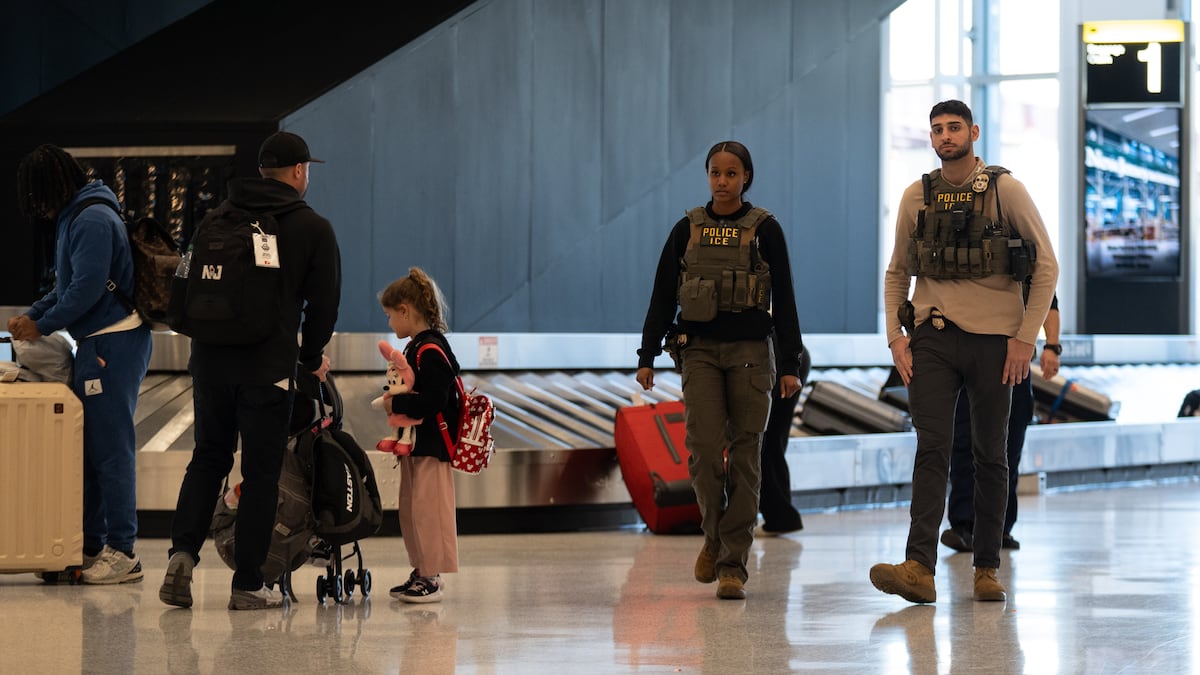
The summer of 2024 was the last time KP’s family enjoyed their traditional annual vacation. They drove nearly eight hours from Minnesota, where they live, southeast to the “water park capital,” the city of Wisconsin Dells. “It was fun, relaxing,” she recalls. But then January came. Donald Trump began his second term as president and started carrying out his promises to detain undocumented immigrants. She and her youngest son are U.S. citizens; her husband was born in Mexico and has been unable to obtain legal immigration status, even after 20 years of “happy marriage.” The family trips gradually became less frequent, until they stopped altogether.This year, 2026, for the second year in a row, KP, her son — an elementary school student — and her husband will not be able to travel to Tennessee to celebrate Thanksgiving, Christmas, or New Year’s with her mother. They have also missed the birth of a beloved baby, birthdays, and other celebrations.“It scares us a lot,” says KP, a 45-year-old American woman who asked to use only her initials, over the phone. She also doesn’t dare to travel alone with her son: she fears that her 50-year-old husband might be detained by Immigration and Customs Enforcement (ICE) agents and that the distance would prevent her from reacting in time to help him.This week, days before Thanksgiving — a tradition that brings families together in the United States to share a turkey dinner — videos began circulating on social media showing travelers of Mexican origin being detained by masked ICE agents on a boarding bridge at Seattle-Tacoma International Airport. KP avoids watching them. It disturbs and saddens her to see that, even though they were afraid, those people decided to travel because — like her — “they probably missed their families, hadn’t seen them in a long time, and had no other way to get there except by air.”KP’s story and that of her family is shared by 1.1 million Americans married to immigrants who lack legal status to remain in the country. It is also the story of approximately 4.9 million American children who have at least one undocumented parent. Both figures were presented in 2023 by members of Congress to the Joe Biden administration. It also applies to millions of undocumented immigrants who have lived in the country for decades without legal immigration status.“The community tells us they’re very cautious, and some don’t want to travel,” Jorge-Mario Cabrera, spokesperson for the Coalition for Humane Immigrant Rights (CHIRLA) — an organization that has advocated for this community for decades — explains to EL PAÍS. He adds that they exercise this caution even when going to the store to buy groceries, dropping their children off at school, deciding which route to take to work, or deciding whether to go to a doctor’s appointment. “Often they have to stay home out of caution, because they know that immigration agents are everywhere and they don’t want to fall victim to these raids and operations.”The trigger for fear: Minneapolis raidsWhen federal authorities carried out immigration raids in Minneapolis in January 2026, KP’s family was overcome with fear and anxiety. That was the trigger that brought everyone’s travel — whether by plane or car — to a complete halt.By then, the community park where they usually go to exercise or play with their son had become the scene of violent immigration arrests. Since then, small memorials have been left at the site to mark the spots where immigrants had been detained: sneakers pinned to the ground with stakes, signs bearing the phrase “our neighbor was kidnapped here.” “And yes, we walk past those memorials in the park as we go about our daily lives,” says KP.The image of those raids left such a deep mark on the community that during a recess at her son’s school, fourth-graders began marching and chanting in the playground: “ICE out!”KP, who was helping as a volunteer, immediately turned to see how her son would react: “He stayed on the sidelines, playing alone in the snow. He never spoke to me about it. I asked him why he didn’t participate, but he didn’t want to talk about it,” she recalls. She believes that the other children, whose parents are American, don’t live their daily lives with the same fear as her son: “It’s very different when the issue hits close to home. The emotions run so deep. For my son, participating in a protest during recess doesn’t feel like a game, I guess.”In recent days, KP says, her son has begun to take an interest in children’s books with stories related to the Holocaust: “He can draw parallels,” she says, especially when, between January and February, they locked themselves in the house to prevent his father from being detained by ICE agents during immigration raids. “It affects me emotionally to think that my son is reading these books and connecting on a personal level with the experiences of those who had to hide in their homes during World War II.”At the beginning of the year, KP says, she had to take a few days off from work. She sought help from both mental health and physical therapists. She says her body began to show signs of the pressure and stress she’s been under over the past few months to keep her family together.KP says that the Democratic victory in the midterm elections, as well as the party’s majority in both houses of Congress, gives her hope that they will make immigration reform a priority so that thousands of people like her husband — who have lived in the United States for decades — can adjust their status and live without fear. She recalls that 20 years ago, when they got married, an immigration lawyer told her: “The best thing you can do is work to change the law.”Sign up for our weekly newsletter to get more English-language news coverage from EL PAÍS USA Edition
Not by car or plane: Families who won’t be traveling for Thanksgiving out of fear of ICE
Full Article
Original Source
Read the full article at English →KhanList aggregates and links to publicly available news content. We do not host full articles from third-party sources. Always verify important information with original sources.