
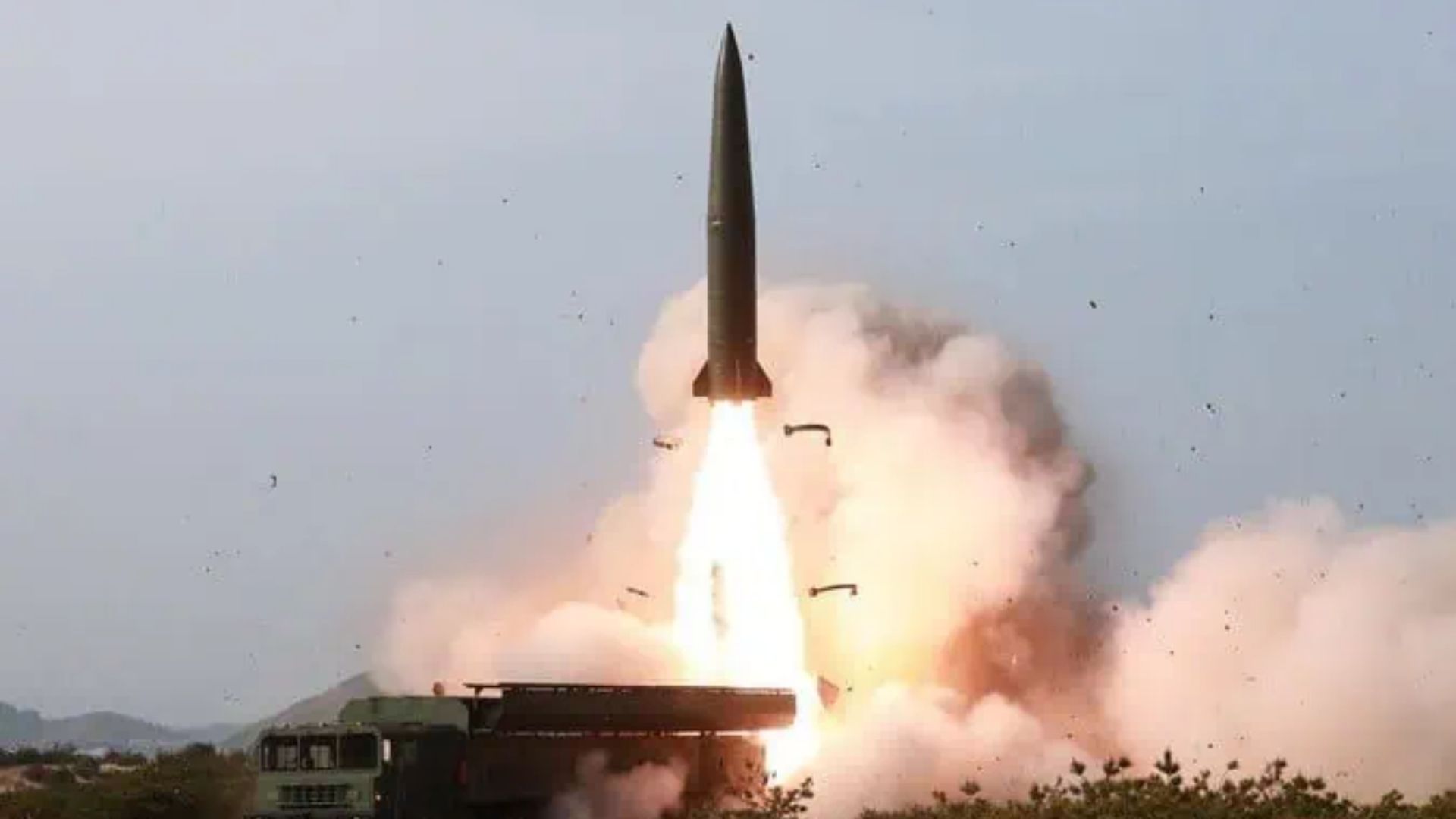
A United States adversary’s missile system, KN-23, capable of evading the air defense systems, was behind the overnight strikes in Kyiv on November 7, according to Ukrainian President Volodymyr Zelenskyy. Russia fired 36 short-range North Korean-made missiles to attack the key energy facilities in Ukraine, ahead of the winter months. Most of them were missed by the Ukrainian air defenses, which brought down only four of them, said Zelenskyy in a social media post. The North Korean KN-23 missile, known as Hwasong-11A in Pyongyang, is a ‘tactical guided weapon’ that can cover short ranges and be fired from a mobile launcher. The North Korean projectiles have design similarities with Russia’s Iskander-M missile and appear to have larger warheads and greater range. Escapes interceptor, greater range During the initial testing in May 2019, the missile had a range of 150-260 miles (240-420 kilometers), attaining a maximum height on the ballistic trajectory of 30-37 miles (50-60 km). The range improved further to nearly 270 miles (430 km) during another round of testing two months later. One of the missiles even flew about 430 miles (690 km), reaching a maximum height of 30 miles (50 km), according to missile defense advocacy. The results about the KN-23 top range were corroborated by experts from the U.S. Center for Strategic and International Studies (CSIS). The missile burns solid fuel and takes a low and flattened path for its flight, which shortens the flight time. This allows the ballistic missile to mask the enemy’s radar and interceptor systems because it does not follow a standard ballistic arc and has the capacity to maneuver during flight. In April this year, Ukraine’s defense ministry said that the KN-23 has been used in previous attacks on Ukraine, acknowledging that the weapon was “extremely difficult for air defense systems to deal with.” The enhanced navigation systems or an upgraded control mechanism that might enable better in-flight maneuverability might also improve its accuracy. Precision strike capacity However, the North Korean missile systems weren’t so precise to begin with. According to reports, Russia’s early firings of the KN-23, which began in early 2024, were often inaccurate. The launch and strike precision has been improved since December 2024, likely after the makers upgraded the design using data from the weapon’s combat use, it stated. According to Ukrainian officials, in December 2025, more than 20 ballistic missiles that were shot by Russia landed within 50 to 100 meters of intended targets, a stark improvement from earlier strikes that often missed targets by 1000 to 3000 meters. The latest strikes hit substations in the Kyiv region that connect the Rivne and Khmelnytskyi nuclear power plants to Kyiv and central Ukraine. Other substations in the Vinnytsia, Zhytomyr, Rivne, Kharkiv, and Dnipropetrovsk regions were also damaged, as Russia also launched 172 drones in the attack. On October 30, the U.S. State Department approved a potential sale of 500 Patriot air defense interceptor missiles, the main Ukrainian defense against ballistic missiles, to Ukraine by a major American defense supplier, Lockheed Martin.Get the latest in engineering, tech, space & science - delivered daily to your inbox.
North Korean ballistic missiles fired against US ally, power infrastructure targeted
Full Article
Original Source
Read the full article at Interestingengineering →KhanList aggregates and links to publicly available news content. We do not host full articles from third-party sources. Always verify important information with original sources.