
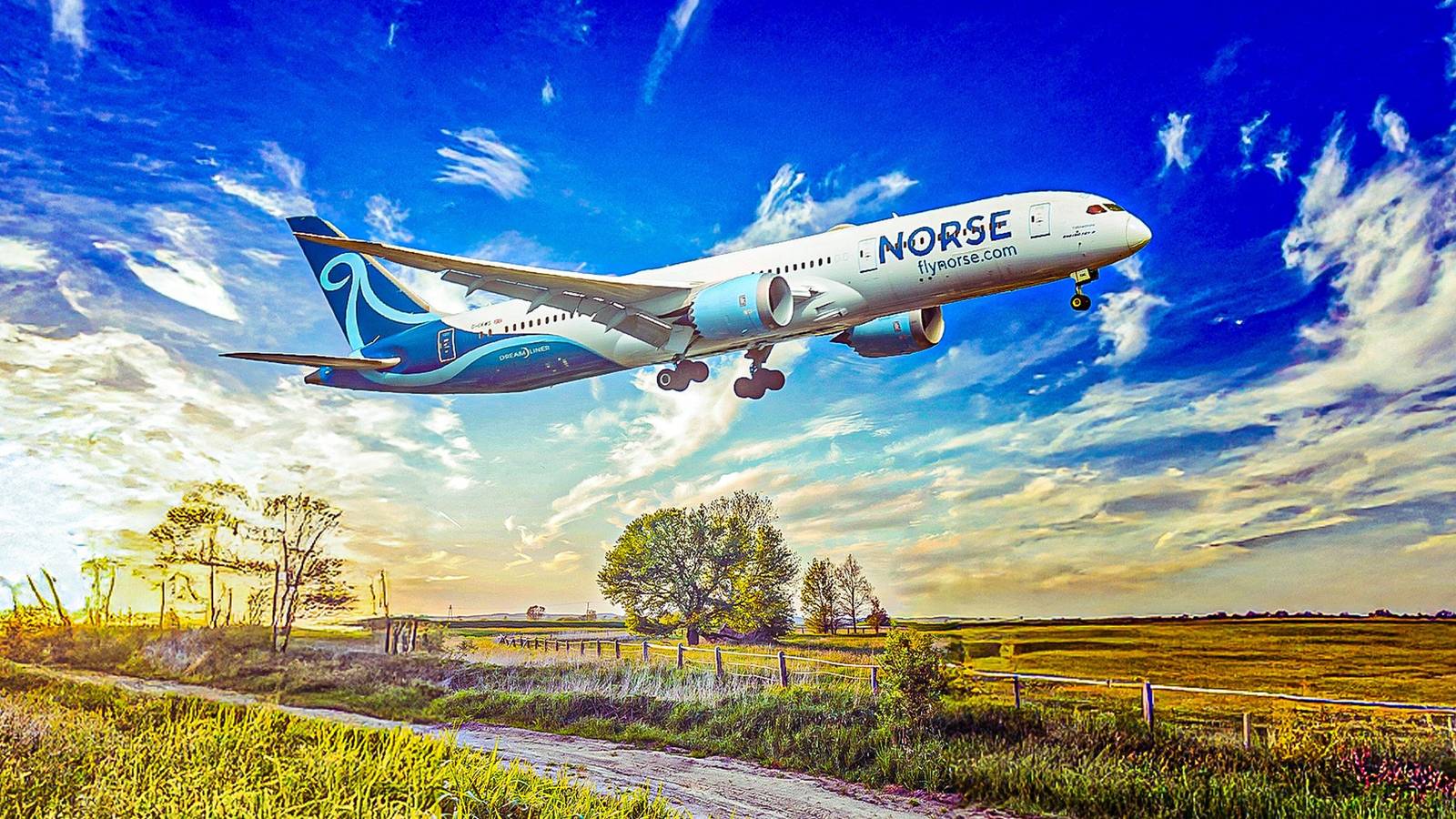
Published Nov 27, 2026, 11:09 AM EST Paul has had a career of 25+ years focused on the international technology sector, which has taken him to over 100 countries. Along the way, he developed a deep love for aviation, with a travel bucket list measured by aircraft types flown rather than destinations reached. Now he brings that avgeek passion, along with the journalism experience he accumulated early in his career, to write insightful pieces for Simple Flying. Norse Atlantic Airways' Norwegian operating subsidiary is filing for bankruptcy after the airline failed to secure sufficient emergency financing. The announcement came earlier today, just hours after the carrier confirmed that it had received lease termination notices covering all 12 of its Boeing 787 Dreamliners. The developments follow Thursday's suspension of all flights, bringing an abrupt halt to operations just four and a half years after the airline's launch. Norse had been attempting to reinvent its business, shifting away from its original low-cost transatlantic network towards Asia and flying on behalf of other airlines. Mounting Costs Push Norse Atlantic Into Bankruptcy Credit: Angel DiBilio | Shutterstock In a stock exchange announcement, Norse confirmed that its Norwegian operating subsidiary would file a bankruptcy petition with the Agder District Court. However, the listed parent company and its UK subsidiary are not included in the filing, with management continuing to explore opportunities to salvage the remaining business. Norse Atlantic CEO Eivind Roald acknowledged the impact of the decision, stating: “We are deeply sorry for the impact this has on our passengers, employees and partners. The Board, management and advisers of the listed entity Norse Atlantic ASA and the UK subsidiary are working to find a solution for the remaining part of the business to continue operations.” Norse had appeared to be making progress towards profitability, reducing its annual net loss from $135.5 million in 2024 to $61.9 million in 2025. However, that improvement was dramatically reversed in 2026. Declining income coincided with increasing personnel and maintenance costs, while financing expenses were exacerbated by a $32.9 million noncash charge associated with the conversion of bonds. Financial Metric H1 2025 H1 2026 YoY Change Total Income $327.9m $292.3m -10.8% Fuel, Oil & Emissions $83.3m $85.4m +2.5% Personnel $72.4m $78.0m +7.6% Technical Maintenance $46.4m $60.3m +30.1% Airport Charges & Handling $44.9m $38.7m -13.8% Other Operating Expenses $42.7m $32.5m -23.8% Depreciation & Aircraft Rentals $39.0m $37.8m -3.0% Net Financial Expenses $19.5m $54.1m +177.0% Operating Loss $0.8m $40.4m +$39.6m Net Loss $20.8m $94.6m +354.8% Source: Norse Atlantic H1 2026 Financial Report. H1 2025 income includes a one-off $28.7 million gain from lease modifications. Remarkably, Norse's fuel expenditure increased by just 2.5% in the first half of 2026, despite average jet fuel prices soaring by 92% year-on-year in the second quarter. But beneath the surface, those spiralling costs were still taking their toll. With no fuel hedging arrangements in place, Norse slashed its own-network capacity by 64% in the quarter, but was unable to reduce its fuel costs, widening its losses. In addition, many of its expenses remained relatively fixed, resulting in substantially higher unit costs and further undermining the economics of its scheduled services. 12 Boeing 787 Dreamliners Face An Uncertain Future Credit: Markus Mainka | Shutterstock Norse secured particularly attractive aircraft leases during the pandemic, when demand for widebody aircraft had collapsed. It originally signed agreements with AerCap for nine Dreamliners and BOC Aviation for a further six. Having subsequently relinquished its three smaller 787-8s, Norse operates a uniform fleet of 12 Boeing 787-9s. The airline is contesting the validity of the termination notices. Fleet Characteristic Details Aircraft Type Boeing 787-9 Total Aircraft 12 Norwegian-Registered Aircraft 7 UK-Registered Aircraft 5 AerCap Aircraft 6 BOC Aviation Aircraft 6 Original AerCap Lease Duration 12 years Original BOC Aviation Lease Duration 16 years Engines Rolls-Royce Trent 1000 Premium Economy Seats 56 Economy Seats 282 Total Seats Per Aircraft 338 The aircraft could prove particularly desirable to other airlines given the current shortage of modern widebodies and the long wait times as Boeing works through its 787 backlog. LOT Polish Airlines could be a particularly logical candidate, given its existing appetite for secondhand Dreamliners. The Polish flag carrier has already secured additional aircraft previously operated by Virgin Atlantic. Other existing Rolls-Royce-powered Dreamliner operators could also represent potential destinations. British Airways, which faces delays to its Boeing 777X deliveries, could use additional 787-9s to bolster its long-haul capacity, while Thai Airways has already turned to secondhand widebodies to support its network expansion. Royal Brunei Airlines, which has ordered four additional Trent 1000-powered 787-9s, could also be a candidate if it seeks to accelerate its fleet growth ahead of those deliveries. And then there's potentially a 787 suitor that would surprise everyone: Southwest Airlines, which is reportedly considering adding long-haul flying. Adding 12 Dreamliners within months rather than having to wait in line behind its competitors for years would enable a far more rapid transformation of its business model. Norse Atlantic's Failed Pivot Away From The US Credit: Markus Mainka | Shutterstock Norse launched operations in June 2022 between Oslo and New York, seeking to fill the gap left by Norwegian's withdrawal from long-haul flying. However, the carrier increasingly struggled to make its original business model work. Its attention gradually shifted towards Southeast Asian destinations and aircraft, crew, maintenance and insurance (ACMI) contracts with other airlines. The scale of that transformation is particularly apparent in US Department of Transportation (DOT) data. Between the summers of 2025 and 2026, Norse reduced its US capacity by more than 60%, including the withdrawal of all its Los Angeles services. Yet its load factors actually improved. By the time Norse suspended operations on Thursday, London Gatwick–Orlando was its sole remaining scheduled US route. US Network Metric Summer 2025 Summer 2026 Change Routes 12 4 -66.7% Departures 1,801 710 -60.6% Seats 608,618 239,980 -60.6% Passengers 552,401 220,725 -60.0% Load Factor 90.8% 92.0% +1.2 pts Meanwhile, ACMI and charter flying increased from 11% of Norse's flights in Q2 2025 to 56% in Q2 2026. Such contracts reduced its exposure to fuel prices but increased its dependence on individual airline customers. Having lost its six-aircraft IndiGo agreement, Norse secured a smaller deal with Pakistan International Airlines. Ultimately, the carrier recognized the need to reinvent its business but lacked the financial resilience to survive that transformation.
Norse Atlantic Files For Bankruptcy After Lessors Terminate Leases On Its 12 Boeing 787s
Full Article
Original Source
Read the full article at Simpleflying →KhanList aggregates and links to publicly available news content. We do not host full articles from third-party sources. Always verify important information with original sources.