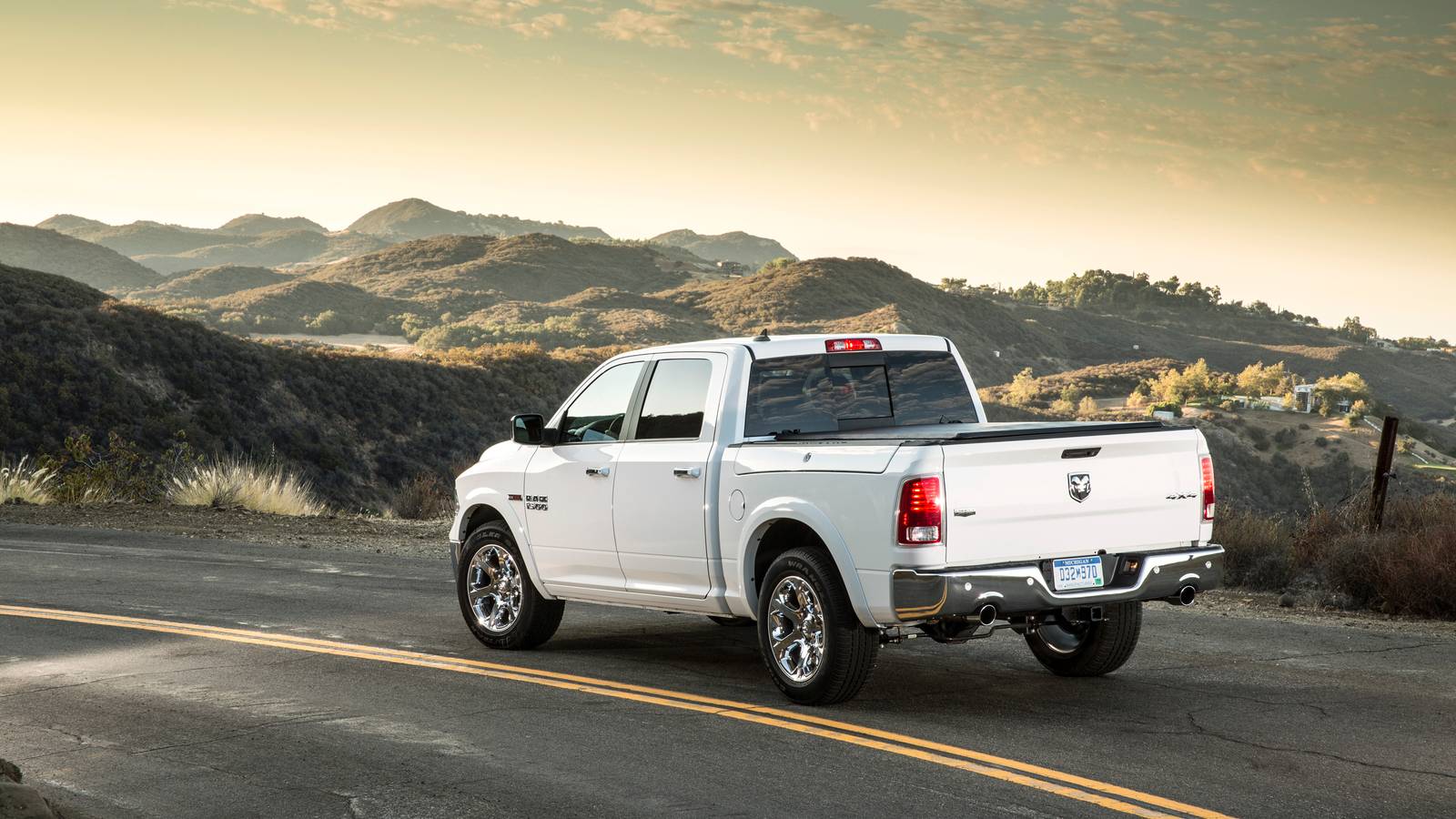
Published Jul 31, 2026, 12:15 PM EDT Based in the Motor City, Carl Anthony is the Automotive Lead at How-to-Geek and the host of AutoVision News Radio, a podcast that focuses on future vehicle technology, including next-generation ADAS innovations, electrification, and software-defined cars. A broadcaster by nature, he has appeared on popular podcasts and radio shows, including Wrench Nation, Cars Yeah, The Car Doctor, and Digital PR Explained. Carl’s frequent appearances on MotorMouth Radio (WHPC 90.3 FM) over the last decade have made him a trusted resource for car enthusiasts, while his hosting of the AutoSens Insights series continues to spotlight the latest automotive technologies. Prior roles include serving as a new vehicle launch and dealer trainer for Ford, Honda, Mercedes-Benz, and Volvo. Carl was a senior product specialist on Chevy's National Truck Team, an experiential marketing program that travels the United States, and a respected member of the FCA (now Stellantis) national auto show team, where he served as the resident expert for consumers on the Dodge Charger and Challenger. Before the automotive industry, Carl was a disc jockey, producer, and programmer at several popular Midwest radio stations, including KIWR, KEZO, KJAN, and KELO-FM. He is a graduate of Iowa Western Community College in Council Bluffs, where he dual-majored in the Electronic Media studies program, earning an Associate of Applied Sciences degree in both radio and television broadcasting. On February 4th, 2014, in Auburn Hills, Michigan, Ram's engineers got the number they had spent more than a year chasing. The EPA certified the EcoDiesel Ram 1500 at 28 mpg on the highway, a rating no diesel half-ton or light-duty pickup had ever touched. Diesel had always been reserved for heavy-duty work trucks, the Ram 2500 and its Cummins engine among them. The Ram 1500 EcoDiesel, like all half-ton trucks at the time, needed to double as a work and family vehicle without making buyers feel they had to choose between the two. Asking a full-size truck with a small-displacement diesel engine to pull that off seemed like an impossible task. The engine ran for nine years, on and off, pausing in 2017 amid an emissions investigation before returning for a second generation, until production ended in January 2023. Stellantis retired the EcoDiesel as part of a broader shift toward electrification. Today's Ram 1500 lineup is characterized by luxurious four-door crew cabs, off-road-specific models, and muscle-car-inspired variants, anchored by turbocharged Hurricane engines or a returning 5.7-liter Hemi V8, with no diesel option remaining. Yet before Ram built a hybrid or an electric truck to chase better fuel economy, it built a diesel V6 that got there first, and changed what buyers expected from a half-ton pickup. Why nobody else had done it Turning nose-heavy with a diesel under the hood Ram's answer came from Cento, Italy, home of VM Motori, a diesel engine maker that had supplied Chrysler since 1992. VM Motori already built a version of its 3.0-liter V6 for European Fiat and Chrysler models, but adapting it for an American half-ton truck meant solving a problem that had kept every other manufacturer out of the segment: how to make a diesel clean enough for every state, California included, without losing the torque that makes a diesel worth choosing in the first place. Engineers at Ram solved that puzzle with a fuel-injection system called MultiJet 2, capable of firing up to eight times per cylinder in a single cycle instead of the single squirt older diesels relied on. Splitting fuel delivery into that many small pulses reduces combustion noise and lets the engine respond to the throttle faster, while also trimming fuel use and emissions. Ram paired that injection system with selective catalytic reduction, exhaust gas recirculation, and a variable-geometry turbocharger, a combination that let the EcoDiesel meet Tier 2-Bin 5 and LEV II emissions standards nationwide. None of that would matter though if the engine couldn't handle real work. The 3.0-liter V6 made 240 horsepower and 420 lb-ft. of torque, towing up to 9,200 lbs. when properly equipped, numbers that held up against V8 engines burning more fuel to get there. Chrysler built the block and bedplate from Compacted Graphite Iron, a material stronger than regular cast iron at a lower weight, which kept the truck from turning nose-heavy with a diesel under the hood. A TorqueFlite eight-speed automatic, then a segment exclusive, was paired with the engine. The TorqueFlite name goes back to 1956, when it was Chrysler's first automatic transmission. It was dropped in the 1990s in favor of alphanumeric codes, but Chrysler brought the nameplate back for its modern eight-speed automatic, which reached the Ram 1500 in 2013 just ahead of the EcoDiesel's debut. The TorqueFlite ultimately gave the EcoDiesel engine more gear ratios to work with; more than any other transmission for any other half-ton pickup at the time. Ram wasn't the only one convinced this was something new and exciting. WardsAuto, which tests dozens of engines every year for its 10 Best Engines list, singled out the VM Motori V6 as unprecedented for the segment, since nothing resembling a modern light-duty diesel had ever reached a full-size pickup before. Diesel had been absent from half-ton trucks long enough that Ward's editors treated it as new territory altogether. Numbers that made headlines Lengthy road test showed the EcoDiesel’s promise When the EPA released its numbers, the two-wheel-drive 2014 Ram 1500 EcoDiesel posted a highway rating of 28 mpg and a combined rating of 23, the best any half-ton pickup had ever recorded. Four-wheel-drive versions returned an EPA-estimated 19 in the city, 27 on the highway, and 22 combined. Edmunds wanted to know what the EcoDiesel would do in the real world versus the marketing claims made by Ram, so the outlet bought its own 2014 Ram 1500 EcoDiesel 4x4. Staff members drove it over 50,000 miles over the better part of a year, hauling furniture, motorcycles, and trailers along the way. The truck averaged 21.8 mpg across every mile of that long test, including the roughly one-fifth of miles spent towing. The Edmunds truck averaged 18.1 mpg with a trailer, a respectable number for a full-size truck under load. Remove the towing miles, and the average climbed to 22.9 mpg, beating the EPA combined rating of 22. At its best, Edmunds saw their EcoDiesel stretch to 700.2 miles on a single tank and average 27.9 mpg. Buyers couldn't get enough of it Nearly double Ram's corporate average Credit: Ram Ram charged $2,850 more for the EcoDiesel than a comparably equipped Ram 1500 with the 5.7-liter Hemi V8. Buyers would need real fuel savings to justify a premium like that. Judging by the response, they believed the diesel delivered it. The order books opened on February 7th, 2014, and by the morning of February 10th, more than 8,000 EcoDiesel orders had already filled Ram's initial allocation. More than half of every Ram 1500 ordered that month was an EcoDiesel. Special orders, meaning customers configuring and paying for a specific truck rather than buying from dealer stock, came in at nearly double Ram's corporate average, an all-time high for the brand (Ram even went so far as to let those customer orders take priority over dealer stock orders). Reid Bigland, Ram's president and CEO at the time, saw the diesel as pulling in buyers Ram couldn't reach with gas engines alone, since no other half-ton truck could match its combination of fuel economy and towing capacity. The praise wasn't limited to buyers, either. MotorTrend named the Ram 1500 its Truck of the Year for 2014, the first time any vehicle had won the award in consecutive years, with the EcoDiesel singled out as a deciding factor. One truck becomes an entire segment By September 2014, Ram had grown the EcoDiesel's share of Ram 1500 production to 20%, double what was anticipated at launch. Nearly 60% of those sales came from buyers switching from another brand, proof that the EcoDiesel did pull in customers Ram wouldn't have reached otherwise. Competitors eventually followed in Ram’s footsteps. Nissan introduced a Cummins-built diesel engine for the Titan XD in 2016. Ford added a Power Stroke diesel to the F-150 in 2018, and General Motors launched its own Duramax inline-six for the Silverado and Sierra a year later. However, none of them existed when the EcoDiesel launched in 2014, and none of them would have made sense without Ram first proving buyers wanted a smaller diesel that could double as a family truck.
Nobody thought a diesel half-ton worked—until Ram sold 8,000 in 72 hours
Full Article
Original Source
Read the full article at Howtogeek →KhanList aggregates and links to publicly available news content. We do not host full articles from third-party sources. Always verify important information with original sources.