
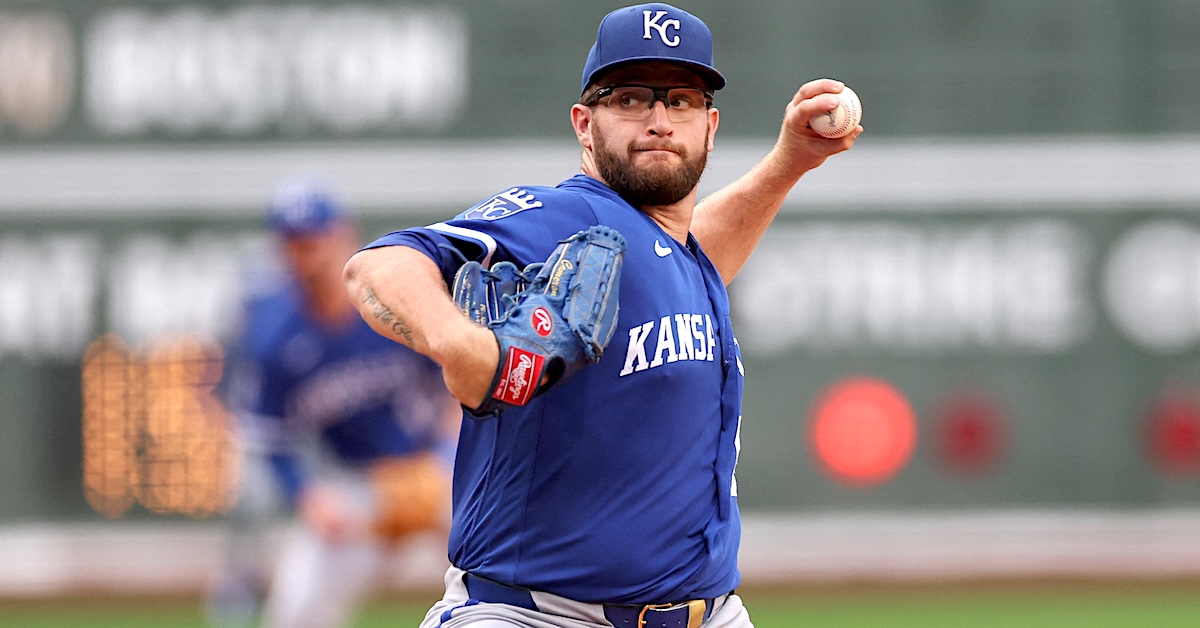
Paul Rutherford-Imagn Images I’m going to give you a little sneak peek into my writing process. By the middle of September, we here at FanGraphs have written about a lot of baseball players. So many baseball players. And while no one’s going to be mad about an extra article about Shohei Ohtani or Pete Crow-Armstrong or the like, we try not to repeat ourselves. How many articles about, say, Cade Cavalli should we write in a year? I’m not sure – but if I covered him in July, I probably won’t in September. That brings me to today’s article. I keep a list of pitchers who fascinate me, and I dig into it when I’m looking for a topic. I cross-reference it with WAR leaderboards and split leaderboards – you never know when someone you’ve been pondering will get hot and merit a deeper dive. When I sat down to come up with a topic yesterday, I crossed off a few usual suspects quickly. Yup, Chase Burns is still great, but nope, it’s not time to highlight that again. Chris Sale is amazing – as you’d well know if you read FanGraphs. Trent Harris got his first save for the Giants last week – but I’ve already written about my fascination with him. Enter Noah Cameron, who has been one of the best pitchers in baseball over the past month. He’s actually been one of the best pitchers in baseball in 2026 – 21st in WAR – but that’s almost exclusively due to his performance after the All-Star break. He’s doing it in obscurity – the Royals have been out of the playoff race since Memorial Day, and well, they’re the Royals, not the most-covered team in baseball. But that obscurity works in my favor – like I said, no-repeats is particularly punishing by September. So let’s dive in. If you’ve watched a Cameron start, there’s a good chance you’ve heard the word “crafty” from the broadcasting crew. He’s left-handed and doesn’t throw particularly hard, and that combination invariably reminds observers of the long string of soft-tossing southpaws who have nonetheless held down opposing lineups. But “crafty lefty” is a big tent, and I don’t think that description does a good job of highlighting what makes Cameron’s approach so effective. Cameron uses a four-seamer/cutter pairing against both lefties and righties. He mixes in four other pitches, varying heavily based on handedness; sliders and sinkers to lefties, changeups and curveballs to righties. (He also throws plenty of left-on-left changeups, but more on that later.) His four-seamer isn’t a great pitch in a vacuum. It’s not that fast, and it doesn’t have any of the outlier traits (approach angle, extension, vertical break) that help many slower fastballs play up. But two things work in its favor. First, his throwing motion conceals the ball well. Between a leg kick, a bit of torso rotation that shows his back to hitters, and a deceptively short stride, he seems to release the ball suddenly. Second, he throws his four-seamer with some natural cut, which both makes it harder to pick up horizontally and plays well with his actual cutter. That cutter is the rug that brings Cameron’s whole arsenal together. He didn’t throw it all that much as a prospect; as Eric Longenhagen and James Fegan noted in his final prospect report, he upped his cutter usage meaningfully in 2025, seemingly in a bid to keep his home run numbers down. The pitch isn’t a standout from a movement or velocity perspective; stuff models don’t like slow, straight cutters all that much, which explains its poor grades there. But the key isn’t how the pitch looks on its own – it’s how it connects to everything else. You Aren't a FanGraphs Member It looks like you aren't yet a FanGraphs Member (or aren't logged in). We aren't mad, just disappointed. We get it. You want to read this article. But before we let you get back to it, we'd like to point out a few of the good reasons why you should become a Member. 1. Ad Free viewing! We won't bug you with this ad, or any other. 2. Unlimited articles! Non-Members only get to read 10 free articles a month. Members never get cut off. 3. Dark mode and Classic mode! 4. Custom player page dashboards! Choose the player cards you want, in the order you want them. 5. One-click data exports! Export our projections and leaderboards for your personal projects. 6. Remove the photos on the home page! (Honestly, this doesn't sound so great to us, but some people wanted it, and we like to give our Members what they want.) 7. Even more Steamer projections! We have handedness, percentile, and context neutral projections available for Members only. 8. Get FanGraphs Walk-Off, a customized year end review! Find out exactly how you used FanGraphs this year, and how that compares to other Members. Don't be a victim of FOMO. 9. A weekly mailbag column, exclusively for Members. 10. Help support FanGraphs and our entire staff! Our Members provide us with critical resources to improve the site and deliver new features! We hope you'll consider a Membership today, for yourself or as a gift! And we realize this has been an awfully long sales pitch, so we've also removed all the other ads in this article. We didn't want to overdo it. A quick trip to the FanGraphs Lab is worth a thousand words: The cutter sits in the exact middle of his arsenal, and it pairs effectively with the way he wants to attack each side of the plate. Lefty at bat? Cameron wants to throw some sinkers and sliders, and the cutter is ideally placed to inject some uncertainty into hitters’ minds. As a gyro-spinning fastball, it forces opponents to think on the fly, and those fractions of a second are valuable. Is the spin because it’s a cutter or a slider? Is the arm speed because it’s a cutter or a fastball? If you think of the cutter as a change of pace from his non-cutter pitches, which he throws a combined 82% of the time against lefties, it’s easier to understand why this low-movement pitch has so consistently befuddled them. The cutter looks like everything else, but moves a little differently, and that’s why it succeeds without being nasty on its own. The same basic math holds against righties. There, he’s looking to mix in a boatload of changeups and curveballs. But without something in the middle of the movement spectrum, that curveball just isn’t all that enticing. It’s enormous and mostly straight up and down. But his changeup gets enough arm-side fade that combining it with his curveball doesn’t really make sense in many of the locations that he likes to place the curveball. Meanwhile, the changeup is definitely his best pitch. Something that splits the difference – same north/south plane as the curve, similar east/west plane to the changeup – further muddles the picture for opposing batters in a way that neither his four-seamer nor his sinker can accomplish. Of course, crediting his success to his cutter is like saying that a burrito is delicious because of its tortilla. Sure, that might bring everything together. But it’s necessary, not sufficient. You need more than just a good tortilla to make a great burrito. The delicious meat and cheese (and french fries, I love a California burrito done well) in this analogy are his delightful changeup and, to a lesser extent, his slider. Both pitches make hitters miss by changing speeds. His changeup also works because he shouldn’t be able to make the ball behave that way. Most of Cameron’s arsenal works the zone from top to bottom. His delivery makes it hard to create glove-side break; that’s why he throws a gyro slider and a vertical curveball instead of a sweeper and a slurve. Every single one of his pitches generates less horizontal movement than league average for that pitch type. But his changeup gets almost average arm-side fade, which makes it look like it’s moving a ton relative to everything else going on. His delivery also imparts a lot of backspin for a changeup – it falls about three inches less than comparables as a result. If that sounds bad to you, you’re not alone. A standard changeup works because speed and spin combine to make it fall much more than batters expect. Indeed, Cameron’s changeup gets hit slightly harder than average when opposing hitters make contact – more balls in the air, more barrels, worse-than-average wOBA and xwOBA allowed. But truthfully, the gap isn’t that meaningful. We’re talking about 10 points of wOBA on contact, give or take, which is basically nothing after you account for the fact that most of his pitches aren’t changeups and most of the changeups he throws don’t get put in play. It seems to me that Cameron is instead creating deception with his changeup via horizontal separation. He pounds the low-away corner against righties, where the unexpected amount of horizontal movement plays at its best. Instead of making batters pick high vs. low, which they expect to do against someone with his release point (and against someone with the rest of his arsenal, which is very vertical), he makes them pick inside vs. outside the zone horizontally. He furthers the bind by tossing a ton of cutters to righties. If you’ll recall from earlier, his cutter and changeup live on a similar east/west plane; the low-away changeup and inside-edge cutter look very similar out of his hand. His changeup has accounted for 93 whiffs against righties this year; his cutter is the only other offering to hit even half of that amount. As Corbin Young noted earlier this year, this increased focus on sliders, cutters, and changeups is an all-year trend for Cameron. He’s set a new monthly high in cutter usage in each of the past three months. Meanwhile, he’s down to around 20% four-seamers in the second half of the season, by far a career low. The cutter/slider and cutter/changeup pairings are ascendant, and they’re working so well for him that he’s cutting down on so-so fastballs to fit in more of the bendy stuff. Last year, Michael Baumann and I fixated on pitchers sprinkling in a cutter to make the rest of the arsenal play up. That’s not exactly what’s going on here, though. Cameron isn’t sprinkling; he’s pouring with both hands. Since the All-Star break, he’s thrown more cutters than any other type of pitch. It is, as I keep emphasizing, the pitch that stuff models like least out of his entire six-pitch arsenal. And yet he’s had his best stretch by a mile, and the cutter has been his most valuable offering by run value. I’ll caution you against extrapolating too heavily from Cameron’s recent form. When a player is adjusting this much all at once, it’s a good bet that he hasn’t found a stable equilibrium yet, and it’s also a good bet that hitters haven’t finished adjusting either. Cameron keeps slashing his fastball usage, but he’s clearly not going to take it to zero. He keeps upping his cutter usage, but how much higher can it really go? At present, he’s surely getting some value out of the fact that every scouting report on him is outdated. That can’t continue forever. And while he’s added enough cutters that it’s now his most frequent pitch, he throws five pitches each at roughly the same rate these days. If he keeps adding more and more cutters, something else will have to give. Ah, but that’s the fun of the cat-and-mouse game of baseball. If this was the only adjustment Cameron could make, I wouldn’t like his odds of continuing to miss bats and prevent runs. But if hitters adjust to this new version of him, there’s an obvious counter: Change which version of him hitters see. He’s up to a good number of pitches that pair interestingly with each other already, but what if he added another? What if he changed the shape of his cutter a little? He’s already dropped his arm angle a bit since his rookie season in 2025; further changes in that vein could unlock new pitch shapes, or alternately eat enough into his existing pitch shapes that he has to make adjustments elsewhere. You can think of pitching design as split broadly into two categories: Making an individual pitch better in isolation, or making a pitch pair better with other pitches. Cameron has excelled so far by doing the latter of the two. But there’s no reason he can’t work more on the former, or apply some of the lessons he’s already used in pairing his pitches to other new combos. Maybe he’s good enough at throwing left-on-left changeups to turn into more of a sinker-changeup-slider guy against lefties. Maybe his four-seamer will start to look better against righties now that they’re working off of a slower primary offering in the cutter. Maybe he’ll just add two ticks of velo and the whole thing will look completely different. I don’t know what the future holds for Noah Cameron. I do know that what he’s doing right now is effective. I’m also fairly certain that he can’t keep getting away with this exact version of himself forever. I’d even surmise that he knows that, or at least suspects it. That’s part of what makes baseball so fascinating. Sure, every sport has its athletic standouts, many-sigma outliers who can succeed even without maxing out every avenue of improvement available to them. But sports have a place for grinders, too, people who wring every last drop out of what they have. I’d put Cameron in the latter camp – and I mean that as a compliment. Succeeding in the bigs with a hittable fastball is incredibly hard. His bag of tricks has been up to the task so far.
Noah Cameron’s Worst Pitch Made Him Much Better
Full Article
Original Source
Read the full article at Blogs →KhanList aggregates and links to publicly available news content. We do not host full articles from third-party sources. Always verify important information with original sources.