
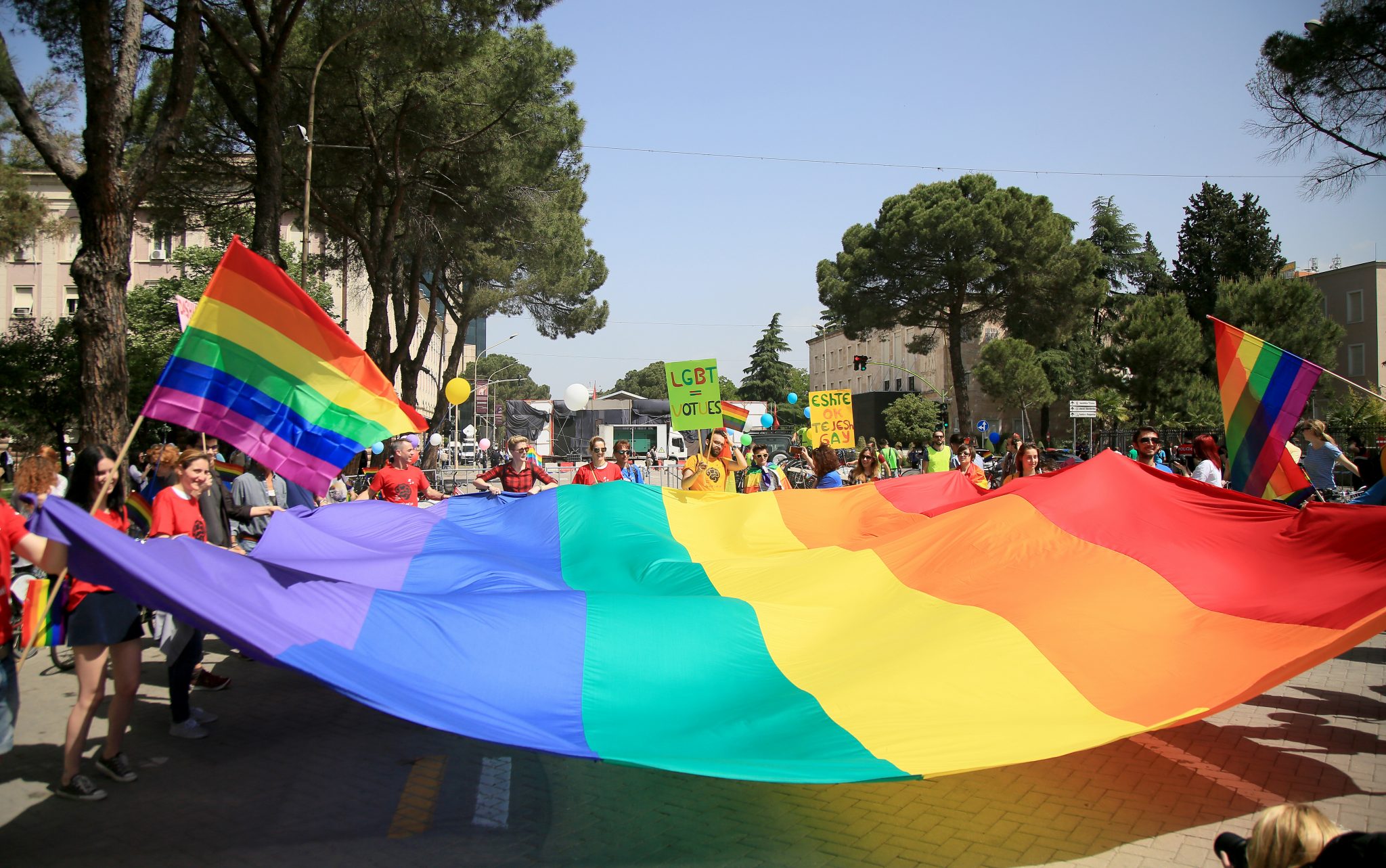
A rally in Tirana for the International Day against Homophobia and Transphobia, May 2017. Photo: EPA/MALTON DIBRA. Albania’s new guideline for gender-affirming hormone treatment for transgender people within the public healthcare system does not provide financing from public funds, according to information gathered by the NGO LGBT Alliance. This means that people receiving such treatment cannot obtain their medications free of charge, Xheni Karaj, head of the LGBT Alliance, told BIRN. “The guideline regulates the provision of healthcare and the clinical protocol, but it does not provide for the reimbursement or public provision of hormones,” Karaj said. The adoption earlier this year of the Clinical Practice Guideline on hormone treatment for trans people sparked a wave of hate speech targeting the LGBTQ+ community, with various posts claiming that the medication would be funded by taxpayers, and that treatment would be made available to minors. However, official documents and responses from the Ministry of Health make it clear that the guideline does not provide for hormone therapy for minors or fund treatment for people over the age of 18. The guideline sets out the clinical procedures to be followed by the Endocrinology Service at the Mother Teresa University Hospital Centre in Tirana for the enrollment and monitoring of people seeking treatment. Evidence gathered by the LGBT Alliance shows that, even for adults covered by the protocol, the actual provision of the services exists only on paper. “Although the Clinical Practice Guideline has been approved and entered into force, in practice there have been obstacles that have made it impossible for transgender people to actually access this service,” said Karaj. “The first three cases that were referred received contradictory information from the responsible institutions, which indicates that the guideline is still not being implemented uniformly,” she added. The Mother Teresa University Hospital Centre, the Deputy Health Minister Eugena Tomini and the head of the Endocrinology Service Agron Ylli did not respond to requests for comment on the issue. According to the Ministry of Health, the guideline was developed as part of the measures envisaged in the National Action Plan for LGBTQ+ people from 2021 to 2027 and aims to improve access to inclusive, safe healthcare services based on international standards. “The guideline was developed in cooperation with experts in the field, representatives of healthcare institutions and civil society organisations, with technical support from the Council of Europe,” the ministry said. Karaj said that the transgender community had not been directly informed about the approval of the guideline, and that another issue that remains unclear is the referral pathway to the Endocrinology Service. During the drafting of the guideline, Karaj said, the possibility of direct referral to the Mother Teresa University Hospital Centre had been discussed in order to avoid the barriers or discrimination that members of the community have reported at health centres. However, in the first cases reported to the LGBT Alliance, they were instructed to go through their family doctor first.
No Subsidies for Hormone Therapy for Trans People in Albania
Full Article
Original Source
Read the full article at Balkaninsight →KhanList aggregates and links to publicly available news content. We do not host full articles from third-party sources. Always verify important information with original sources.