
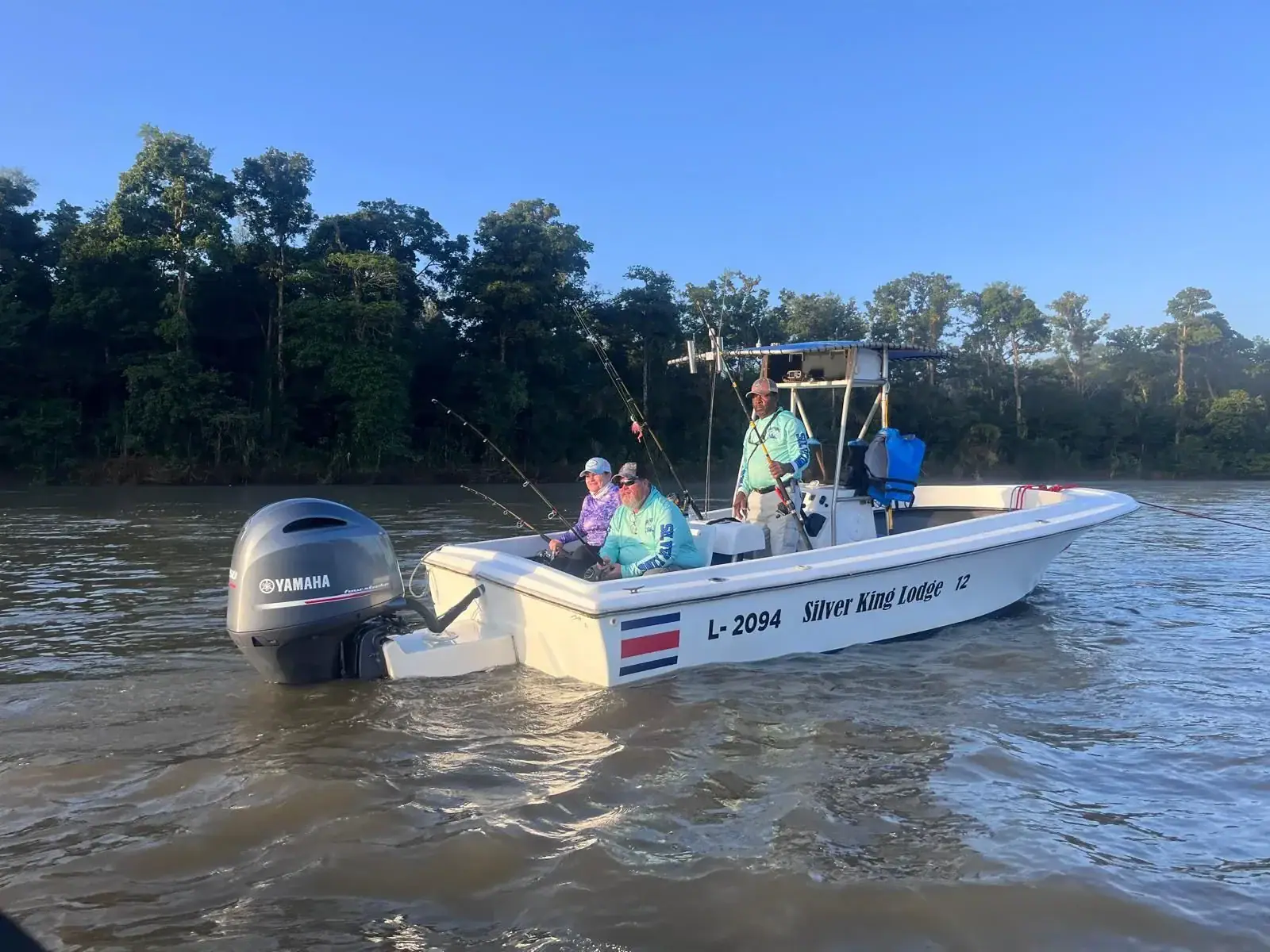
Long before Costa Rica became known for surf towns and zip lines, the remote corner where the Río Colorado spills into the Caribbean was known to a small circle of anglers as the finest tarpon water on the planet. Barra del Colorado still sits at the edge of the map, reachable only by boat or small plane. It remains something of a secret even at home, and many Costa Ricans have never been. Under new ownership, Silver King Lodge is giving travelers a reason to make the trip. The Río Colorado branches off the San Juan River near the Nicaraguan border and winds through lowland rainforest to the sea. Most of its course runs through the Barra del Colorado National Wildlife Refuge, about 81,177 hectares (200,600 acres) of rivers, wetlands and forest. The village is a scatter of wooden houses raised on stilts along the riverbanks, a short airstrip and a handful of lodges. There are no roads in and no cars in town. The river is the highway, and the day runs on boats, tides and rain. Schoolchildren ride a boat to class each morning, every one of them in a life jacket. It is a small community that looks after its own, and that warmth extends to the visitors who make the long trip. The modern story of Barra begins with Casa Mar. In the late 1960s, Carlos Barrantes, a San José tackle shop owner, found the river full of tarpon that no one had ever fished with a fly. With backing from a U.S. financier, he built a lodge on Laguna Agua Dulce, a short boat ride from the sea and the Nicaraguan border. Casa Mar’s longtime owner and manager was Bill Barnes, a former physical education teacher from South Florida who took over in the early 1970s. Under Barnes, the lodge became the place where much of modern tarpon fly fishing was worked out. In the 1970s, anglers at Casa Mar fishing lead-core shooting heads developed many of the deepwater fly techniques now used around the world. Harry Kime spent about three months a year there for several seasons, fishing tarpon almost every day. Dan Blanton, Del Brown and Lefty Kreh were among the regulars. “All the top American flyfishermen came to Casa Mar,” Casa Mar veteran Peter Gorinsky told writer Dave Sherwood, whose history of the lodge appeared in The Flyfish Journal. Kreh, a good friend of Barnes, later said more tarpon had likely been caught at Casa Mar than anywhere else on Earth, according to Sherwood’s account. Success brought competition. Isla de Pesca, Tarponland, Silver King and the Río Colorado Lodge founded by Archie Fields all opened along the river and its lagoons. For a time the boom brought jobs to the village and an improved airstrip. Harder years followed. In the 1980s, Nicaragua’s civil war played out just across the border and kept many visitors away. Barnes died in 2002, and his ashes were scattered on the Río Colorado and at Casa Mar. Afterwards, the lodge never regained its footing and in the years that followed, the jungle reclaimed much of the old lodge. Silver King, which opened on the banks of the Río Colorado in the early 1990s, outlasted most of its neighbors. The lodge stands on pilings above the river’s flood line. Covered wooden walkways link the rooms, dining hall and common areas, so guests stay dry even in a tropical downpour. It takes up to 24 guests at a time, which keeps the atmosphere close. The lodge changed hands in 2025 and its new owner has fished Barra for 30 years and set out to restore the relaxed, welcoming character that made the place special. Fishing is still the heart of it. Guides work the river mouth for giant tarpon and the backwaters for lighter-tackle species. The on-site tackle shop is stocked well enough that guests don’t need to bring their own rods. The lodge has the only IGFA-certified scale in Barra, which matters to anglers chasing world records. Snook, tripletail and several other species offer real record opportunities on this water. The captains are local men who grew up on this river, many from families that have guided here for decades. They are bilingual, patient with beginners, sharp with experienced fly casters and always ready with a story about the fish that got away. Meals are served buffet style, with fresh local seafood and Costa Rican dishes alongside American and European favorites, plus a different homemade dessert each day. Dinners run long and loud, and the open bar keeps the stories going well after dark. Howler monkeys announce the dawn, and the gardens and river edges draw a steady parade of wildlife. Birders who download Merlin, the free identification app from the Cornell Lab of Ornithology, can spend an afternoon logging Caribbean lowland species rarely seen on the Pacific side. Others claim a hammock, the pool or the sauna and let the river do the rest. Most guests take a 25-minute flight from San José that lands on the village airstrip, and the transfer is included in the lodge’s packages. Others travel overland to the Caribbean side and finish the trip by boat through the canals. Rooms measure more than 41 square meters (450 square feet), with 3.7-meter (12-foot) wild cane ceilings, hardwood walls and air conditioning. Free Starlink Wi-Fi keeps guests connected. Reservations can be made through Silver King Lodge at 1-800-610-1333 or 352-422-5214, or by email at william@silverkinglodge.com. Casa Mar’s heyday is long past, but its spirit lives on along the Colorado. The river still runs to the sea, the guides still know every bend and the howlers still call from the canopy. At Silver King, the old Barra is very much alive.
No Roads, No Cars, Just Tarpon at Costa Rica’s Silver King Lodge
Full Article
Original Source
Read the full article at Ticotimes →KhanList aggregates and links to publicly available news content. We do not host full articles from third-party sources. Always verify important information with original sources.