
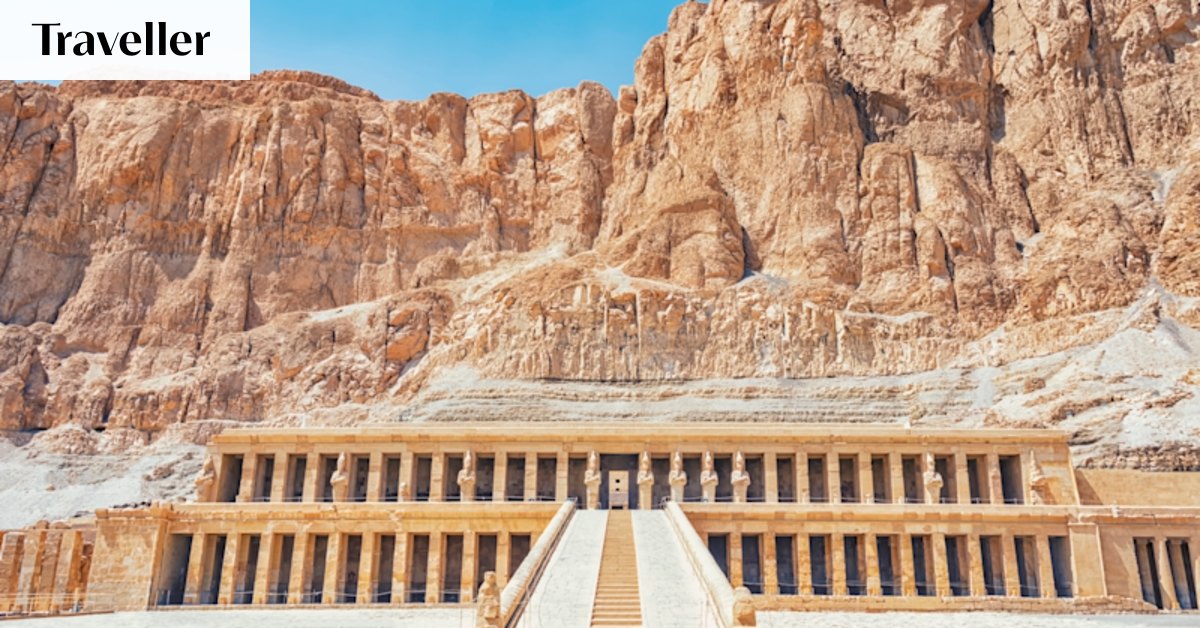
Seven wonders within Luxor, EgyptOn a visit to Luxor, take your time, and prepare to be astounded by its rich archeological bounty.Marvel at temple architectureMortuary Temple of Hatshepsut in Luxor, Egypt.iStockThe Mortuary Temple of Hatshepsut, on the west bank, is backed by barren cliffs and, from a distance, has the curiously modern look of a communist dictator’s mausoleum. Closer up it offers far more architectural merit and intriguing embellishments. Three terraces linked by long ramps are lined by colonnades and statues, and reliefs depict events from female pharaoh Hatshepsut’s reign. The interior, which has several altars, is crosshatched with shadows that create a sense of elegance and contemplation despite the temple’s monumental size. See egymonuments.gov.egVisit Luxor Temple after darkSign up for the Traveller Deals newsletterGet exclusive travel deals delivered straight to your inbox. Sign up now.Entrance to Luxor Temple.iStockThis cluttered downtown temple dedicated to Amun was added to over centuries, including by the Romans, but despite the muddle has an imposing presence. A much later mosque was built into the temple structure in a fine example of the casual way past and present blur in Egypt. Sphinxes stare at you on the approach. The Great Colonnade shows scenes from the Opet festival: look out for the backflipping acrobats. The monument stays open after dark, when bats come out and the atmosphere is delightfully eerie. See egymonuments.gov.egLearn how to make a mummyWedged into the Nile embankment, the Mummification Museum is a small museum that addresses the fascinating beliefs, rituals and 70-day process of mummification. You can see the tools and jars of the trade, prettily painted coffins, and a striking statue of a grieving Nephthys, the goddess associated with mourning. The mummy of a priest called Masaharti is on display, as well as those of cats, birds and a crocodile. The yearning for eternal life displayed here is ultimately not macabre but rather endearing. See egymonuments.gov.egGo to a sound-and-light showKarnak Temple.iStockKarnak Temple is ancient Egypt’s most important sanctuary and also the world’s largest religious complex. It is a staggering accumulation of statuary, ram-headed sphinxes, obelisks, giant papyrus-style pillars and more. The cumulative effect is monumental and brooding, but the detailed decoration equally astounding. Arrive at opening time to avoid crowds and heat. Then return in the evening. While sound-and-light shows have become old-fashioned, don’t miss Karnak’s over-the-top effort, when illuminations and deep shadows add to the complex’s majesty. See egymonuments.gov.egStroll with Luxor locals along the CornicheNile waterfront in the city of LuxoriStockThis riverside promenade bustles with tourists, hawkers, schoolkids and strolling locals in a nice reminder that there’s more to Egypt than ancient pharaohs. Strike up a conversation for some insight into modern Luxor life. Sparrows make a tremendous noise in the trees, and horse-drawn carriages clip-clop along on the road. You get great views over the Nile and its passing ferries and feluccas, towards the brooding desert hills of the west bank that house so many royal tombs.See well-preserved frescoesA painted relief of the pharaoh Ramses III from the Theban Necropolis.iStockThe desert hills of west-bank Thebes are riddled with the plundered tombs of pharaohs, queens and nobles, most famously that of boy-king Tutankhamun. Among the Theban Tombs the most spectacular, thanks to their superbly preserved hieroglyphics and frescoes, belong to Ramses III and Seti I. They depict scenes from everyday life and religious cults in ancient Egypt and indicate how the deceased would like to spend their afterlife. Finally, stop by the orientation centre, if only for the black-and-white photos of historical excavations. See egymonuments.gov.egTake to the air in a hot-air balloonHot-air balloons over Temple of Hatshepsut near LuxoriStockSightseeing amid tombs and temples can become hot and bothersome, so take time out at dawn to enjoy the peace and romance of this destination viewed from above. Amid sun-scorched sand and red rock, the sluggish, muddy Nile throws up a thin strip of fertile agricultural land that has supported all of Egypt’s civilisations. As the sun comes up, it illuminates the colossal temples of Karnak and Hatshepsut and the tomb-riddled Valley of the Kings. Magnificent. See sindbadballoons.comBrian Johnston seemed destined to become a travel writer: he is an Irishman born in Nigeria and raised in Switzerland, who has lived in Britain and China and now calls Australia home.From our partners
No pyramids, but this historic city is a true highlight of Egypt
Full Article
Original Source
Read the full article at Smh →KhanList aggregates and links to publicly available news content. We do not host full articles from third-party sources. Always verify important information with original sources.