
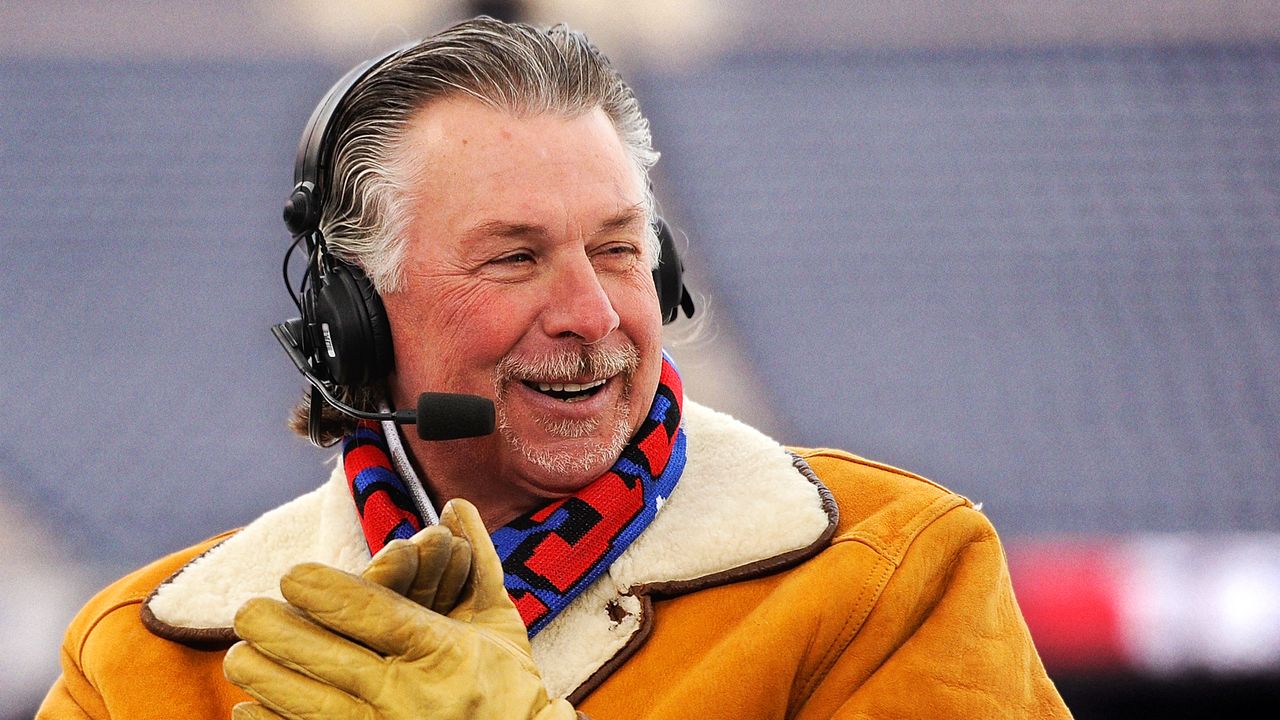
Even when the NHL was at the peak of its popularity, the league has always had to fight an uphill battle to secure a foothold in the busy ecosystem of American sports. It spent more than a decade without a TV rights deal on ESPN, which is about as devastating a blow to an American sports league as you can imagine. Combine that with hockey’s somewhat niche status here in the States, and finding NHL coverage on ESPN—or anywhere in mainstream American sports culture, really—often felt impossible.But you couldn’t tell that to Barry Melrose, the beloved analyst, coach and former defenseman who passed away last week at the age of 70 after a battle with Parkinson’s disease.From the moment he joined ESPN in 1996 to his retirement from broadcasting three years ago, Melrose became one of the faces of hockey in the United States, acting as one of the sport’s sharpest and most notable analysts but also as its fiercest ambassador. So contagious was his passion for hockey that, when he made an appearance talking about it, you would have never guessed how much ground the sport had lost in the public imagination. That was especially true in the years when ESPN was not actively broadcasting the league’s games. He was always the exceptionally vocal minority, taking up the fight for the NHL and trying to make it matter, whether in a two-minute segment with Scott Van Pelt or John Buccigross on Sportscenter or a five-minute sermon on Tony Kornheiser and Michael Wilbon’s Pardon the Interruption.In Melose’s world, hockey was everything, and he wanted us to love the sport as much as he did.If you’re a hockey fan somewhere between the ages of 35 and 50, he’s almost certainly synonymous with your formative years: in a pre-social media world, before 24/7 hot-takery bludgeoned us over the heads, he was the sport's foremost television authority, sometimes speaking from the perspective of a former player (Melrose played 300 games for the Detroit Red Wings, Winnipeg Jets and Toronto Maple Leafs from 1979 to 1986, and in 1993 coached the Los Angeles Kings to the Stanley Cup Final) but just as often from that of a card-carrying fanatic.He did it with style, too. The shearling coats, boldly colored suits and flared lapels, the perfectly manicured goatee and slicked back mullet that gave him the appearance of a mob boss. At times he seemed larger than life, especially if you ever encountered him in a press box or at a game. All of this, in some ways, made him American hockey’s answer to Don Cherry (even though Melrose, himself, was also Canadian)—only without the plainly xenophobic assessments of any player that wasn’t from his country.Make no mistake, Melrose could be harsh. He was unapologetically old-school in his views on the game and the way it should be played, and that was evident in both his analysis and coaching style when he was behind the bench of the Los Angeles Kings and briefly (very briefly) with the Tampa Bay Lightning.Early on in his broadcasting career with ESPN, both as a game commentator and studio analyst on NHL 2Nite, he did have his share of criticisms for the European style of play, its players and whether or not it could stand up to the more physical North American style. But Melrose’s evolution—and his willingness to grow and expand, especially in the twilight of his broadcasting career— was one of the things that made him such an effective flagbearer for hockey in America. He had his opinions, of course, but he wasn’t unreasonable, nor did he refuse to recognize what was happening around him. As the game started to move away from the clutch-and-grab, face-punching spirit of Melose’s own playing career to a more speed- and skill-based style rife with European influence, he started to buy in, eventually coming to respect and admire players like Nicklas Lidstrom, Erik Karlsson, David Pastrnak and Alex Ovechkin.That is what love looks like. Sometimes the game changes. Sometimes you have to change with it. Melrose did everything he could to keep pace and elevate the NHL’s standing. And though it must have felt to him like an impossible fight, it was always one he was happy to take up.
No One Loved Hockey More Than Barry Melrose
Full Article
Original Source
Read the full article at Gq →KhanList aggregates and links to publicly available news content. We do not host full articles from third-party sources. Always verify important information with original sources.