
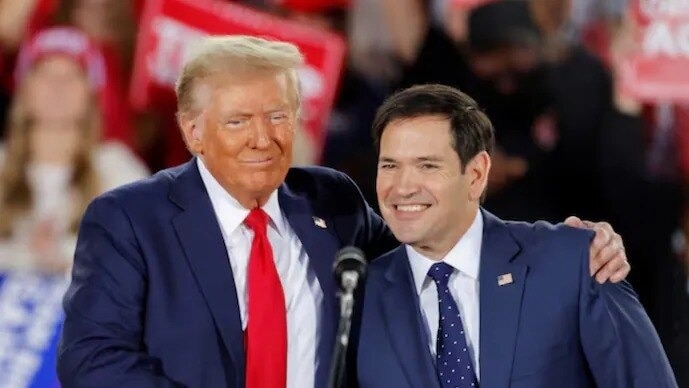
Marco Rubio told allied foreign ministers the United States does not currently expect fresh strikes on Iran and will instead intensify sanctions and maritime pressure. The shift underlines Washington's effort to squeeze Tehran economically while keeping the military option open if Iran attacks first.US President Donald Trump and US Secretary of State Marco RubioUS Secretary of State Marco Rubio has told several allied foreign ministers that Washington does not currently expect to launch new strikes against Iran, signalling a shift towards economic and maritime pressure as efforts to end the conflict remain stalled, Axios reported.According to US officials cited by Axios, Rubio said the United States would, "for the time being", avoid initiating fresh military action against Iran. Instead, Washington plans to intensify pressure through its naval blockade, sanctions and efforts to keep oil shipments moving through the strategically vital Strait of Hormuz.The approach comes as the Trump administration appears increasingly focused on squeezing Iran economically while avoiding a return to large-scale combat operations.MILITARY OPTION REMAINS OPENWhile Rubio's message indicated that the US does not currently plan new major strikes, officials said Washington has not ruled out military action if Iran attacks first. The US believes its campaign in and around the Strait of Hormuz has significantly weakened one of Tehran's main sources of leverage over global energy markets. American forces have been clearing mines from the waterway, while an increasing number of tankers have reportedly begun using its southern passage.US officials have described the development as a major shift, arguing that Iran's ability to restrict energy flows through the strait has been substantially reduced. The US naval blockade has also sharply curtailed Iran's oil exports. American officials say very few tankers have been seen at Kharg Island, the country's main oil export terminal, in recent weeks.State Department spokesman Tommy Pigott said the administration was cutting off what he described as the Iranian regime's remaining financial lifelines, while reiterating President Donald Trump's position that Iran must not obtain a nuclear weapon.SANCTIONS REPLACE STRIKES AS MAIN PRESSURE TOOLWashington has simultaneously stepped up its economic campaign against Tehran. The US this week announced further sanctions measures and warned countries doing business with Iran that they could eventually face penalties.Officials cited by Axios said the current strategy could remain in place at least until the November midterm elections, after which a renewed military campaign could potentially be considered.Iran, meanwhile, has rejected the US pressure campaign, describing the effort to isolate its economy as unlawful. Oil prices fell for a second consecutive day as markets appeared to discount the immediate impact of the latest sanctions threat.The conflict has already caused thousands of deaths, most of them in Iran and Lebanon, while US and Israeli military operations have significantly degraded Iran's conventional military capabilities. The condition of Iran's nuclear programme, which Washington and Israel have sought to dismantle, remains unclear.IRAN, OMAN DISCUSS TEMPORARY HORMUZ CORRIDORAgainst this backdrop, Iran and Oman have resumed discussions on managing shipping through the Strait of Hormuz.The two countries said they had discussed establishing a temporary navigational corridor and agreed to work on clearing mines from the waterway. The strait, through which a significant share of global oil and liquefied natural gas shipments passed before the conflict, has remained largely shut to normal commercial traffic.Although large-scale hostilities between the US and Iran have eased, diplomatic efforts to reach a broader settlement remain deadlocked.The security situation in the waterway also remains fragile. The United Kingdom Maritime Trade Operations said an oil tanker was struck by an unidentified projectile on Tuesday and disabled around 9 nautical miles northeast of Oman's Ash Shishah, near the entrance to the strait.US President Donald Trump has said mines in the strait have been cleared, while Washington maintains that increased tanker traffic shows Iran has lost much of its ability to use the waterway as leverage.PAKISTAN STEPS UP MEDIATION EFFORTSDiplomatic efforts have continued despite the absence of direct US-Iran negotiations.Pakistan's army chief, Field Marshal Asim Munir, travelled to Tehran on Sunday for talks with Iranian leaders. Pakistan has played a mediating role between Washington and Tehran since the conflict began.Saudi-affiliated broadcaster Al Arabiya reported that Munir spoke with Trump before travelling to Iran and presented a possible proposal to the Iranian side. The White House did not deny that Trump had spoken with Munir, but said there were no ongoing or scheduled negotiations with Tehran.A US official summed up Washington's current approach as pressure rather than diplomacy, saying the objective was to squeeze Iran economically and potentially force it back to the negotiating table.Meanwhile, Washington has begun returning some personnel to US diplomatic missions in the Middle East that had previously been evacuated or downsized because of the conflict. The move suggests the administration currently sees a lower risk of an immediate escalation, although some missions will initially operate with reduced staffing.The easing of US military preparations comes as public support for the conflict has weakened. Reuters/Ipsos polling has shown declining approval of the war and falling support for Trump ahead of the November congressional elections.- EndsPublished By: Nitish SinghPublished On: Aug 26, 2026 05:55 IST
No new Iran strikes for now, Rubio tells allies as US tightens economic pressure
Full Article
Original Source
Read the full article at Indiatoday →KhanList aggregates and links to publicly available news content. We do not host full articles from third-party sources. Always verify important information with original sources.