
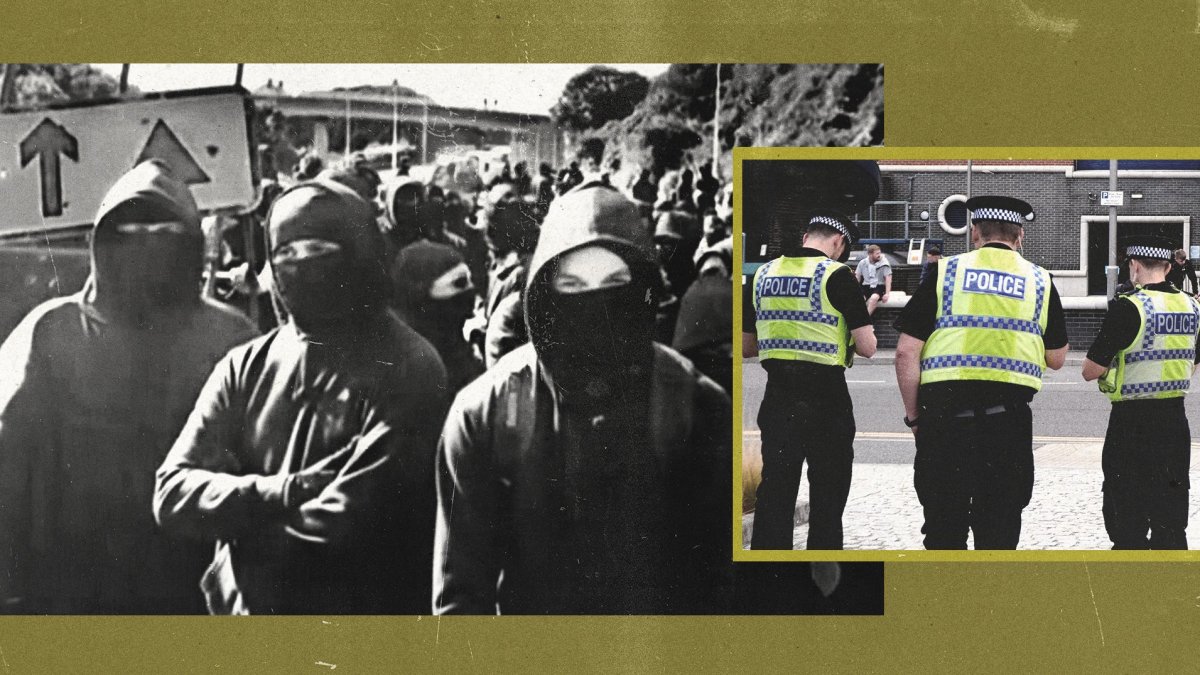
Police forces are increasing intelligence-gathering efforts and preparing to use “every power at their disposal” to respond to further disruption by the far-right group Patriot Platform. Hundreds of men wearing black clothing and face coverings blocked the Port of Dover and caused miles of tailbacks on surrounding roads last Saturday, before a separate protest the following day targeted a Portsmouth marina over the arrival of small boat migrants rescued by the RNLI. Patriot Platform’s founder Daniel Thomas, who calls himself “Danny Tommo”, vowed on social media that the stunts were “only the beginning” and the group’s website makes getting “boots on the ground” a key promise to new recruits. Shorts No arrests were made at the protests in Dover and Portsmouth, sparking criticism from some MPs and questions over the apparent difference in response to the blocking of roads by environmental groups as recently as last week. On Thursday, Home Secretary Shabana Mahmood met police leaders to seek reassurances ahead of the weekend that officers could respond quickly and effectively to further Patriot Platform actions. A source close to the Home Secretary said she urged the police to learn lessons from Dover and Portsmouth and to gather intelligence to ensure they have the correct resources in place. Mahmood is said to have made clear the Government’s expectation that police should make full use of their protest powers, as well as digital tools including facial-recognition technology and automatic number-plate recognition. “These scenes have caused disruption for people and, given that people are dressed in black wearing balaclavas, there is a fear factor and obvious malign intent being communicated to our residents,” Mahmood said during the meeting. It was attended by members of the National Police Chiefs’ Council (NPCC), who said they had stepped up activity to support local forces to ensure they have the “right information, support and operational capacity” in place to respond to further Patriot Platform events. Patriot Platform members dressed in black blocked roads near the port of Dover last Saturday (Photo: SWNS) Deputy Chief Constable Andy Mariner, the NPCC lead for public order, said: “This includes ensuring commanders are ready to use every power at our disposal, from arrests and dispersal orders to more recent powers which can help police manage protests. “Our priority is to keep people safe, maintain public order and support the right to peaceful and lawful protest. While people are entitled to express their views, anyone committing criminal offences can and should expect police action.” The powers under consideration include activating a new law banning people using face coverings to conceal their identity in areas designated by the police, as well as making arrests under laws against obstructing highways and interfering with key national infrastructure, such as harbours. Thomas, the man behind Patriot Platform, was filmed outside parliament in 2019 saying that people who dress in black and cover their faces should not be allowed to protest, but now says they are necessary to “protect members from far-left attacks, from people losing their jobs, and from being labelled”. Police also have the ability to impose conditions governing the location and timing of protests that may result in “serious disruption to the life of the community”, and arrest anyone breaking the conditions. None of the powers were used in Dover and Portsmouth last weekend, where local police forces were caught off-guard by the arrival of hundreds of Patriot Platform protesters. Daniel Thomas at a Patriot Platform protest outside the Daily Mail offices in London (Photo: Denise Laura Baker/Getty Images) Kent Police admitted that it had “not fully assessed” calls from members of the public the previous evening reporting that groups of people were travelling to Dover to target Muslims. “We have examined our decision-making to identify any lessons, to ensure we are well prepared for future events organised in a similar way,” a spokesperson said. But the force said it believed the Patriot Platform protest to be “lawful” and said it could not have prevented it. Hampshire Police said that although no arrests were made at the scene of the Portsmouth protest, “an investigation to identify offenders responsible for any assaults to officers, criminal damage to vehicles, or other criminal offences has been launched”. Geoff Pearson, a professor at the University of Manchester Law School who trains senior police commanders on public order powers, said that any move to stop protests must be balanced against human rights laws. “Ultimately the police have a duty to protect peaceful protest even if it’s unlawful,” he told The i Paper. “But if these are repeated protests, it becomes a lot easier for police to say ‘you’ve made your point’.” Jonathan Hall KC, the Government’s watchdog on terrorism laws, said the tactics used by Patriot Platform were “associated with paramilitarism in Northern Ireland” and that English far-right activists appeared to be using them as inspiration. Paramilitaries were involved in the Belfast riots following the attempted murder of Stephen Ogilvie in June and Thomas was among the “various extreme right-wing supporters” who travelled to the city at the time, Hall told The i Paper. In Northern Ireland, the offence of “unlawful assembly” is applied to activity like the incidents seen in Dover and Portsmouth, and covers a group of people gathering with intent “to carry out any common purpose whether lawful or unlawful, in such a manner as to cause reasonable people to fear a breach of the peace”. But the law was abolished in England and Wales in 1986. Hall added: “Our laws are really designed to deal with violence and threats, and do not apply so easily where the threat is implicit.”
No-mask zones and face scanning: Inside the operation to derail small boats demos
Full Article
Original Source
Read the full article at Inews →KhanList aggregates and links to publicly available news content. We do not host full articles from third-party sources. Always verify important information with original sources.