
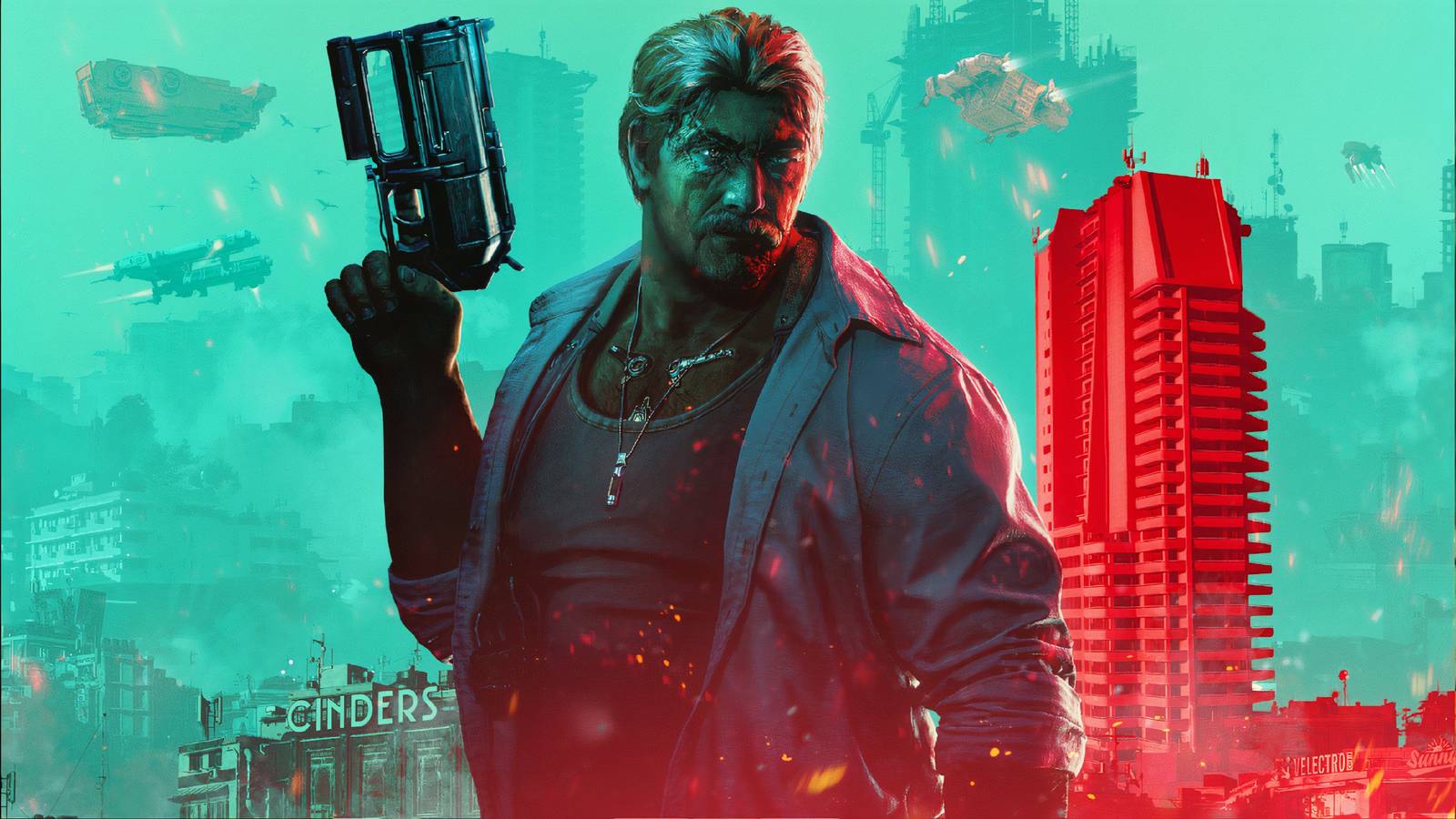
No Law's Developers Say Players "Should Not Be Able To Play The Game Wrong" Published Sep 4, 2026, 10:00 AM EDT Meg is an Executive Editor and Technical Lead for TheGamer, and has been working within the gaming industry since 2014. She was shortlisted as a finalist for the GameHers Journalist of the Year award in 2022 and was a juror for the BAFTA Games Awards 2026. Some of the games and genres that Meg is an expert in include RPGs, point-and-clicks, puzzle games, and life sims. She has a particular fondness for Yakuza/Like a Dragon and Final Fantasy, especially Final Fantasy 14 (for which she used to run a weekly community column). There’s always at least one game that takes you by surprise at Gamescom. Even if it was already on your radar or it had already grabbed your attention, there’s typically one where seeing it first-hand just blows those expectations out of the water and leaves you obsessed. This year, that game was No Law. No Law is an open-world cyberpunk adventure set in the city of Port Desire. Players take on the role of mustachioed Grey Harker, an ex-military trying to settle down and live the quiet life, but of course, he doesn’t get what he wants. Where would be the fun in that? What immediately captured my attention was the level of depth and detail in every small facet of the game. You walk into a store and you can pick individual items off the shelves to purchase them. Or not. If you want to try and run out the front door with your stolen goods then you can, but there will be consequences. You can even steal the little beeper machine that alerts the store owner that a customer has entered, and then use it to create a customised hand grenade later as a proximity trigger. That’s No Law in a nutshell really: you can play your own way. No Law's Port Desire Is Built To Be Explored Your Way That sense of freedom only became more apparent as I played through a couple of sections of No Law with Neon Giant co-founders and creative directors Tor Frick and Arcade Berg, who talked me through just how much of the game is built around letting players do things their own way. “You play Grey Harker, the beginning of the game, you are wronged, they take something from you, you want it back,” Berg tells me. “That's the story. If that's all you want it to be, if that's the only excuse you need to go and shoot people in the face, great. If you want more story, there’s plenty. If you want world-building story and characters, that's when you start digging into the conversations, right? That's when you start reading the files and the emails and all that. But it's all opt-in, because some people don't care, or some people don't want it, and we don't want to force that on you.” The team shows me the city during a nice summer day, so I can see all the greenery and lush vegetation in the warmer Mediterranean climate. “That's one of the things that puts us apart from a lot of the typical cyberpunk stuff you experience,” Berg says before showing me a corner of the city he particularly loves where the vegetation is bleeding into the city. “They're constantly fighting vegetation back with chemicals, and so the vegetation will just take over because of the warm climate, and feel like it's putting us somewhere else than we typically would find in the universe.” Port Desire is open world. You can go wherever you want and the map is densely packed to fit its scale. Berg explains as he shows me around the city, “There's never a lonely street, you never need to teleport somewhere, and you can go wherever you want. You can go into the bazaar in the market over there, where you can buy weird stuff, and it's just people doing their day-to-day.” The team wants players to explore and stumble across locations. You might only visit a hotel because of a specific mission, but perhaps you’ve been there before while looking for treasure. There’s also a great sense of verticality, as the team wanted to avoid the feeling of a “flat city”, so you can climb up to balconies and truly explore however you want. “Every single road and street in the entirety of Port Desire has a name, and all the buildings, the numbers, so whenever we give you a destination, we give you the address,” Berg says. “Right now we're playing with some guidance, we have a mission marker, it starts telling you where to go. If you want to go full immersion, again, it's always opt-in, you can go immersive mode, and we turn off all the helpers, and we give you an address, and you can start looking at the signs, looking at the building numbers, that's how you can navigate the world. “Or, again, if you don't care about story, and you just want to play a little shooter, we turn everything off, and we'll tell you where to go, how to get there, what to do, we never want there to be a hurdle for you to enjoy the game you want to enjoy, it's all about you, your player choice, and your experience.” Port Desire is alive and bursting with activity. There are ice cream vendors, taxi stops, and everything you’d expect in a living, breathing city. During the day, the cafes and stores are bustling, baristas whirring away, but by night the city changes. Some stores close, and sketchier characters lurk in the shadows. You can flush toilets, you can use vending machines - you can even wait for NPCs to use vending machines and then steal their soda before they can take it. When it comes to perusing stores for items, every single object has an individual price, all of the designs and product labels are handcrafted, so you can read the ingredients, nutritional values, and all the information. The wealth of detail is staggeringly impressive. You Can Kill Almost Anyone In No Law The level of autonomy given to players in No Law extends to deciding whether NPCs live or die. If you kill an NPC, they are dead forever. If you kill a store owner, the store closes and a ‘Staff Wanted’ sign will appear outside. Berg tells me, “you could close down every shop in the entire game. Bad idea, but you can.” There’s even dialogue you can miss if you get too trigger happy. Frick tells me “if they're dead, they can’t talk to you. But the game is built so you can't do a sequence breaker. You can miss out on content. But you will not miss out on the main narrative of the game. You can break parts of the game. Side missions. Kill everyone on the side mission. But the main narrative is built in a way that it's completely up to you how you play it. You can still finish the game. You can also play whatever content you want first, with Berg saying, “You choose which order you want to tackle the entire game, basically. It's completely non-linear in how you approach things.” Frick admits it was very difficult to deliver this level of freedom for players, but that ultimately it was worth it. “One of the first things we said is that players should not be able to play the game wrong. That was one of the very first things. One of the other things we said earlier was like, We have 100 different players with 100 different stories. We want there to be things that we miss. Because making content is expensive, time-consuming, and hard. “We had to make that decision early on. Are we okay with people missing out on the content? And yes, we are. Because we think it's worth it. Because otherwise it was a crisis. They need to have some fun. So it is definitely hard. But it's basically the core of the game.” During one mission, the goal is to get into a specific apartment, only it’s a restricted area with a gaggle of goons outside the front door. The team shows me that there are a few ways you can go about achieving this. There’s an open window you can reach if you move a lot of boxes to climb up - if you have the right abilities, doing it this way will be a lot easier. Peering in through a window, we can see a drunk guy forget to lock his door, which might come in useful. There’s a key down on the sofa where the thugs are, but that seems risky. Once we’ve managed to get inside the building, we still need access to the upper floors, but a mafia-esque brute isn’t letting us through. We could bribe him, or even kill him, but looking around a bit we instead discover the password so he lets us through without bloodshed or money. Creeping into the room with a sleeping NPC means we have to stay quiet or he’ll wake up, but stunning the guy solves that problem. Berg tells me he will stay unconscious “forever” or “until a friend tries to wake him up”. If they’re sleeping, they can wake. If you killed them, well, they’re dead. You can move and hide bodies to cover up your tracks, though. After lockpicking our way into the apartment in question, we can scope out the target’s computer and go through his emails to get some new intel. When it comes to finding answers or clues in the environment, Berg explains “We always put the solution somewhere nearby. Having said that, there's also a lot of examples where you'll find something, and you're like, ‘Oh right, with this, I should be able to do this thing out of this completely different district’. We do a bit of both, but we try to present it with a challenge.” While you can stealth your way through the game, gathering clues and uncovering new information in secret, you can also load your skill points entirely into combat and weapon training and go in guns blazing. The team shows me the same scenario, this time in the pouring rain, where those gangsters that were guarding the building are instead reduced to pulp by good old Grey Harker, who then proceeds to go inside and shoot the Mafiaoso square in the head. “One of our mantras from the very beginning is that the player, we can't tell them what to do. Player agency is one of the most important things for us, so we never tell the player how to play the game. We never tell you, oh, you can't shoot your gun.” Because of that mantra, the team was very careful about how players earn XP so that they never feel forced into playing a certain way. “What's important for us is that you get XP for getting access to places, or going to a person's store, completing missions, finding XP for using certain glitches and stuff like that,” Berg says. “But never for the taste of how you play. “You don't get XP for lockpicking the door, you don't get XP for hacking something, you don't get XP for using the vent, you don't get XP for headshots, because then you're just going to start doing headshots later on. We never give anything to externally skew your playstyle. It should always be however you want to play it. As long as you get inside, I'm happy, here's your XP. That's something we're very adamant about, not ever pushing you one way or the other with playstyle.” It's that commitment to letting you do things your own way that made No Law stand out so much for me at Gamescom. Plenty of games promise player freedom, but here it feels baked into everything, from how you navigate Port Desire and approach missions to something as small as whether you steal a soda from an unsuspecting NPC. I only saw a tiny slice of what Neon Giant has planned, but if the rest of No Law gives players this much room to mess around, experiment, and make their own stories, Port Desire is somewhere I'm very keen to get lost in. I’m placing my bets now. Everyone is going to be obsessed with No Law when it launches. Released 2027 Developer(s) Neon Giant Publisher(s) Krafton Number of Players Single-player Steam Deck Compatibility Unknown Genre(s) Action, RPG, Open-World, FPS
No Law Lets You Kill Every Shopkeeper And Close Every Store
Full Article
Original Source
Read the full article at Thegamer →KhanList aggregates and links to publicly available news content. We do not host full articles from third-party sources. Always verify important information with original sources.