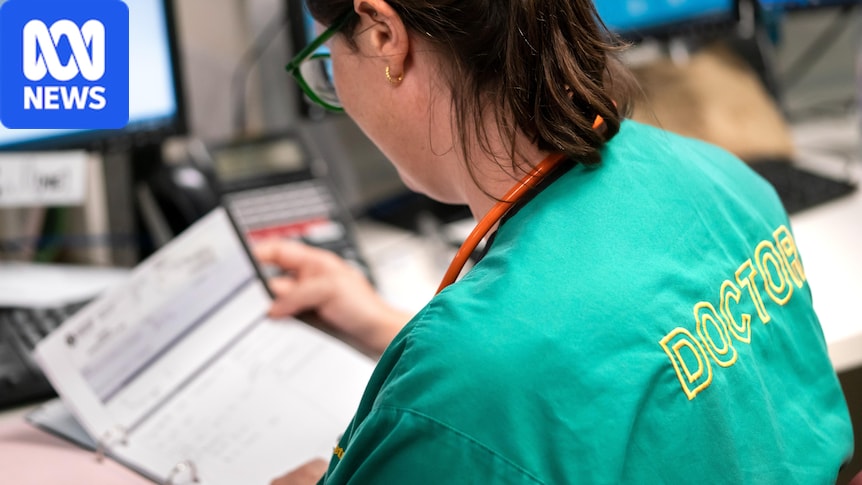
Robert Davies moved from Sydney to Armidale to study medicine and will need will need to complete thousands of unpaid practical placement hours to become a doctor.The 25-year-old University of New England student said it was difficult to find a job while juggling a 38-hour weekly prac schedule."It throws a lot of job opportunities out the window for supporting yourself," he said."[I'm] just looking to survive … I'm a bit worried and I'm sort of playing it by ear."Trainee doctors are at risk of being unable to survive financially, a student and advocates say. (ABC News: Tristan Hooft)Earlier this week Prime Minister Anthony Albanese announced an expansion of the Commonwealth Prac Payment program, which provides students payments of $338.60 a week.From July next year the scheme will include a number of courses in allied health fields, but medical students will not be covered.Mr Albanese told the ABC's AM program that funding was being used to address skills shortages."These are areas where we do have skill shortages and we want to encourage people to go into these professions," he said."There aren't shortages of people who want to do medical degrees."Australian Medical Students' Association president Seniru Mudannayake said the decision sent a clear message, particularly to medical students from lower-income backgrounds.Seniru Mudanna says medical schools should be accessible to people from all socio-economic backgrounds. (Supplied)"If you want to do healthcare and you don't come from a wealthy family and you need financial support, medicine's not for you," he said."The people applying are disproportionately from upper class and in the metropolitan areas, because they're the ones who know they can survive 2,000 to 4,000 hours of unpaid placements."We need doctors who represent their communities and this Commonwealth Prac Payment would have been the way to do that."A 'shame' for rural communitiesAustralian Medical Association president Danielle McMullen said the program should support students studying outside metropolitan centres.Danielle McMullen says the payment could help to fill doctor shortages in rural areas. (ABC News)"We know there's already a shortage of doctors in rural and regional areas," she said."We also know one of the best ways to fill that gap is to attract students from rural Australia who are most likely to practise there once they're qualified."For medical students to be left out of this scheme yet again is nonsensical and it puts a particular strain on rural and regional health."Dr McMullen said medical degrees were among the most demanding and required students to complete about 2,000 hours of clinical placements.'Scraping to survive'Mr Mudannayake said students from low-income backgrounds who accepted rural placements were faced with the additional cost of fuel, utilities, rent and food."They're paying out of pocket, they're scraping to survive," he said."Medical schools are becoming less reflective of socio-economic diversity in this country."We need doctors in low-income areas, we need doctors in First Nations areas and we need doctors in rural areas."Tuition fees can also be costly.The full fees for a domestic undergraduate medical student studying full-time at the University of New England amount to almost $47,000 a year.Those eligible for a Commonwealth Supported Place, which offers subsidised tuition, will pay $50,000-60,000 in total for a four-to-six-year degree.
No government support for trainee doctors doing 2,000 unpaid hours
Full Article
Original Source
Read the full article at Abc →KhanList aggregates and links to publicly available news content. We do not host full articles from third-party sources. Always verify important information with original sources.