
For months, two wars thousands of kilometres apart appeared to be settling into a dangerous and increasingly familiar pattern. The Russia-Ukraine conflict continued to grind on without directly drawing Nato into combat, while the US-Iran war had entered a prolonged pause after months of confrontation. But that fragile balance is now shifting, and it seems like there are no extinguishers available for the wars that are again leaping into flames.In Europe, the battlefield is increasingly stretching beyond Ukraine's borders, with Germany accusing Russia of orchestrating a drone attack on Leipzig airport and Nato openly rallying behind Berlin. Moscow, meanwhile, has also warned Britain over its military support for Ukraine.In the Middle East, the month-long lull between Washington and Tehran collapsed. US forces resumed strikes on Iran on Tuesday (September 1), while Tehran has retaliated with missiles and drones and threatened "crushing and devastating blows".Ukraine has claimed that Russia has been uninterruptedly attacking Kyiv for seven days from August 26. Neither development, on its own, means a wider war is inevitable. But together, they point to a world in which two conflicts are becoming harder to contain. Amid the renewed escalation, Prime Minister Narendra Modi also urged that the world must move from "endless war to the end of wars" during his interaction with Russian President Vladimir Putin at the SCO Summit 2026 held on August 31.UKRAINE'S WARNING: RUSSIAN SKIES NOT SAFE FOR ANYONEThe latest escalation in the Ukraine war is no longer confined to trenches, missile strikes on cities or battles along the front. Ukrainian President Volodymyr Zelenskyy has issued an extraordinary warning to airlines, passengers and insurers still using Russian airspace. He said Russian skies would become increasingly unsafe as Ukraine expands its drone campaign against Russian targets. The warning from Ukraine's President comes after six railway employees were killed after a ballistic missile struck a locomotive depot in Kyiv on September 1, according to Ukraine's state-owned railway company Ukrzaliznytsia."Russian airspace is becoming completely unsafe," Zelenskyy posted on X, warning that airlines would have to take into account the presence of Ukrainian drones "on a scale" over Russia.Zelenskyy stressed that Ukraine was not targeting civilian aircraft and had a clear message for every country. His message, however, was clear that as Kyiv expands its long-range drone operations, flying through Russian airspace could increasingly carry risks.Russian President Vladimir Putin reacted, describing Zelenskyy's comments as a "declaration of state terrorism". And Russia has been striking key infrastructures in Ukraine from August 26.The exchange captures how the nature of the conflict is changing. Ukraine is seeking to take the war deeper into Russian territory, while Moscow continues to attack critical infrastructure inside Ukraine. Infrastructures are increasingly becoming a major target in the war.ACT OF WAR: GERMANY ACCUSES RUSSIA OVER AIRPORT DRONE ATTACKGermany has directly blamed Moscow for a failed drone attack at Leipzig airport on August 4 that allegedly targeted a Ukrainian cargo aircraft. The German government said its investigation had found indications that the Russian state supplied know-how and equipment to "low-level agents" operating on the ground.The accusation has triggered a significant German response. Berlin plans to close Russia's consulate in Bonn and evict Russian House, a cultural and scientific institution in Berlin that German authorities allege was being used as a base for espionage and hybrid operations.Berlin is pushing for tougher European Union (EU) sanctions. The Kremlin's alleged use of sabotage, espionage, cyber operations and other covert activities across Europe has long been described by European governments as "hybrid warfare". But the language surrounding the Leipzig incident has become sharper.German defence entrepreneur Stefan Thumann went further, telling US-based Politico that Moscow's alleged sabotage campaign should be regarded as an "act of war" and arguing that the operations are controlled and coordinated by the Russian armed forces.He said, "Germany and Russia are at war." This is not Berlin's official position. But the political temperature is clearly rising.NATO BACKS GERMANY, UNITES AGAINST RUSSIA OVER AIRPORT ATTACKThe German accusation has also received a strong response from Nato. Secretary General of Nato, Mark Rutte, said he had spoken with German Chancellor Friedrich Merz and that Nato stood in "full solidarity" with Germany following the alleged Russian hybrid attack in Leipzig.Rutte said the evidence was clear and welcomed Germany's response. He also warned that Russia's attempts to intimidate Nato members, undermine their unity, and weaken Western support for Ukraine would fail.What Germany regards as an attack on its territory is also being treated as an issue affecting the whole Nato, and that is the clear message seen from Rutte's response.EU President Ursula von der Leyen has also promised a "clear response", including additional sanctions against Russia.The prospect of direct Nato-Russia confrontation still remains remote, but every such incident reduces the distance between the Ukraine battlefield and the territory of the alliance.MIDDLE EAST FLARE UP AFTER US-IRAN TRADE MISSILESAs Europe grapples with uncertainty, the Middle East is seeing escalation too. The US military launched fresh strikes against targets in Iran on September 1, after a month without major military action between the two sides. Tehran responded with missiles and drones.The US Central Command (CENTCOM) said its latest strikes were carried out in response to Iranian attempts to attack commercial ships and American forces in the Middle East. US President Donald Trump also said that his forces had targeted Iranian radar systems. The strikes came after American attacks over the weekend had already ended the prolonged military pause.Iran continued to demonstrate an ability to target bases in the Gulf used by the US. Tehran attacked US bases in Kuwait and Jordan on Thursday (September 3).That pause had raised hopes that Washington might be moving away from direct military confrontation and towards an economic campaign designed to pressure Tehran. Those hopes have now been badly shaken. Trump warned Iran that retaliation would trigger an even more severe American response, saying that a still larger attack was "waiting in the wings".Iranian officials, meanwhile, have vowed to respond. Iran's Armed Forces General Staff and joint military command promised "crushing and devastating blows" against the United States. Iranian state media also accused Washington of striking civilian locations, including a civilian airport and a house where a wedding ceremony was taking place in southern Iran. Iranian officials said the strike killed two people and wounded at least 20 others.TWO WARS AND A NARROW MARGIN FOR RESTRAINTWashington is trying to manage both theatres — the Russia-Ukraine conflict and its own war with Iran. It is supporting Ukraine and deterring Russia from testing Nato while simultaneously fighting Iran and attempting to prevent Tehran from disrupting regional shipping.That leaves less room for miscalculation. A drone attack, a missile strike, an accidental hit on civilian infrastructure, or a retaliation that goes further than intended could force governments to respond to domestic and alliance pressures.For now, neither conflict has crossed into a full-scale confrontation between the world's major military blocs. But the space for restraint is shrinking.The Ukraine war is pressing outward through drones, sabotage allegations and threats against Nato members. The Iran conflict has snapped back from a pause around one of the world's most important oil choke points.The embers of the wars are no longer quietly glowing. They are beginning to throw sparks into places that were, until recently, outside the immediate battlefield. And the central question now is whether those sparks can still be contained before they ignite something much larger.- EndsPublished By: Avinash KateelPublished On: Sep 5, 2026 07:00 IST
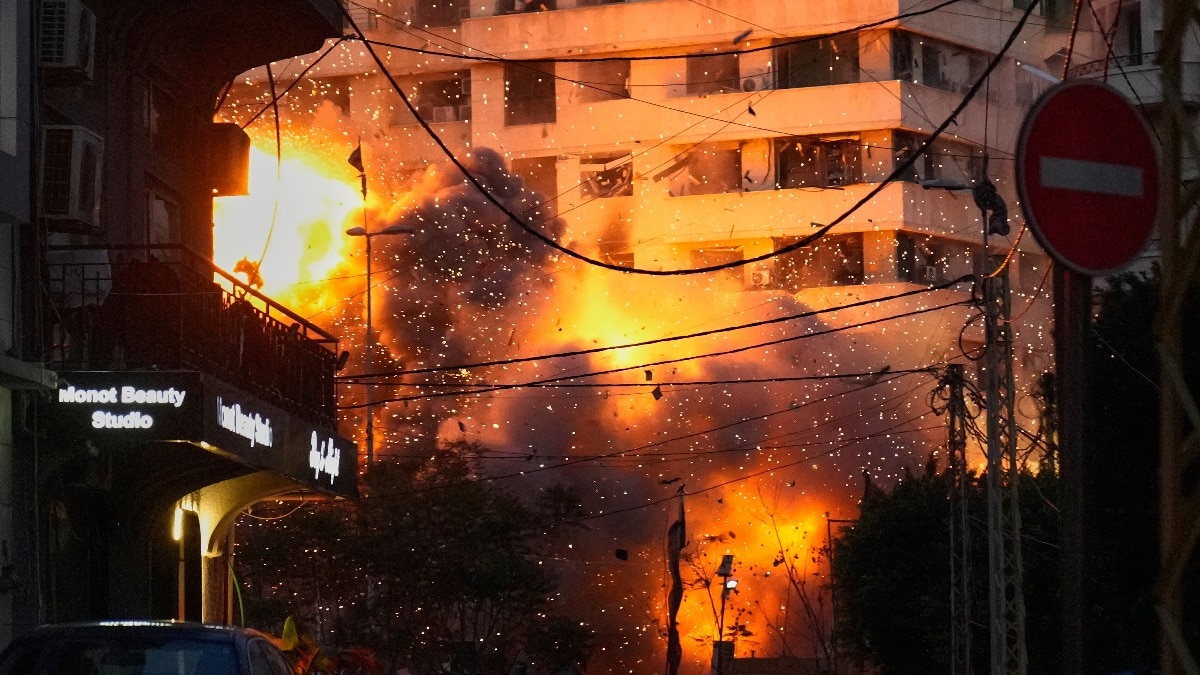
No extinguishers as embers of ongoing wars turn into leaping flames
Full Article
Original Source
Read the full article at Indiatoday →KhanList aggregates and links to publicly available news content. We do not host full articles from third-party sources. Always verify important information with original sources.