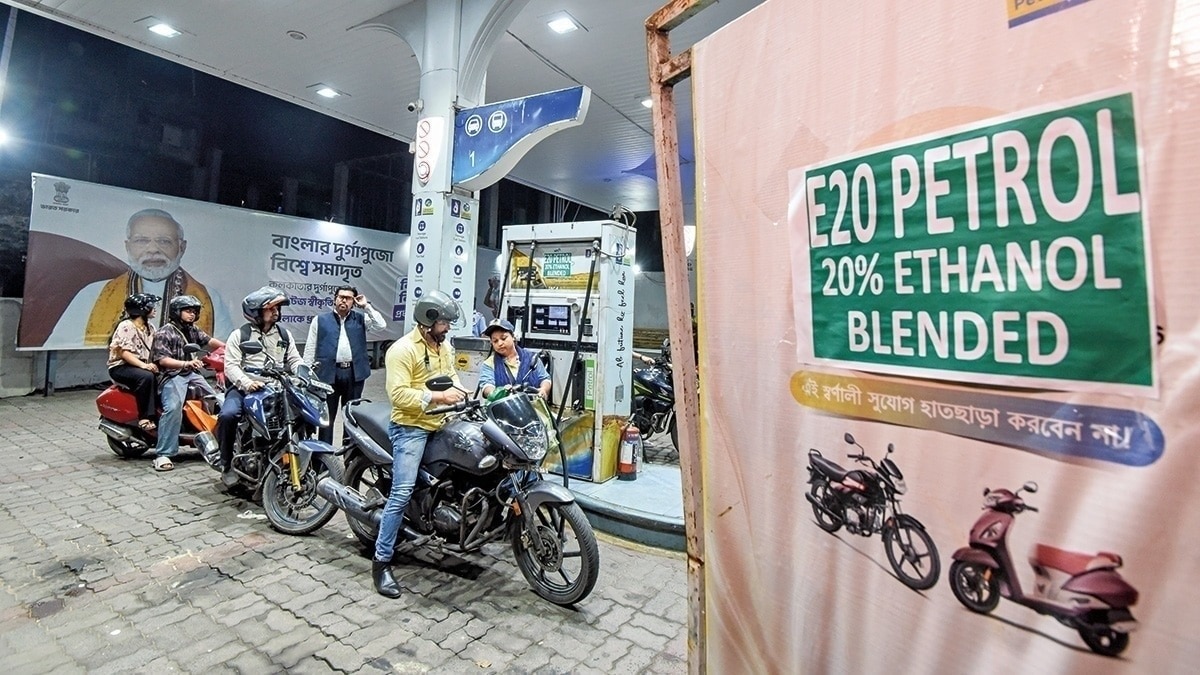
The Centre said the roadmap to achieve 20% ethanol blending by December 2025 was based on scientific studies, field trials and consultations with automobile manufacturers and oil companies.The Central Government told Parliament that no scientific study has substantiated claims that E20 petrol causes engine damage.The Centre on Wednesday said there is no scientific evidence to support claims that E20 petrol damages vehicle engines or significantly reduces fuel efficiency, telling Parliament that the ethanol-blended fuel was introduced only after years of testing and consultations with industry experts.In a written reply in the Lok Sabha, Union Road Transport and Highways Minister Nitin Gadkari said the Ethanol Blended Petrol (EBP) Programme was introduced after extensive scientific studies, field trials, laboratory testing, validation by expert agencies and consultations with stakeholders before the phased rollout of E20 petrol.The government said the Indian Oil Corporation Limited (IOCL), the Indian Institute of Petroleum (IIP), the Society of Indian Automobile Manufacturers (SIAM) and the Automotive Research Association of India (ARAI) conducted joint studies over several years to assess the impact of E20 fuel on two-wheelers and four-wheelers.The statement comes as the Delhi Taxi and Tourist Transport and Tour Operators Association had called for a Parliament protest march against the ethanol-blended policy on August 4 in the national capital. According to the government, the roadmap to increase ethanol blending from 1.53% in 2013-14 to a target of 20% by December 2025 was formulated based on scientific studies, field trials and extensive consultations. It said the "Roadmap for Ethanol Blending in India 2020-25", released in June 2021, examined material compatibility, engine calibration, fuel systems, drivability, durability, emissions and fuel efficiency before the nationwide rollout.According to the findings, E20 petrol does not cause any significant adverse impact on engine durability, vehicle performance, drivability or Bharat Stage VI (BS-VI) emissions. The government also said BS-VI compliant vehicles continue to meet emission norms while operating on E20 fuel. It added that even legacy vehicles tested with E20 did not show any significant variation in performance, abnormal wear and tear, or issues related to drivability, startability, metal compatibility or plastic compatibility. The government said modern cars and two-wheelers do not require any engine modifications to use E20 petrol. However, it noted that certain BS-III vehicles introduced from April 1, 2005, and vehicle models manufactured before 2016 may require replacement of some rubber parts or gaskets during routine servicing. It said these replacements do not indicate any major mechanical problems.Addressing concerns over fuel efficiency, the government said mileage depends on several factors and cannot be attributed solely to ethanol blending. It said driving habits, engine maintenance, timely oil changes, air filter cleanliness, tyre pressure, wheel alignment and the use of air conditioning also influence fuel efficiency.The government further said an Inter-Ministerial Committee constituted under NITI Aayog on December 26, 2020 examined vehicle compatibility, mileage and efficiency before recommending higher ethanol blending. The assessment relied on research by IOCL, ARAI and SIAM.The Centre also said India adopted a phased and scientifically validated approach to ethanol blending. According to the government, the programme began as a pilot in 2001, E5 fuel was introduced in 2006, and blending levels were increased gradually after production capacity, infrastructure and regulatory frameworks were put in place.Citing inputs from SIAM, the government said it has not received any verified or widespread complaints of engine failure or vehicle breakdown linked to E20 petrol. It added that concerns regarding engine damage, reduced mileage and vehicle wear have largely emerged through public discourse and social media discussions rather than documented large-scale technical failures.The government reiterated that the Ethanol Blended Petrol Programme has been implemented through a phased, calibrated, scientifically validated and consultative approach, and maintained that available scientific evidence does not indicate any widespread adverse impact of E20 petrol on modern vehicles. It, however, acknowledged that certain older vehicles may require replacement of a few rubber components as part of routine maintenance.- EndsPublished By: Devika BhattacharyaPublished On: Jul 29, 2026 20:37 IST
No evidence of engine damage, mileage drop due to E20, Centre tells Parliament
Full Article
Original Source
Read the full article at Indiatoday →KhanList aggregates and links to publicly available news content. We do not host full articles from third-party sources. Always verify important information with original sources.