
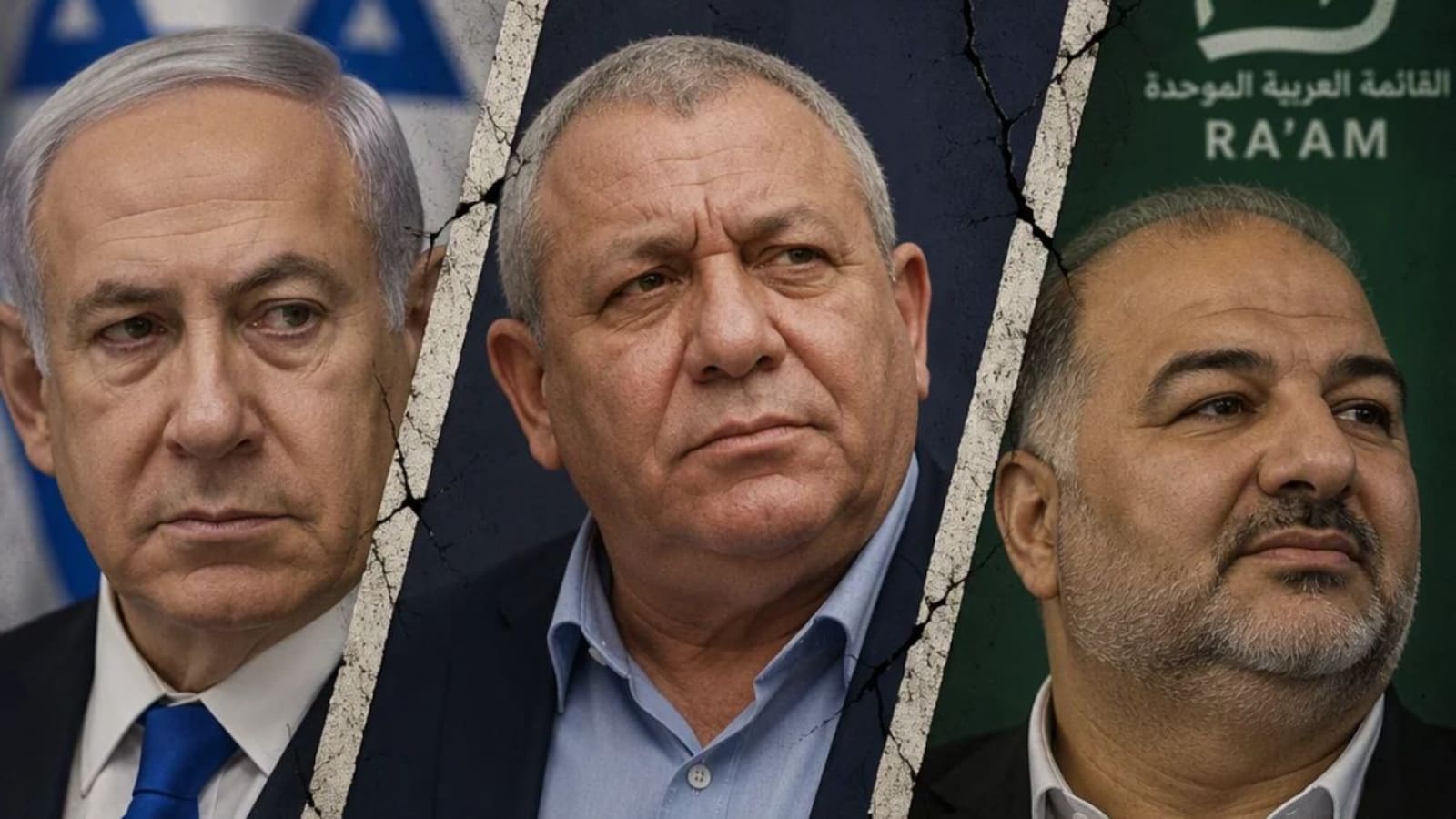
Tel Aviv: Israel's election results left the country with more questions than answers. Prime Minister Benjamin Netanyahu and his main rival, former army chief Gadi Eisenkot, had both stood before cheering supporters in the early hours and claimed victory. But as the count went on, the mood changed. Neither side, it turned out, had the numbers to form a government.Preliminary figures give Netanyahu's Likud-led bloc 53 seats in the 120-member Knesset. Eisenkot's opposition bloc, led by his Yashar party, has 48. Arab-led parties are projected to take a record 19. To form a government, the coalition needs at least 61 seats.The question is no longer just whether Netanyahu can survive. It is whether Israel's fragmented politics can produce a government at all or whether voters will be sent back to the polls once more.Two Victory SpeechesThe post-election speeches of rivals showed how uncertain the picture was. Eisenkot called the result a public verdict against Netanyahu's leadership. Netanyahu stood by his coalition allies, attacked his critics and called for a right-wing nationalist government.Both spoke before the count had settled, and neither can claim a clear mandate.Israel's system makes this difference important. Voters pick party lists, not leaders, and governments are built by bargaining among parties that together command a Knesset majority. Likud is still the largest single party in the preliminary count, which keeps Netanyahu in the contest. But the setback is real: his bloc has lost the majority it held before.President Isaac Herzog is now in the spotlight. Once final results are certified and he has consulted party representatives, he will decide who is best placed to form a government. The job does not automatically go to the leader of the largest party. Herzog has already urged politicians to be flexible and avoid a fresh election.Arab Parties Become PivotalThe standout feature of the election may be the performance of the Arab-led parties. The Joint List and the United Arab List, known as Ra'am, are projected to win 19 seats between them.Arab citizens are about a fifth of Israel's population. Their political weight has long been held back by low turnout, rivalry among their parties, and the reluctance of Jewish-led parties to depend on their votes.On paper, the arithmetic offers Eisenkot a way to block Netanyahu. In practice, however, the situation is more complex. Eisenkot has cast himself as the head of a Zionist opposition, and whether his bloc can work with Arab parties has become the central test of his strategy.Yair Golan, who leads the centre-left Democrats, has openly backed bringing Arab parties into the process, saying their voters cannot be ignored. Other opposition figures are warier. Some have ruled out any formal partnership, and others fear losing voters who want Netanyahu gone but are uneasy about relying on Arab lawmakers.For many Arab families, this election is about more than seats in the Knesset. Their leaders said they want a real voice in the decisions that shape the country, and they have a clear list of what matters to them. They want something done about the violent crime that has haunted Arab towns, an end to the poverty and discrimination many residents live with, and a government that pays attention to their communities. Ra'am leader Mansour Abbas has said Arab citizens will no longer stand on the sidelines, and this result gives him a stronger hand to make that case.Fraud Claims The contest has already turned into a row over the integrity of the vote. Likud has alleged widespread fraud at Arab polling stations, saying the election was "stolen." It has demanded investigations by the police, the Shin Bet and the Central Elections Committee.The party said it has filed hundreds of testimonies and pieces of evidence. Its claims include cash handed out alongside ballots for Ra'am, intimidation of polling staff, several voters crowding into booths together, voting under false identities and mismatches in ballot counts.Likud's claims are serious, but they are still just claims. So far, no one has shown that the vote was rigged. A senior official at the Central Elections Committee brushed aside the idea of widespread fraud in a television interview, and the committee said it was going through the complaints as it would after any election. Looking into a complaint is not the same as finding something wrong, and until investigators say otherwise, that gap matters.The timing is politically sensitive. Arab parties have become potential kingmakers just as neither big bloc can reach a majority alone. The row risks deepening mistrust between Jewish and Arab communities at a moment when their cooperation is at the heart of coalition talks.Netanyahu has long opposed any government that relies on Arab parties, calling it a danger to Israel's security and national identity. His opponents said Arab citizens have the same democratic right to representation as anyone else.Haredi's Hard ChoiceThe numbers also point to shifts among ultra-Orthodox voters. Early figures from Haredi towns suggest United Torah Judaism has held its ground and may have gained slightly. Shas has slipped, with its share of the Haredi vote falling from 30.9 per cent in 2022 to 24.4 per cent. The Haredi Public Party, which drew attention during the campaign, has made little impact.This matters because the ultra-Orthodox parties have been key partners in Netanyahu's coalitions, with influence over religious institutions, public funding and exemptions from military service.The draft is especially sensitive after years of war and repeated reservist call-ups. Many Israelis wonder why most ultra-Orthodox men remain exempt while others bear an increasing burden. An Eisenkot-led government would face pressure to pass a tougher conscription law, but that could mean confronting the very parties whose votes it might need. The Haredi parties must now choose between their traditional alliances and a new arrangement that could give them influence under a different prime minister.Liberman Keeps His Cards CloseAnother hurdle for the opposition is Avigdor Liberman, who leads Yisrael Beytenu. He has said he will not join a Netanyahu-led government. He has also rejected backing a minority government that depends on Arab parties.That leaves the opposition without a common plan. Liberman reportedly had limited direct contact with Eisenkot and fellow opposition figure Naftali Bennett, though talks between their teams continue. He has a record of taking his time: after the 2009 election, when his party won 15 seats, he delayed before joining Netanyahu's government.His stance could push Eisenkot to consider a unity government with Netanyahu rather than an arrangement involving Arab parties.Possibility Of A Unity Government A national unity government is one possible solution. It could bring rivals together on the shared view that another election would only prolong the uncertainty and could shut out far-right minister Itamar Ben-Gvir.Eisenkot could seek a major post, possibly defence, while other opposition leaders negotiate portfolios and policy pledges. With the ultra-Orthodox parties outside, such a government could pursue changes to the draft.But it would demand trust between leaders who spent the campaign attacking each other. Netanyahu's political future would be central, and any deal would need safeguards on power-sharing, the timing of any rotation in the premiership, and the delivery of promises. It would also be challenging for Eisenkot to explain to voters who backed him as the alternative.A unity deal would not settle the deeper disputes over the war, Gaza's future, relations with Palestinians, judicial independence or the military burden. The United States has not named a preferred outcome, and an American official said it is too early for Washington to step in. Fresh tension with Iran adds another layer of uncertainty, though there is no basis to assume a new conflict or that it would produce a unity government.What Happens Next?The election has exposed the limits of both Netanyahu's coalition and Eisenkot's attempt to build a broad alternative. Netanyahu has lost his majority in the preliminary count but is not out. Eisenkot has rallied a large opposition vote but has not shown he can command the Knesset. Arab parties have a historic result, but their influence depends on others being willing to deal with them.Absentee ballots, including those from soldiers and diplomats, are still being counted, and the Central Elections Committee has said the final tally will take more time.Turnout was high, reflecting how much Israelis feel is at stake after years of war and upheaval. The next test comes in coalition talks, where Herzog must decide who has the best chance of building a government.
No Clear Majority, Record Arab Votes And A Dilemma For Israel's Opposition
Full Article
Original Source
Read the full article at Ndtv →KhanList aggregates and links to publicly available news content. We do not host full articles from third-party sources. Always verify important information with original sources.