
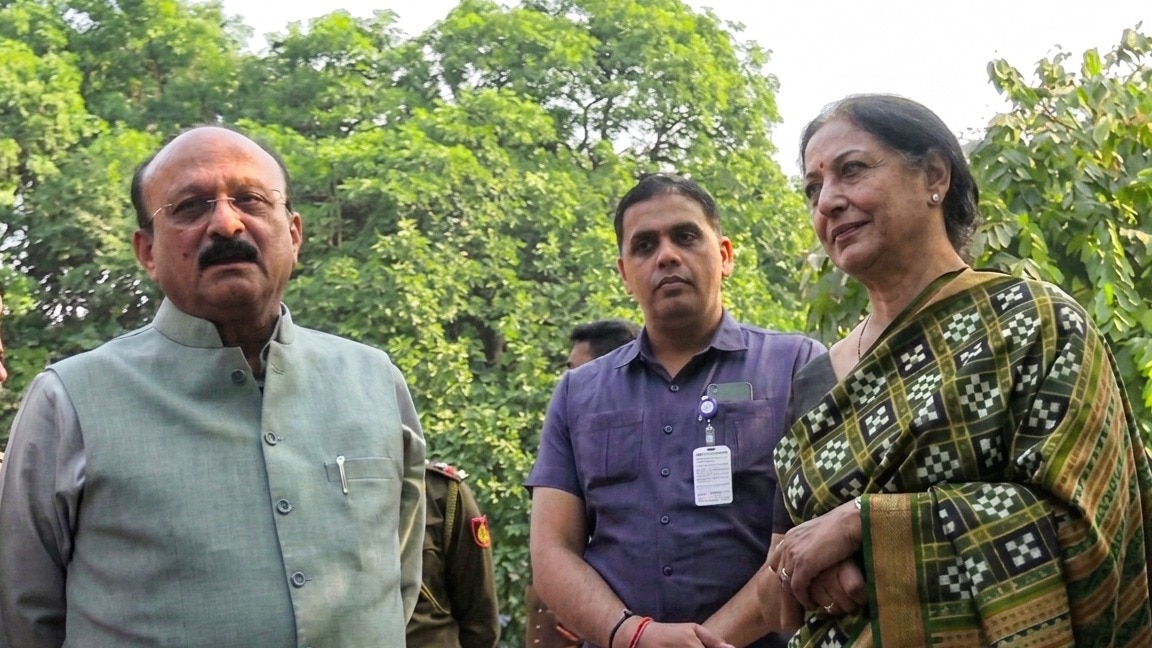
Speaking at an inclusion-focused conference at Vasant Valley School in Delhi's Vasant Kunj, Delhi Education Minister Ashish Sood said RTE admission must go beyond securing a seat, stressing that every child should feel accepted, included and confident in the classroom. The event also highlighted Vasant Valley School's efforts to ensure that RTE students receive the same opportunities as their fee-paying peers, with additional academic support wherever needed.Vasant Valley School has stressed equal opportunities for children admitted under the RTE quota, saying it makes no distinction between fee-paying and non-fee-paying students. (In photo: Ashish Sood (l) and Vasant Valley School Principal Sharmila Bakshi (r))New Delhi,Nov 18, 2026 20:24 ISTA child getting admission to a private school under the Right to Education (RTE) quota is only the first step. What matters just as much is whether the child feels accepted, participates in class and gets the same opportunities as everyone else, Delhi Education Minister Ashish Sood said on Wednesday.Addressing a conference at Vasant Valley School in Vasant Kunj as the guest of honour, Sood stressed that a family's financial condition does not determine a child's intelligence, talent or potential. No child, he said, should feel like an outsider in their own classroom.The minister raised questions about whether RTE students feel equally welcomed, take part in classroom activities, have the confidence to express their views and develop friendships with other children. He also linked inclusive education to the larger responsibility of ensuring children's mental and emotional well-being.The conference coincided with the launch of the handbook 'Inclusion in Action: Lessons from RTE 12(1)(c) Implementation in Delhi Classrooms'. Also present were Director of Education Ankita Anand, Rajbir Singh Bhandal, Trustee of the Vasant Valley Centre for Excellence in Education, Dr Rahul Karnamadakala of Indus Action, Dhananjay Vaidyanathan Rohini of Alstonia Impact, and Rekha Krishnan, Chief Education Officer at the Vasant Valley Centre for Excellence in Education. Representatives of Indus Action, Alstonia Impact and more than 25 schools were also present at the conference.VASANT VALLEY SCHOOL'S APPROACH TO RTE STUDENTSVasant Valley School Principal Sharmila Bakshi said the institution does not differentiate between children from affluent families and those admitted under the 25 per cent RTE quota. "For us, every child who enters the school is simply a child, whether they come from a wealthy family or are admitted under the RTE quota. We do not make any distinction between fee-paying and non-fee-paying students," Bakshi said.She said schools must give every child the chance to discover their potential and build confidence, whether through academics, sports, art or music.Bakshi also pointed out that children from economically weaker backgrounds may not receive the same academic support at home as their more privileged peers. The school tries to bridge this gap through additional assistance, including tuition support wherever required.14 PRACTICES TO MAKE INCLUSION WORKThe handbook is based on a study by Indus Action, in collaboration with Vasant Valley School and Alstonia Impact, on the implementation of Section 12(1)(c) of the Right to Education Act, 2009.The provision mandates 25 per cent reservation of entry-level seats in private unaided schools for children from economically weaker sections (EWS) and disadvantaged groups (DG).The research covered nine private unaided schools in Delhi, with observations across 26 classrooms and more than 160 interviews involving students, parents, teachers and principals. It identified 14 practices to strengthen inclusion, including student leadership, remedial classes, career counselling, dedicated counsellors and regular engagement with parents.Rahul Karadamangalaram, Director at Indus Action, said the study examined what happens after children secure admission under the RTE quota, including whether they feel included, receive the same quality of education and are able to cope with the school environment.He also highlighted gaps in access to laptops and the internet at home, as well as the challenges parents may face in providing academic support.Representatives from more than 25 schools attended the launch and discussed how the practices identified in the study could be adopted more widely.The larger message from the conference was that RTE inclusion cannot end with an admission letter. Children must also have the support, confidence and freedom to participate fully in school life.- Ends
No child should feel like outsider in class: Delhi Education Minister on RTE students
Full Article
Original Source
Read the full article at Indiatoday →KhanList aggregates and links to publicly available news content. We do not host full articles from third-party sources. Always verify important information with original sources.