The upcoming test of Australia's new national mobile alert system has led to false claims and conspiracy theories being spread online.The AusAlert system works by broadcasting a 10-second siren and message to compatible mobile devices including mobile phones, some smartwatches and tablets.A planned test of the system will occur nationally on Monday July 27 at 2pm AEST.Some Australians have been discussing everything from whether the government is using the system to secretly track them, to what precautions people who have hidden phones for safety reasons should take.ABC NEWS Verify spoke to the National Emergency Management Agency (NEMA), which is delivering the test and alert system, as well as an independent telecommunications engineering expert to address some of these questions and concerns.The mobile phone notification will be sent to mobile devices on Monday, July 27 at 2pm AEST. (ABC Midwest and Wheatbelt: Eliza Bidstrup)1. Is the government doing this to track me or read what's on my phone?Concerns around privacy are central to much of the false claims being spread online.AusAlert uses cell broadcast technology, not the SMS system that's still relied on by states to issue their warnings.Mark Gregory from the School of Engineering at RMIT University said the technology simply identified devices inside a certain region at the time an alert would go out."What they're going to do is identify the base stations within those regions and then send messages to all the devices that are currently connected to that base station," he told ABC NEWS Verify."The telcos already know which devices are connected to base stations. That's how the telecommunications system works."It's really a matter of you're either in that region, or you're not — it's as simple as that."It's not about the government getting any more information than is already available."For the government to access who's connected to a tower they need to go to a court and they need a warrant."The assistant coordinator general of the AusAlert Task Force at NEMA, Meghan Hibbert, said it was a one-way system and does not give access to a user's device."AusAlert works on cell broadcast technology which does not require a phone number. In fact it does not require a SIM card," she said."This also means someone who's a visitor to Australia, who is in the area of risk, they too will receive the information if they have a compatible device and they're in the warning area."It's a one-way broadcast and we don't receive anything back in response."2. If I wrap my phone in foil, or put it in the microwave, will this 'protect' me from AusAlert?This is a tactic being promoted online by people keen to avoid the AusAlert test.NEMA's Meghan Hibbert told ABC NEWS Verify it was unlikely to work."We saw no reason to test this, but I can confidently say that wrapping your phone in foil or putting it in the microwave will make no difference," she said."The critical alert being used for the national test will override silent and do not disturb settings."If you do not wish to receive the AusAlert, you need to turn your phone off or put it on to aeroplane mode."Dr Gregory said he believed enough foil could probably stop an alert getting through, but said switching your phone off was far easier.He emphasised the dangers of putting any metallic device, like a phone, into a microwave, calling it "not a sensible idea"."I would not put any metal device into a microwave under any circumstances. It's dangerous and it could cause harm," he said."Really, if you want to be disconnected from the network when the AusAlert messages are sent out, turn your phone off."3. What should I do if I have a secret or hidden phone for safety purposes?This is a frightening issue for some in the community, including victims of domestic and family violence, as even phones on silent mode will sound the alert.People with concealed phones are being advised they can turn them off or put them on aeroplane mode for at least an hour ahead of Monday's test, and for at least 24 hours after.Ms Hibbert said NEMA had been working closely with experts in the domestic and family violence space around this issue with the test, and what people should do to prepare for possible future alerts."In terms of after [Monday's] test, we've heard a lot, especially this week from trusted sources that are supporting domestic and family violence victim survivors," she said."They generally advise them to have their phones off, their secondary or safe phones off, to save battery. And as part of their safety plan they decide when they'll turn it off or turn it on to silent."4. Can the system be hacked?Ms Hibbert said every precaution had been taken to prevent AusAlert from being hacked or otherwise exploited."We don't use links in AusAlerts. We won't ask you to click on anything. And because it's not an SMS, it's safer," she said."One of the benefits of AusAlert is that it does not require access to customer databases or personal information to send messages."AusAlert's been developed in compliance with the Australian government's cyber security requirements."Dr Gregory said he was confident adequate security had been put in place around the AusAlert system."We need to remember that the message is being promulgated by the telcos, through the telecommunications system after receiving the initial message from the government," he said."That's a very closed loop-type environment and the telcos are very practised at providing the security that we need to ensure that it works properly."
No, AusAlert isn't tracking you (and other conspiracy theories)
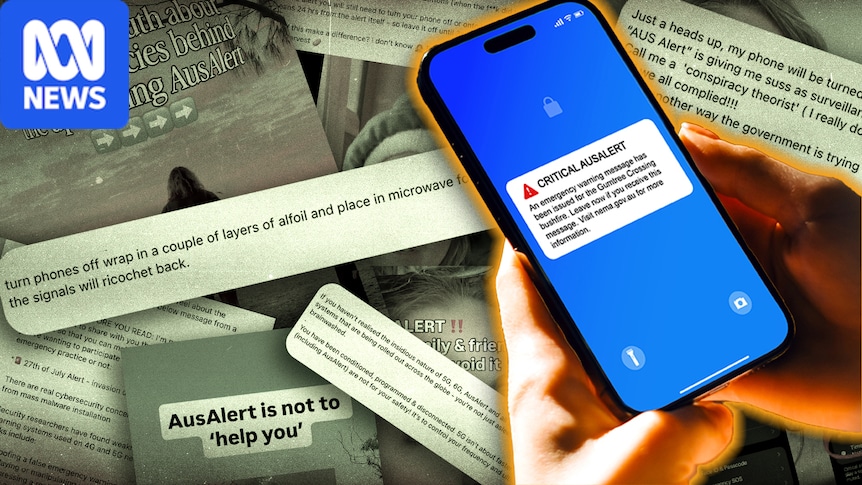
Full Article
Original Source
Read the full article at Abc →KhanList aggregates and links to publicly available news content. We do not host full articles from third-party sources. Always verify important information with original sources.