
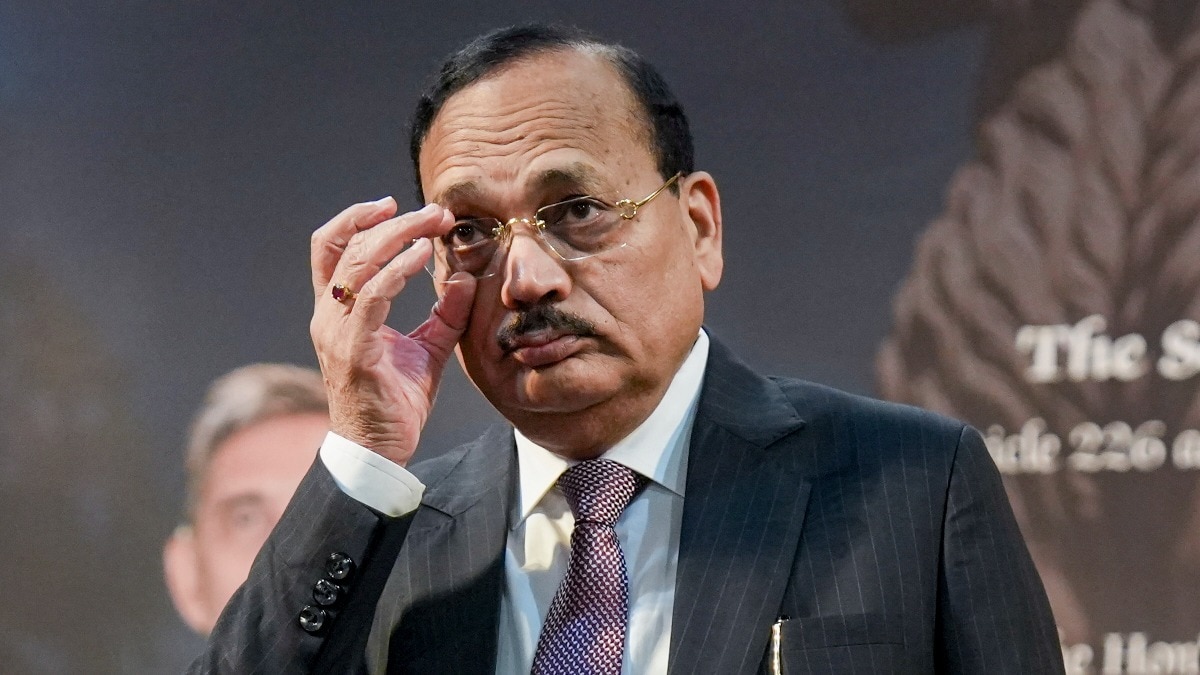
From NLSIU cancelling its convocation to TISS replacing CJI Surya Kant as chief guest, several universities have faced student opposition over his proposed presence. Here is what happened at NLSIU, TISS, NALSAR and OP Jindal Global University, and why convocation ceremonies have become a flashpoint for campus dissent.From NLSIU cancelling its convocation to TISS replacing CJI Surya Kant as chief guest, several universities have faced student opposition over his proposed presence. A convocation is usually one of the least controversial events on a university calendar. Students dress up, collect their degrees, pose for photographs and move on to the next chapter.But at some of India's leading universities this year, the choice of chief guest has turned the ceremony itself into a point of confrontation.The latest and most striking example is the National Law School of India University (NLSIU) in Bengaluru, which has cancelled its 34th Annual Convocation scheduled for September 12, 2026. The decision came after students and alumni objected to the proposed presence of Chief Justice of India Surya Kant and Bar Council of India Chairman Manan Kumar Mishra.The university said it was unable to hold the ceremony due to "unavoidable circumstances". Graduating students will instead be awarded their degrees in absentia, subject to the required approvals. NLSIU is not the first campus where the proposed CJI appearance has triggered controversy.1. NLSIU CANCELS CONVOCATIONAction: NLSIU cancelled its September 12 convocation. Reason: More than 700 students and alumni had opposed the proposed presence of CJI Surya Kant and BCI Chairman Manan Kumar Mishra.Outcome: The graduating batch will receive degrees in absentia instead of attending the scheduled ceremony.The cancellation is particularly notable because the university did not simply replace the proposed chief guest. The entire convocation has been called off.2. TISS POSTPONES CONVOCATION, THEN CHANGES CHIEF GUESTAction: Tata Institute of Social Sciences postponed its 86th convocation, originally scheduled for August 2.Reason: The institute cited "unforeseen circumstances". Reports said there were concerns about possible student protests over CJI Surya Kant's presence.Outcome: The ceremony was rescheduled for August 22, with Tata Memorial Hospital director Dr C.S. Pramesh replacing the CJI as chief guest.Unlike NLSIU, TISS eventually held the ceremony, but with both the date and chief guest changed.3. NALSAR STUDENTS OPPOSED CJI INVITEAction: Hundreds of NALSAR University of Law students objected to the reported invitation to CJI Surya Kant as chief guest.Reason: Students raised concerns linked to the CJI's reported remarks and handling of proceedings concerning protests in Delhi.Outcome: The controversy escalated after the BCI briefly directed state bar councils not to enrol NALSAR's 2026 graduates. The order was subsequently withdrawn. The CJI later said he had never accepted the invitation.What began as a dispute over one convocation guest therefore moved well beyond the ceremony, raising questions about student dissent, professional regulation and institutional autonomy.4. OP JINDAL GLOBAL UNIVERSITY CHANGED COURSEAction: OP Jindal Global University altered its convocation arrangements.Reason: The university's position was that CJI Surya Kant had never accepted the invitation to preside over the ceremony.Outcome: Justice PS Narasimha presided instead. The development was reported alongside the NALSAR and TISS controversies.WHY ARE CONVOCATIONS BECOMING A CAMPUS FLASHPOINT?The four cases do not have identical circumstances. At NALSAR, the CJI said he never accepted the invitation. TISS cited unforeseen circumstances before eventually replacing him. NLSIU has now gone further and cancelled its entire ceremony.But together, the developments point to a larger change in campus politics.For students, a convocation guest is no longer necessarily just a ceremonial choice. At institutions that train future lawyers, academics and public officials, students can see the guest as representing the values and principles of their university.That makes the convocation stage more than a backdrop for degrees. It can also become a place where students decide whether they want to celebrate, question or protest the institution's choices.And at NLSIU, that disagreement has now resulted in something unusual: there will be no convocation ceremony at all.- EndsPublished On: Aug 27, 2026 14:42 IST
NLSIU to TISS: How 4 universities handled CJI Surya Kant's convocation invites
Full Article
Original Source
Read the full article at Indiatoday →KhanList aggregates and links to publicly available news content. We do not host full articles from third-party sources. Always verify important information with original sources.